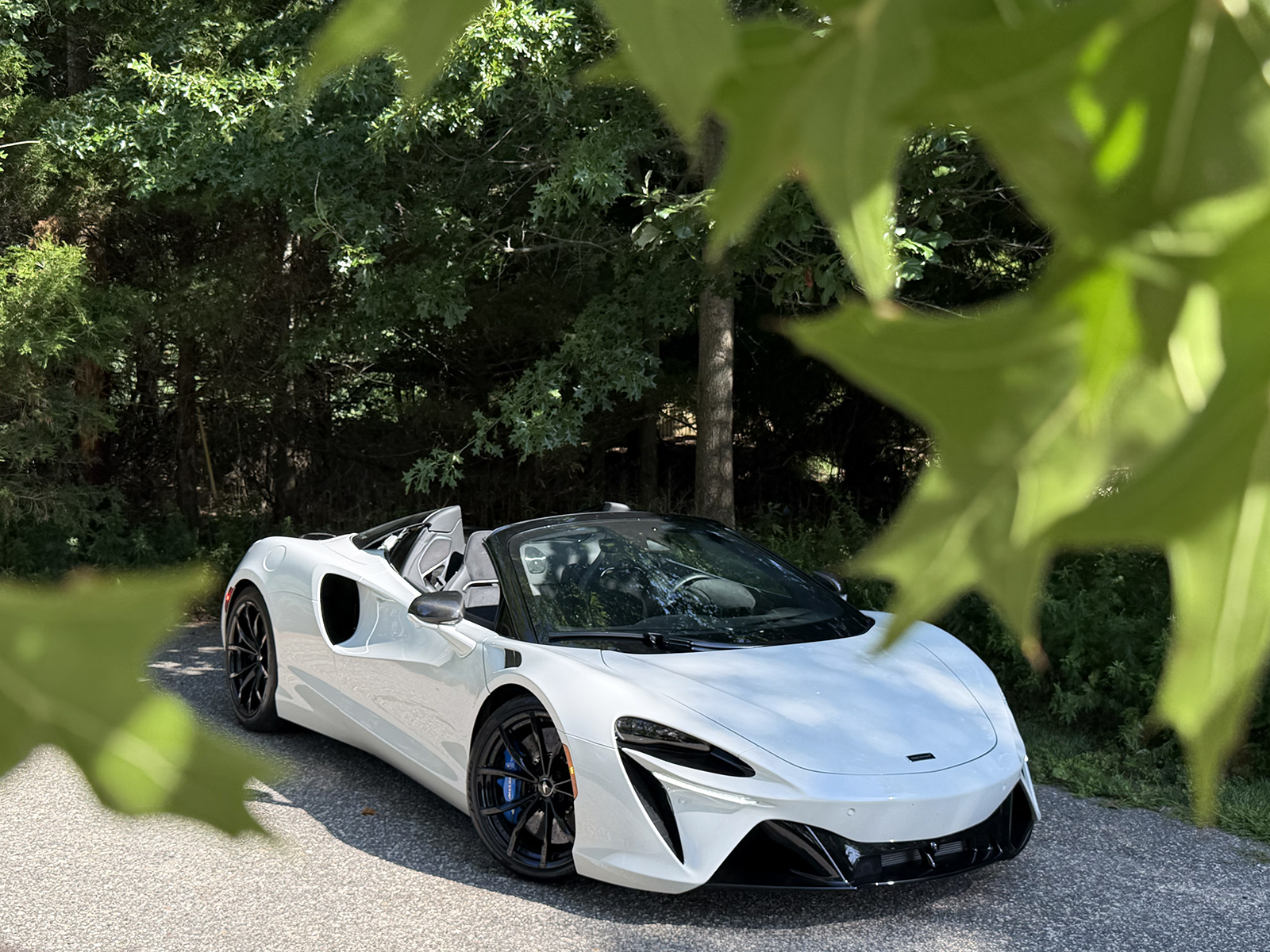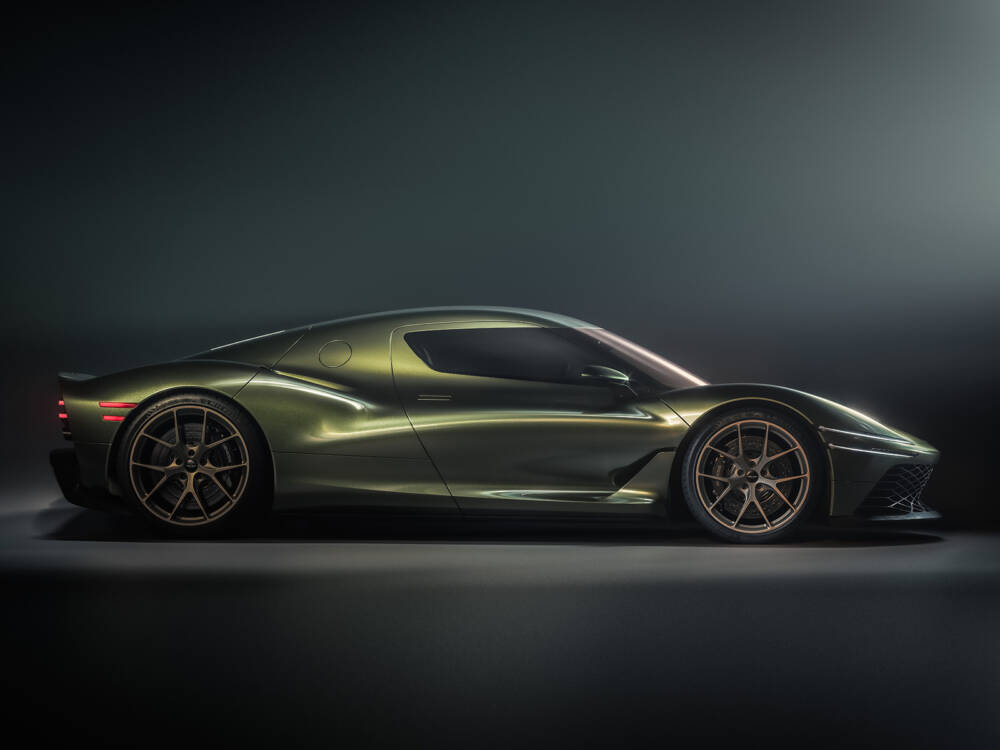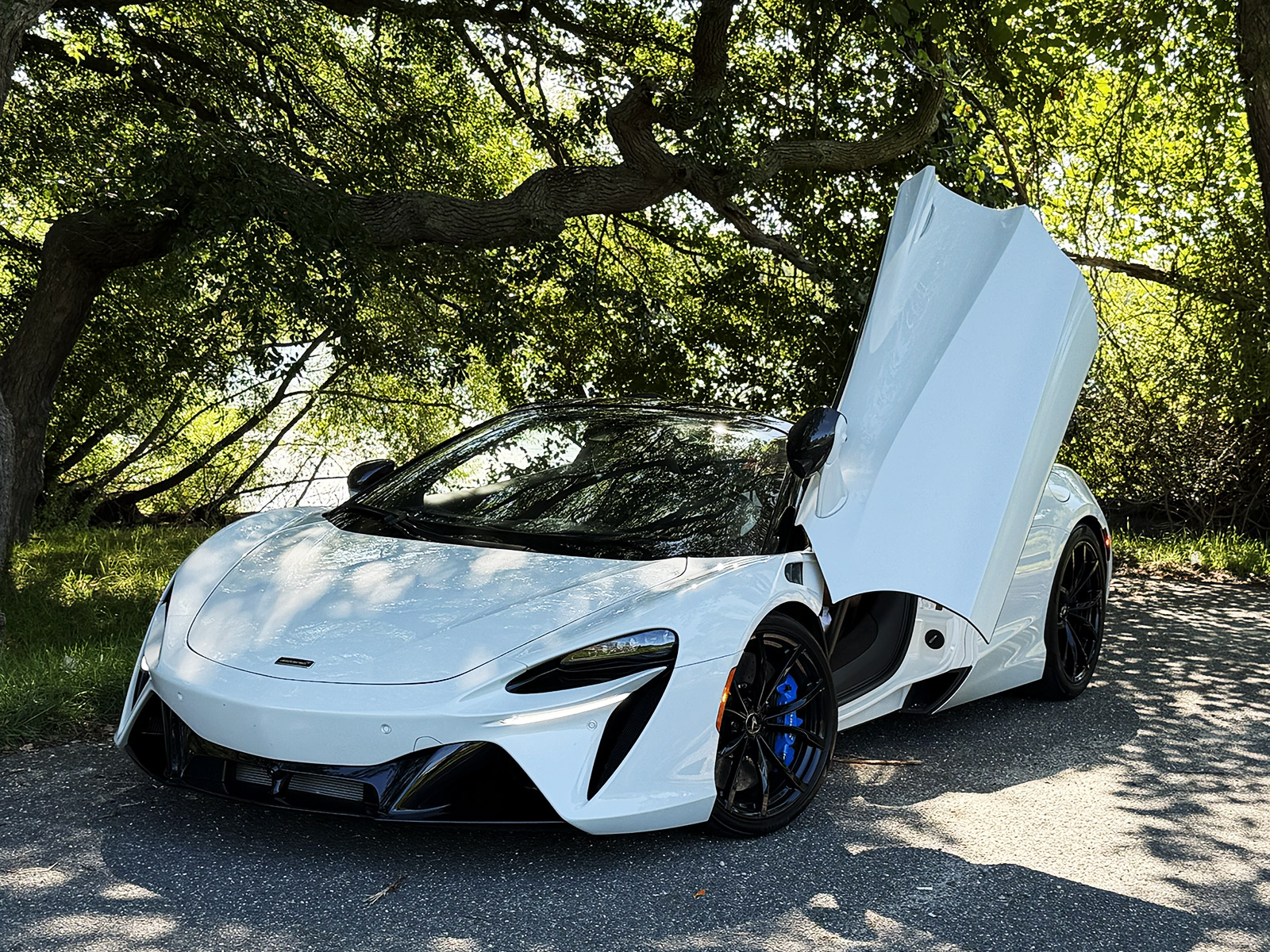

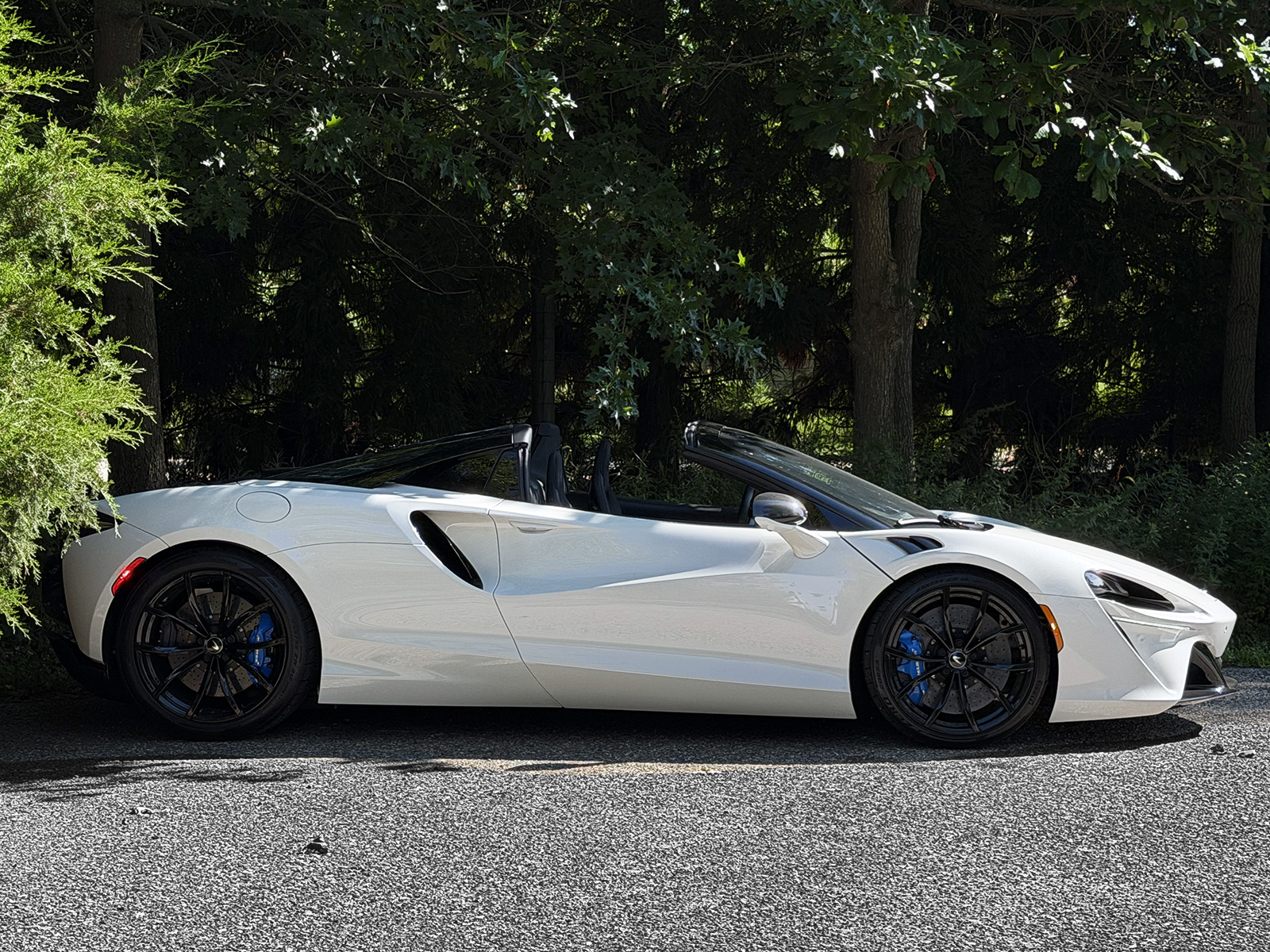
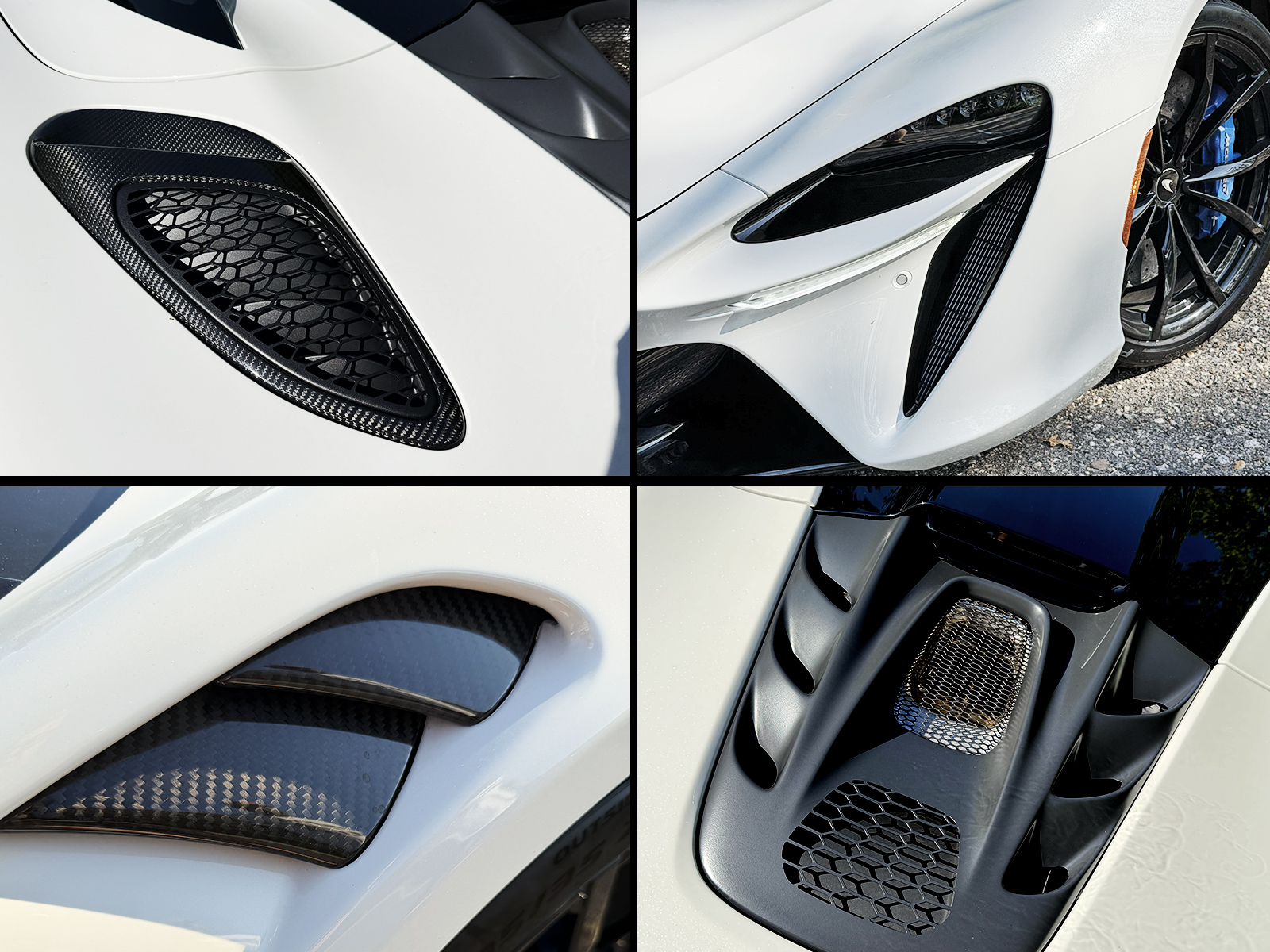
There is something wonderfully contrary about the McLaren Artura Spider. It looks like a supercar designed for the perfect summer afternoon, yet underneath the low-slung carbon-fiber body is a remarkably sophisticated piece of engineering that is perfectly happy being driven every day.
The transformation is almost theatrical. Press a button and the retractable hardtop disappears in 11 seconds, even while moving at speeds up to 31 mph. A glass roof panel is available with electrochromic technology, allowing the light entering the cabin to be changed at the touch of a button. It is an unusually elegant solution to the convertible problem: open when you want the sky, sealed when you don’t.
Our route from New York toward the Hamptons made a good argument for the Artura’s dual personality. On the highway, it settles into something surprisingly civilized. Then the road tightens, the traffic thins and the car begins to reveal what McLaren really built it for.
The Artura’s 3.0-liter twin-turbocharged V6 works with an axial-flux electric motor to produce 690 horsepower and 531 lb-ft of torque. Power goes exclusively to the rear wheels through an eight-speed seamless-shift transmission. Zero to 60 mph takes approximately 3.0 seconds; top speed is 205 mph.
But the numbers are almost beside the point. McLaren’s obsession with lightness and response is what you notice. The steering is beautifully clean, the car changes direction with almost no ceremony, and the relationship between driver and machine feels unusually direct for something carrying a hybrid powertrain and this much technology.
Even the soundtrack has been reconsidered. A revised valved exhaust, tuned resonator and reshaped tailpipes give the V6 a cleaner, more deliberate voice through the middle and upper reaches of the rev range. Specify the sports exhaust and the experience becomes more theatrical, with an exhaust symposer bringing the engine’s character further into the cabin.
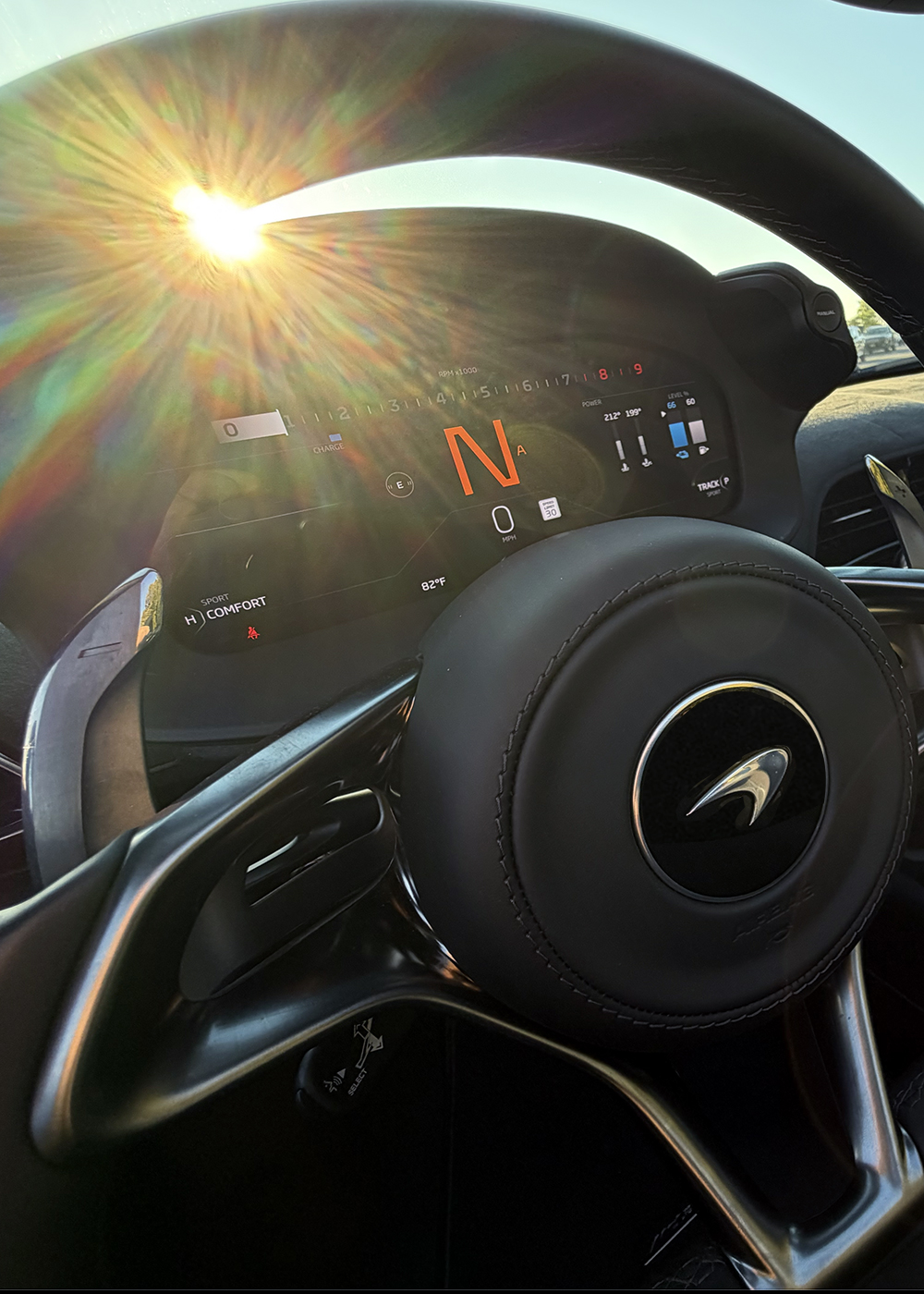
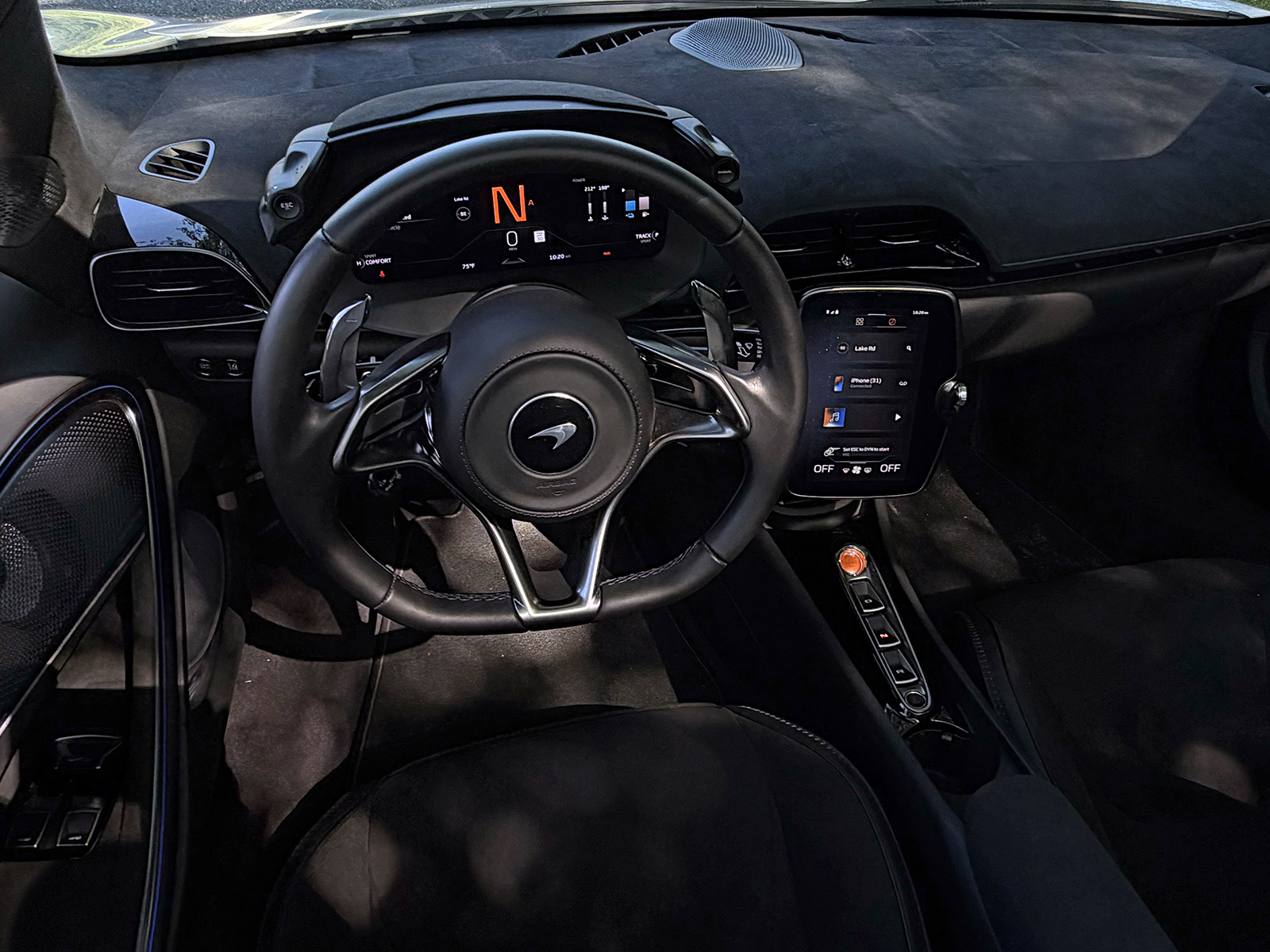
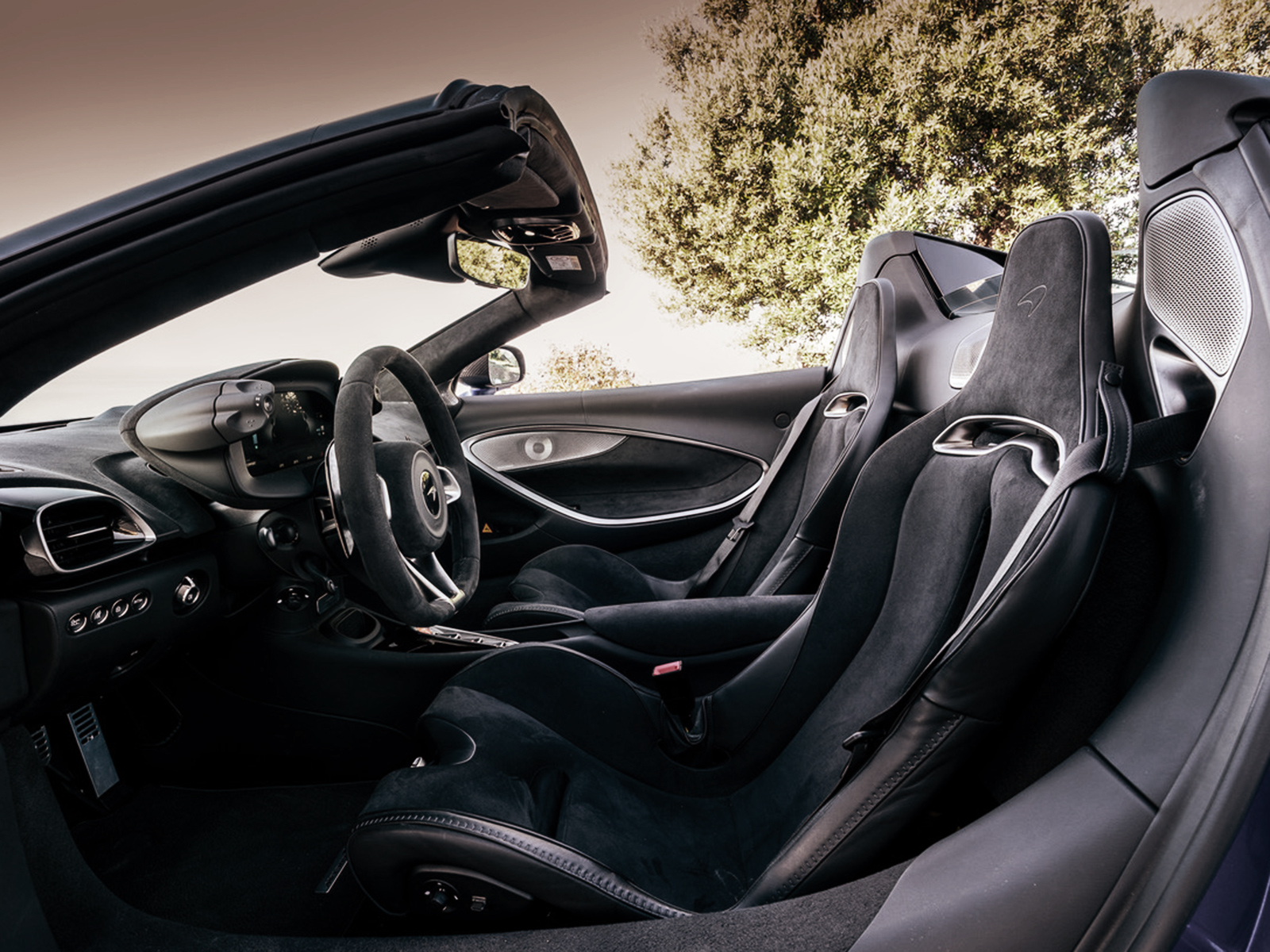
Inside, restraint is the dominant idea. The steering wheel is almost free of controls, leaving the sculpted shift paddles to do their work. The driver display moves with the steering column, keeping the essential information directly in the driver’s eyeline. Handling and powertrain controls sit on the binnacle itself, making it possible to move between Comfort, Sport and Track without turning the cockpit into a videogame.
There is a certain pleasure in knowing how much is happening underneath. The Artura offers adjustable ESC intervention, including a more permissive ESC Dynamic setting with Variable Drift Control, while Launch Control is standard. There is even a deliberately mischievous Spinning Wheel Pull-Away mode for those moments when restraint feels overrated.
The Clubsport seat is equally clever: it follows an elliptical arc, giving the movement of a conventional seat while retaining the support and lightness of a bucket. For those who prefer something more civilized, electrically adjustable heated comfort seats are available.
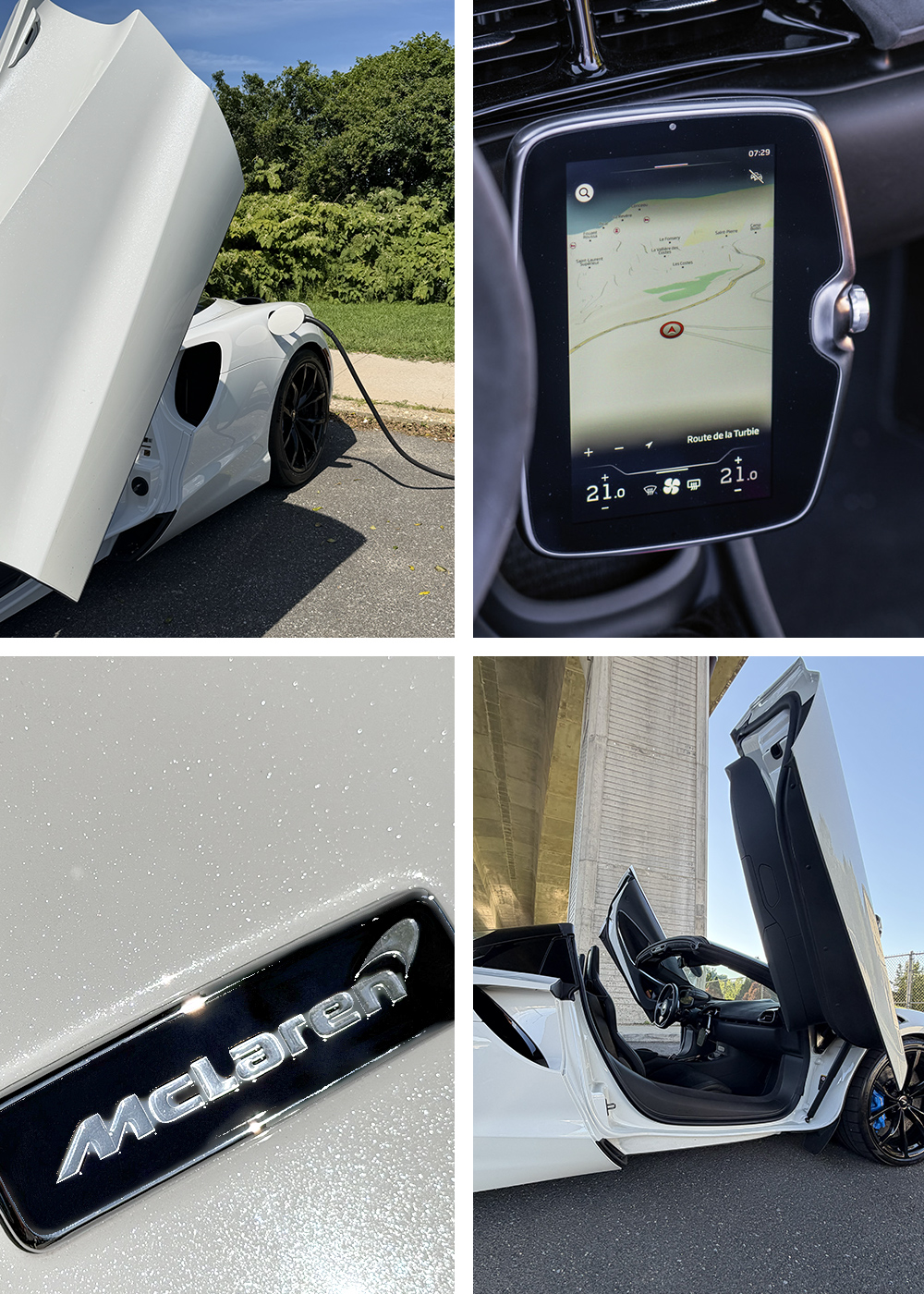
And then there is the technology that matters less because it works quietly. McLaren’s MIS II system uses two high-definition displays and supports Apple CarPlay, while wireless phone charging is available. Our car was also fitted with the optional 12-speaker, 1,280-watt Bowers & Wilkins system. It was excellent.
With the roof down and the road narrowing into the kind of curving roads that make you look for another corner rather than your destination, the Artura Spider makes its own argument. You find yourself taking every curve just a little more deliberately, carrying speed, feeling the car settle and turn beneath you. For a car that can do 205 mph, its real pleasure may be much simpler: finding the next bend and taking it again. Let’s build one.