
Only a few days into Monterey Car Week, and already one collaboration has managed to cut through the noise: Louis Vuitton and Singer.
We’re always interested when fashion and cars occupy the same space, but this feels different. Guided by Louis Vuitton’s Art of Travel philosophy, the House has joined forces with Singer, the California atelier celebrated for its highly personalized reimagining of classic Porsche 911s, to create two remarkably considered automobiles.
The result is not a car with a few Louis Vuitton accessories added. It is a complete meeting of two design languages.
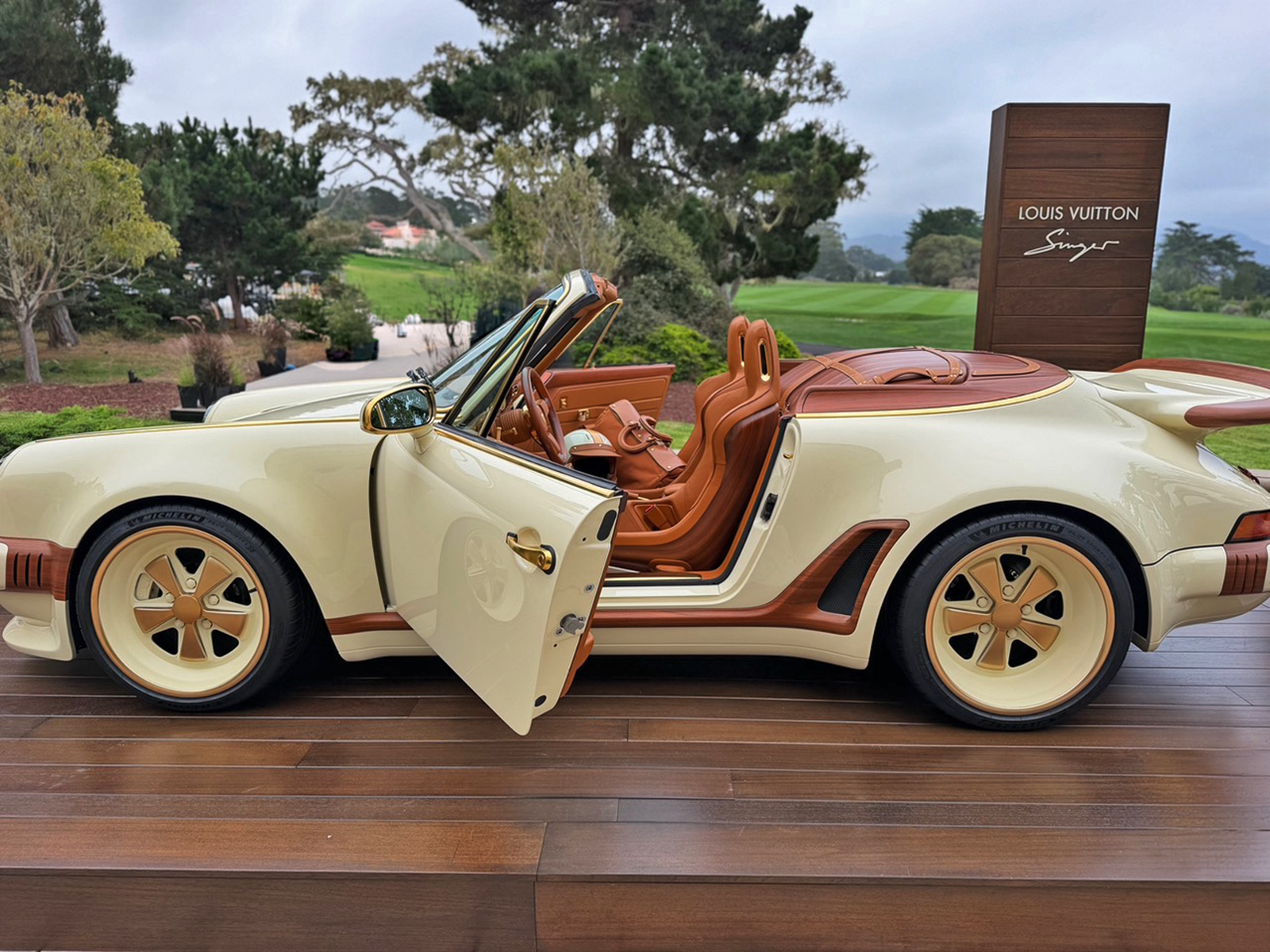
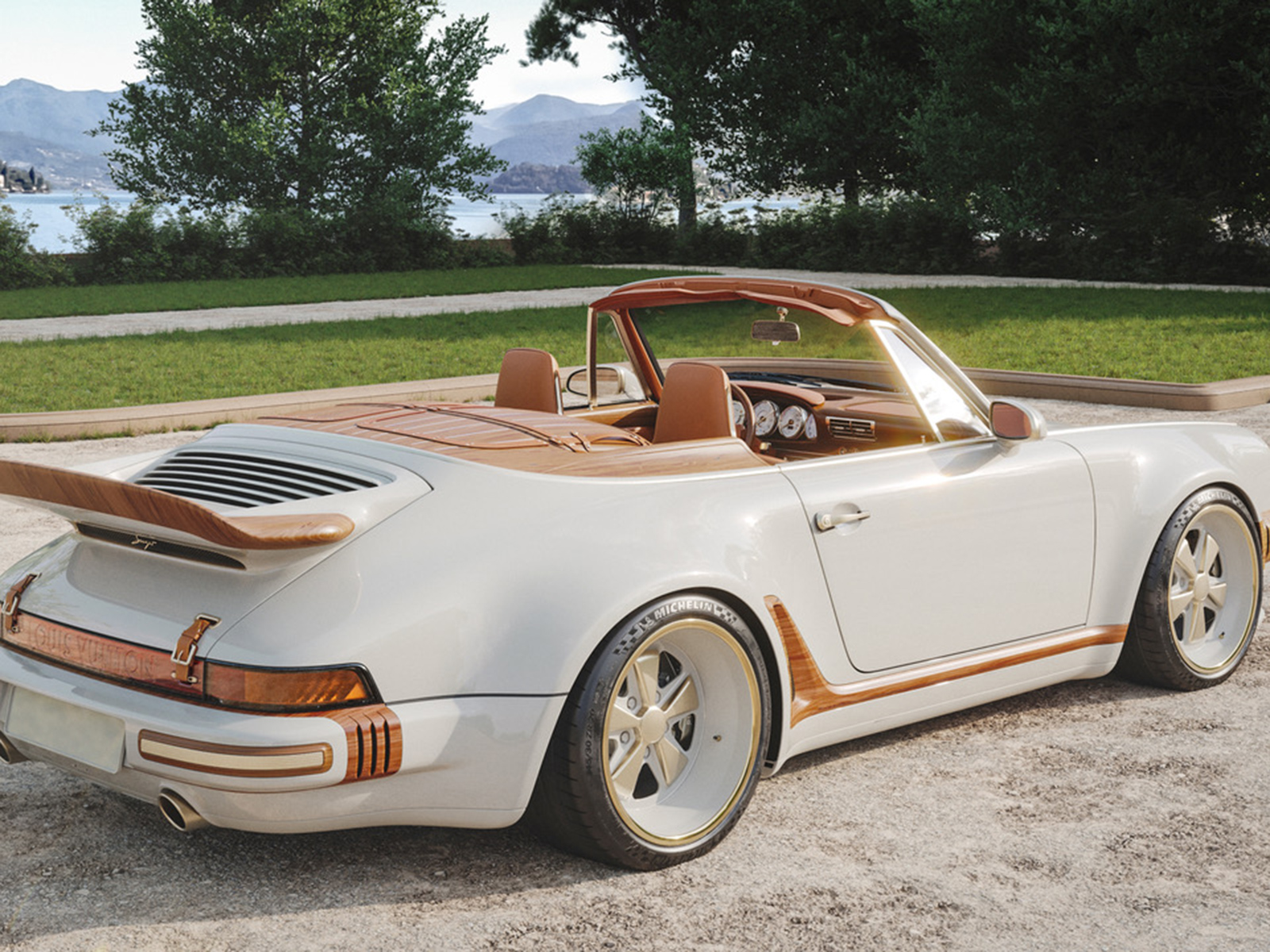
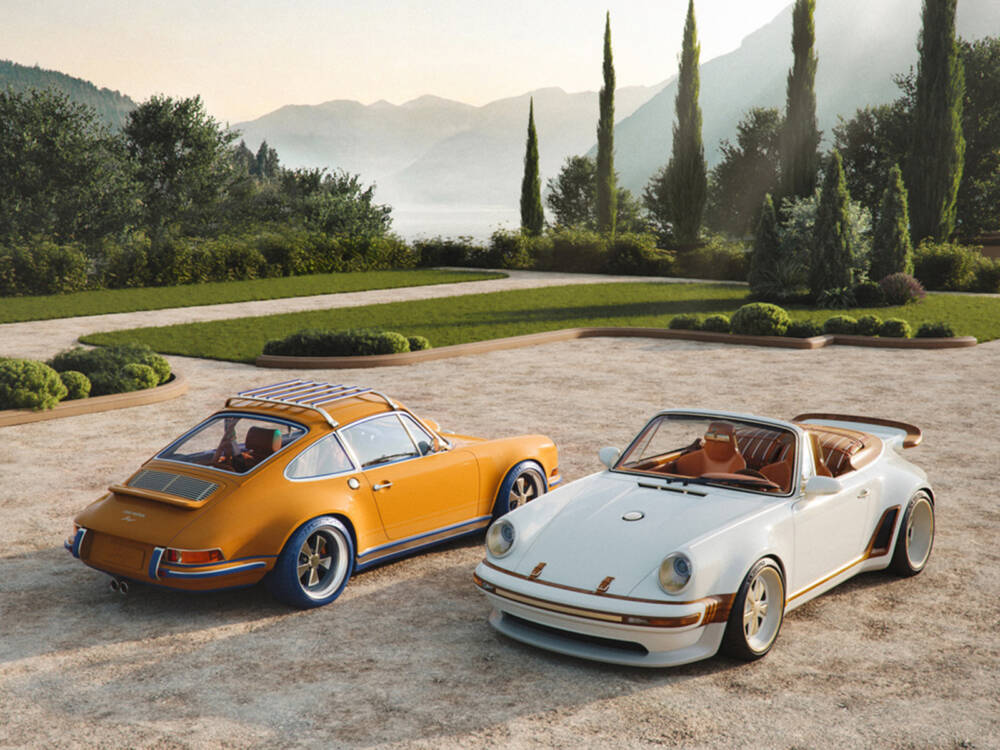
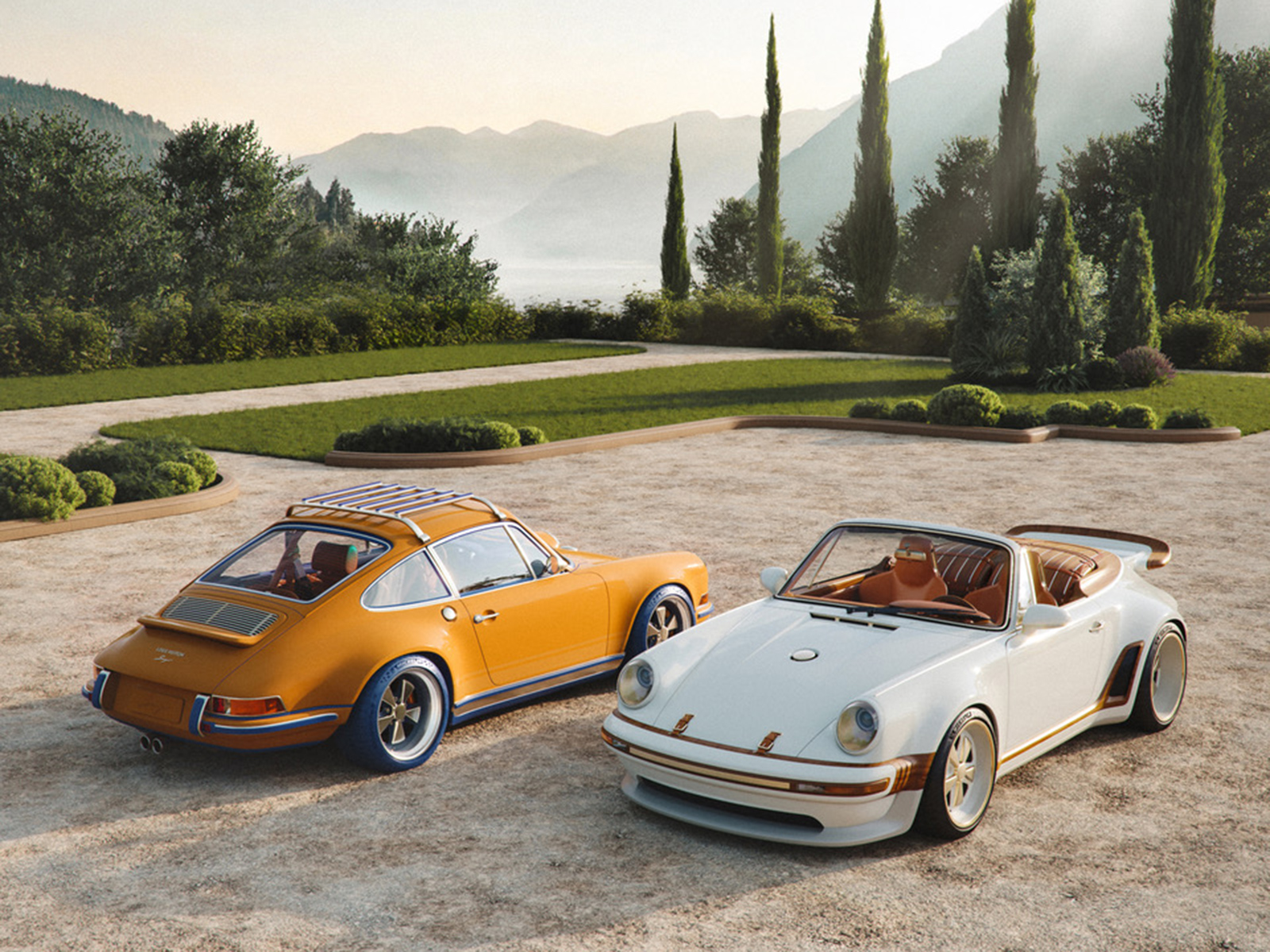
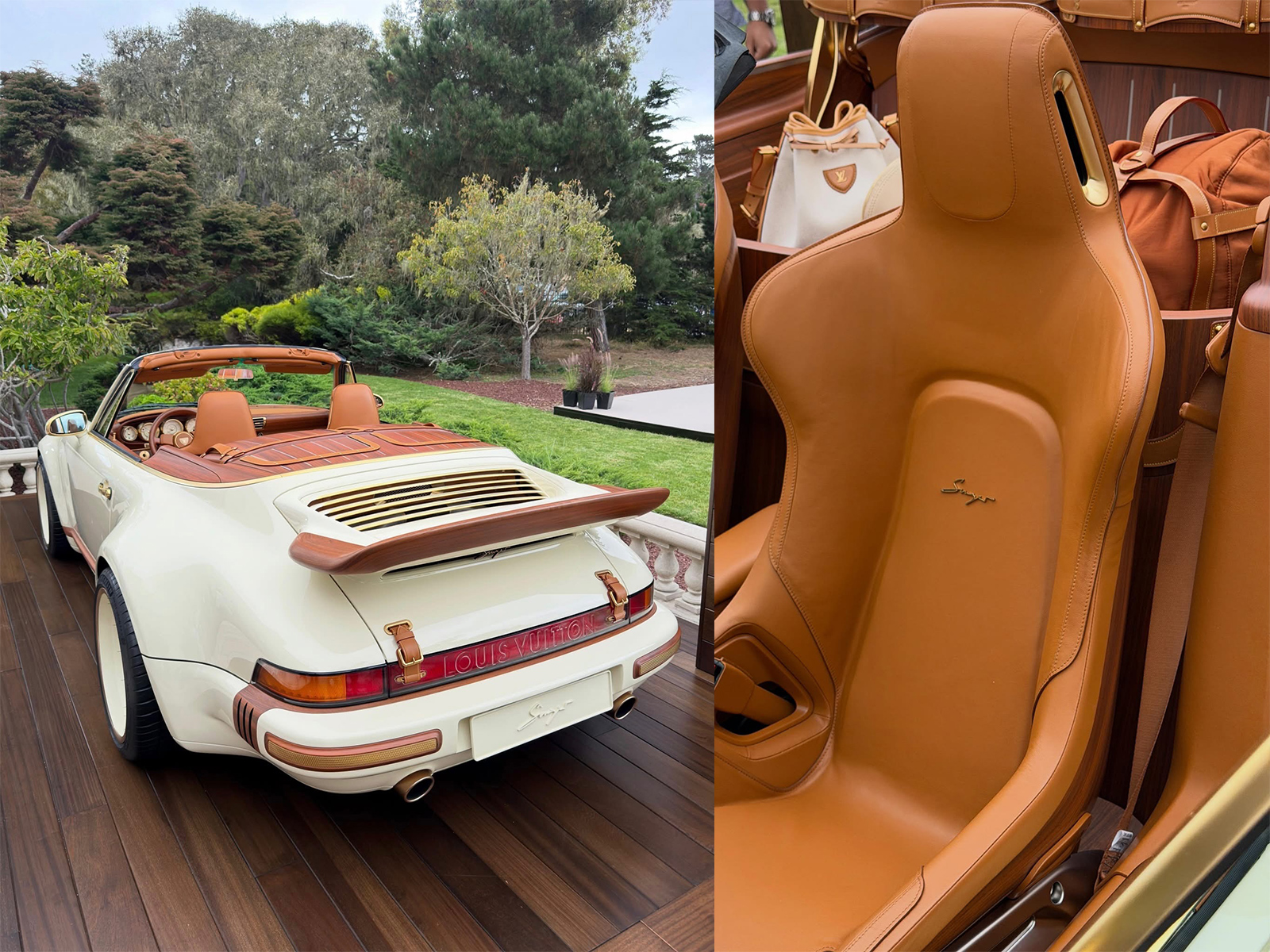
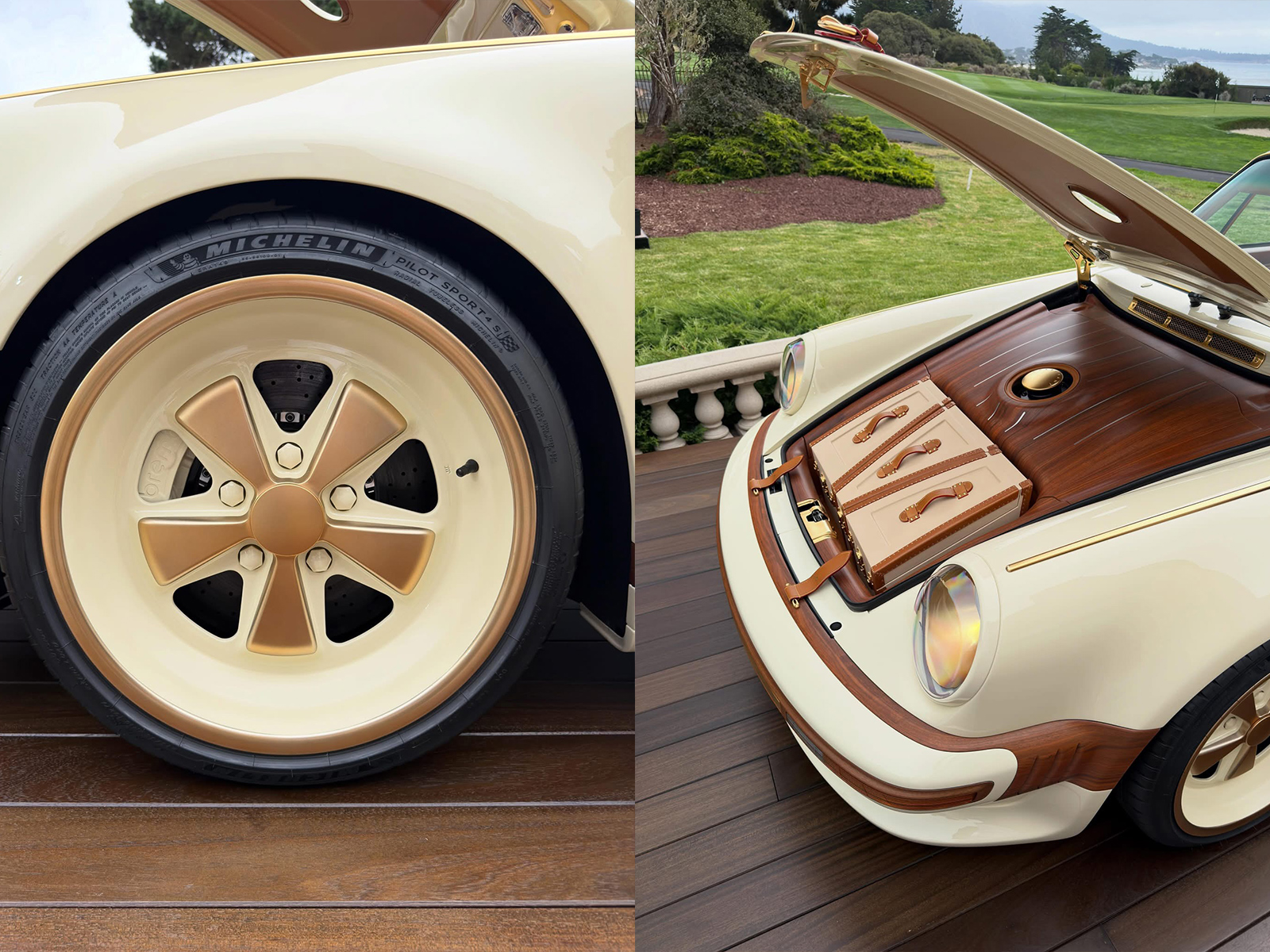
The first is a Porsche 911 Reimagined by Singer – Classic, finished in an exclusive livery of saffron, cobalt blue and yellow, colors chosen specifically for Louis Vuitton. Alongside it is a Porsche 911 Reimagined by Singer – Classic Turbo, a cabriolet conceived by Louis Vuitton Women’s Artistic Director Nicolas Ghesquière. Finished in Calcaire Lutétien white with precious-wood trim, it takes a considerably quieter approach.
Both cars are fitted with made-to-measure Louis Vuitton details, extending the collaboration well beyond the expected leather and luggage.
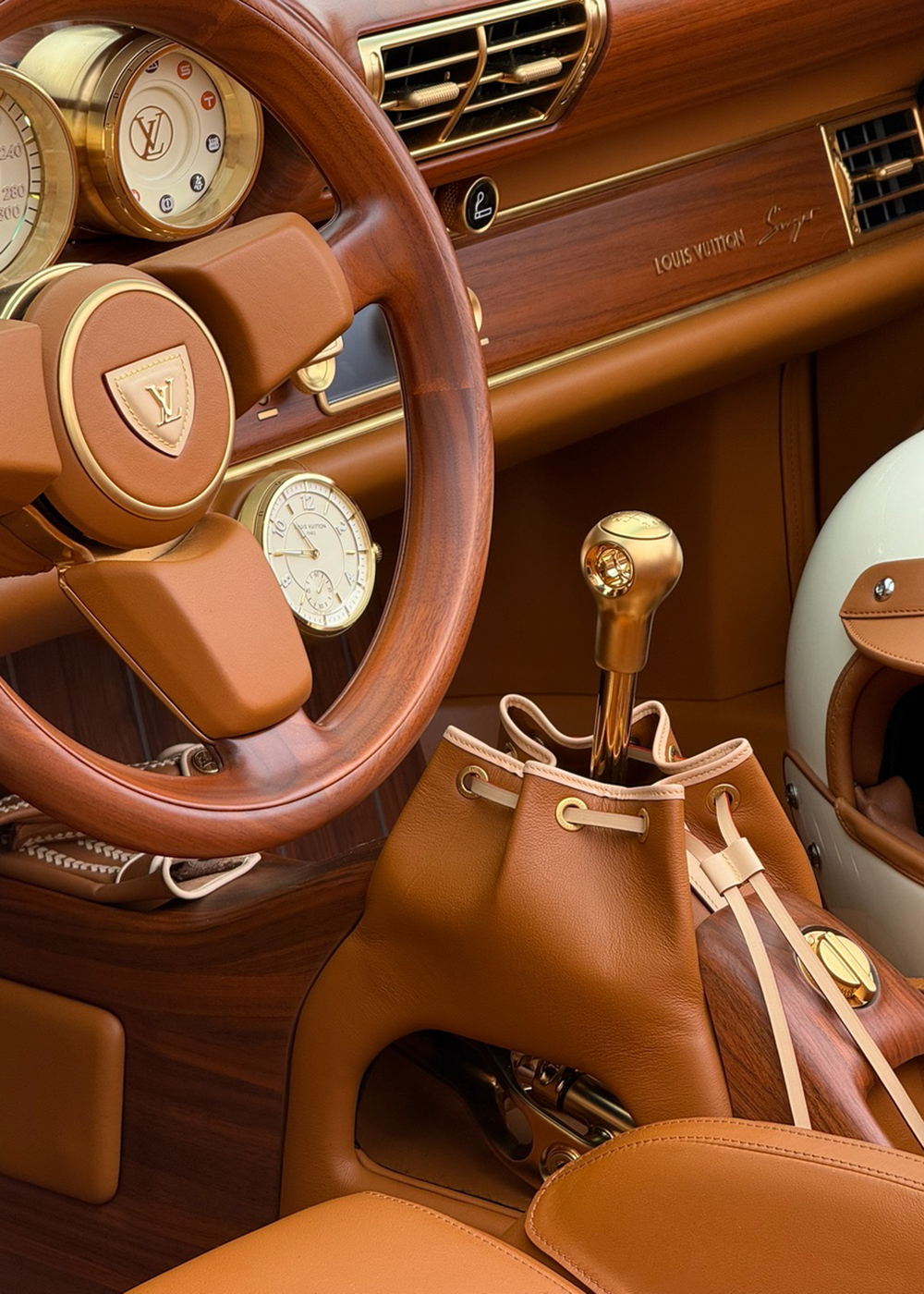
The project began with something deceptively simple: a dashboard clock.
Louis Vuitton initially approached Singer about creating a timepiece for a Singer-reimagined Porsche. The clock was developed by La Fabrique des Arts, Louis Vuitton’s watchmaking workshops in Switzerland, and inspired by the distinctive Tambour watch, including its twelve polished and engraved letters around the bezel.
From there, the idea expanded.
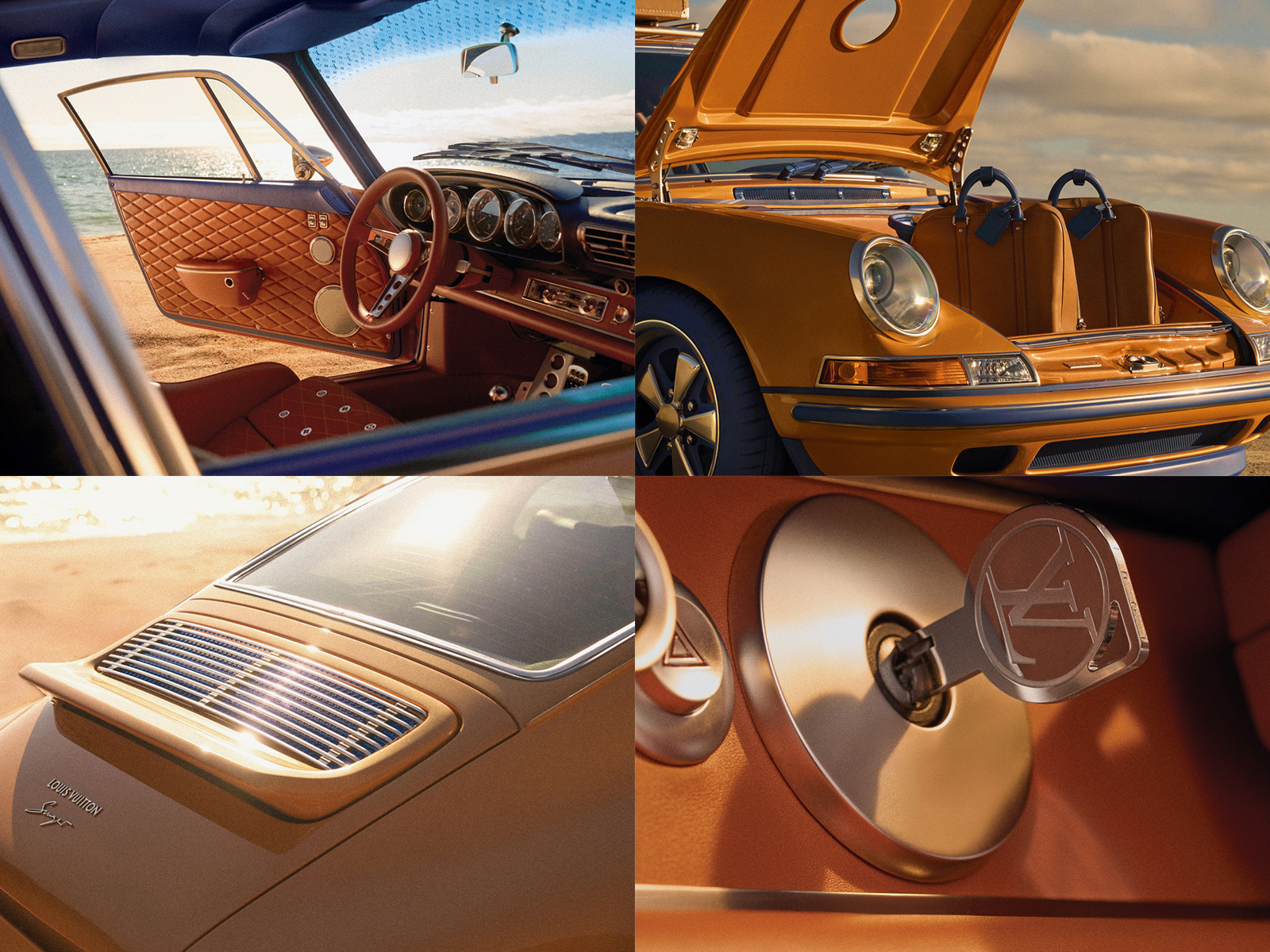
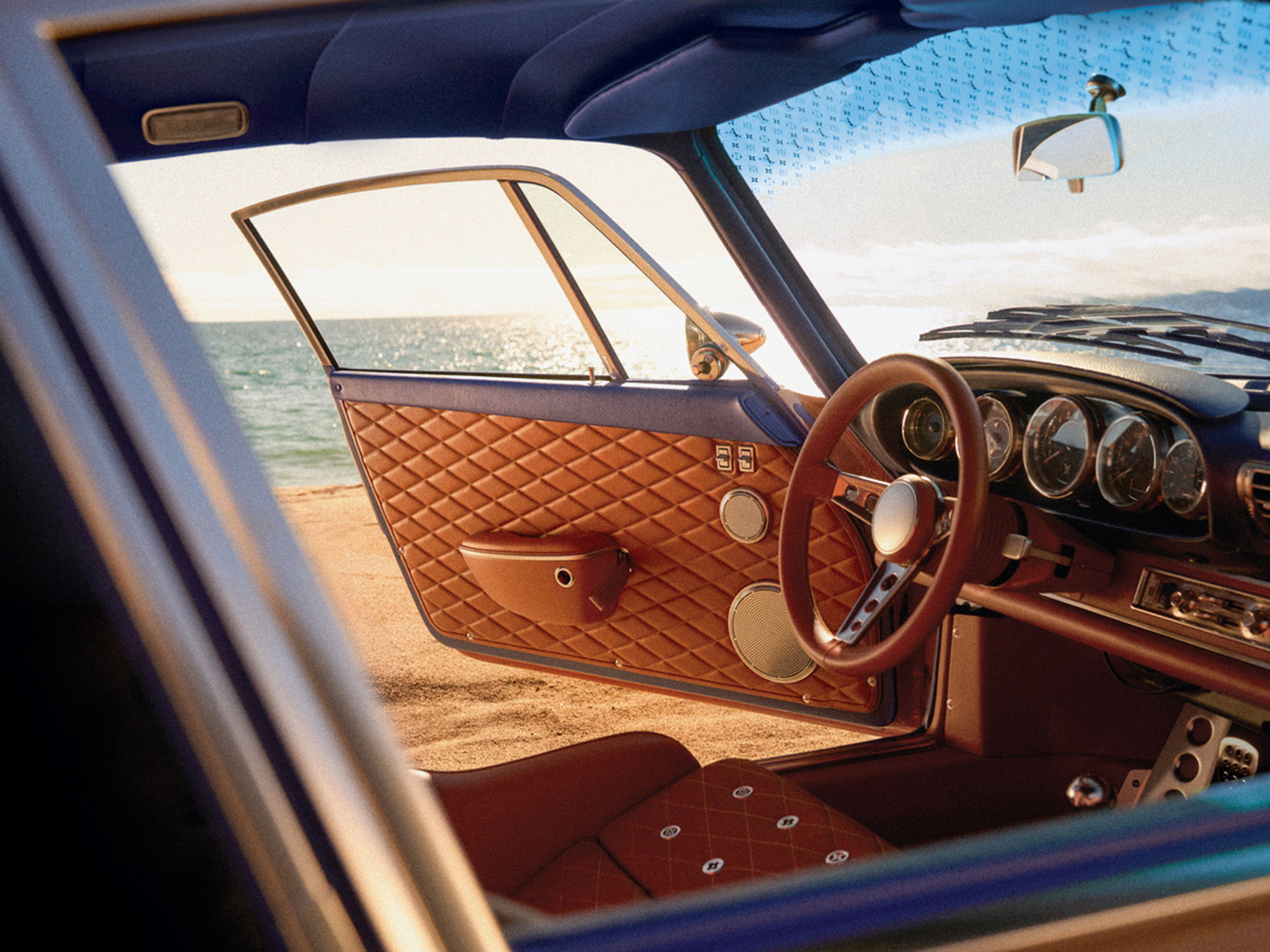
Once the clock was integrated into the cockpit, it became clear that the rest of the instrumentation would need to speak the same visual language. The speedometer, rev counter and gauges were redesigned, with cobalt blue, bright orange lettering, Tambour-inspired hands and carefully considered index systems.
It sounds like a small detail. It wasn’t. The instrument redesign alone took a year.
And that may be the most interesting thing about the collaboration. Neither company appears to have treated the other as an opportunity for branding. Instead, each brought its particular obsession with craftsmanship to the other’s world.
“The aim was to create a true synthesis between Singer’s architectural and timeless language and the Louis Vuitton culture, characterised by refined materials, travel and expression of style,” explains Octave Chany, Project Lead Designer at Singer.
That synthesis extends beyond the cockpit. Louis Vuitton approached the two cars as expressions of its Art of Travel philosophy: one a coupe reimagined through Singer’s Classic services, the other a cabriolet through Classic Turbo, both reflecting a sense of movement, craftsmanship and California’s inherent spirit of freedom.
For Singer, the collaboration brings its meticulous approach to personalization into a new creative territory. For Louis Vuitton, the automobile becomes something more intimate than transportation — another object through which the House can explore craftsmanship, travel and the art of living.
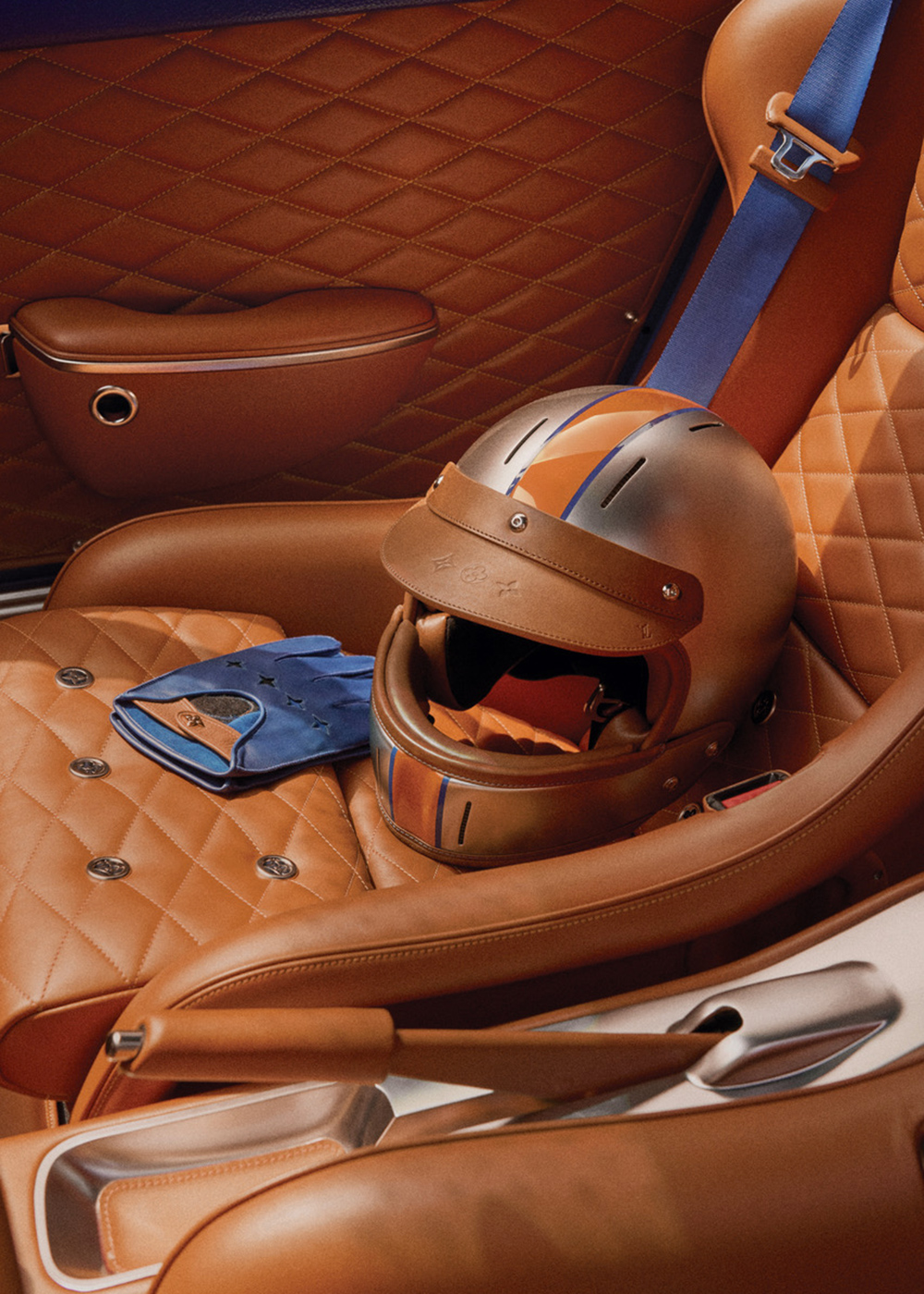
At Monterey, where automotive history and modern luxury collide almost everywhere you look, it is a particularly good fit.
And perhaps the best part is that neither car feels like the other.
One announces itself in saffron, cobalt and yellow—the other whispers in white, wood and beautifully considered mechanical details.
Both are unmistakably Singer.
And now, unmistakably Louis Vuitton.