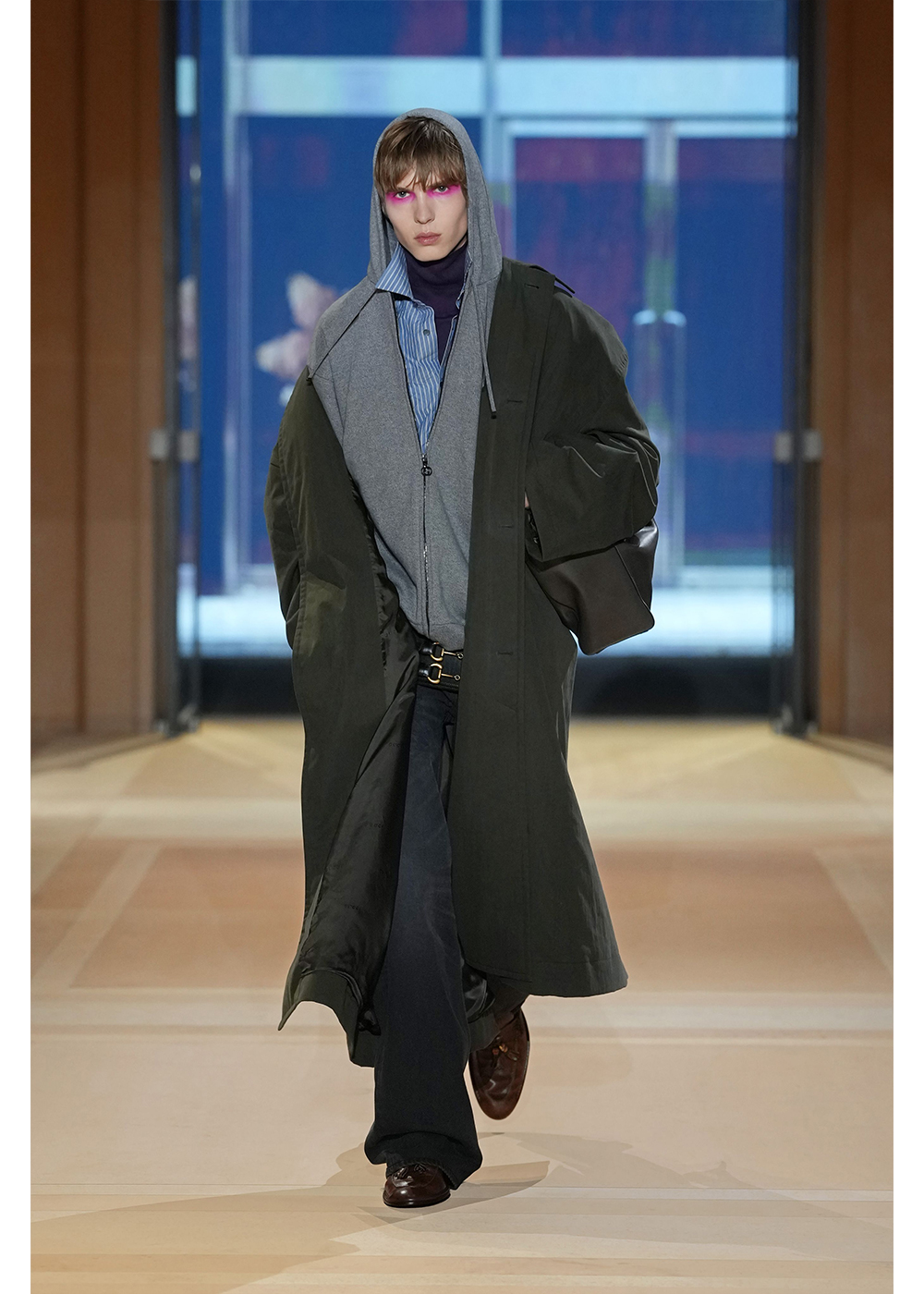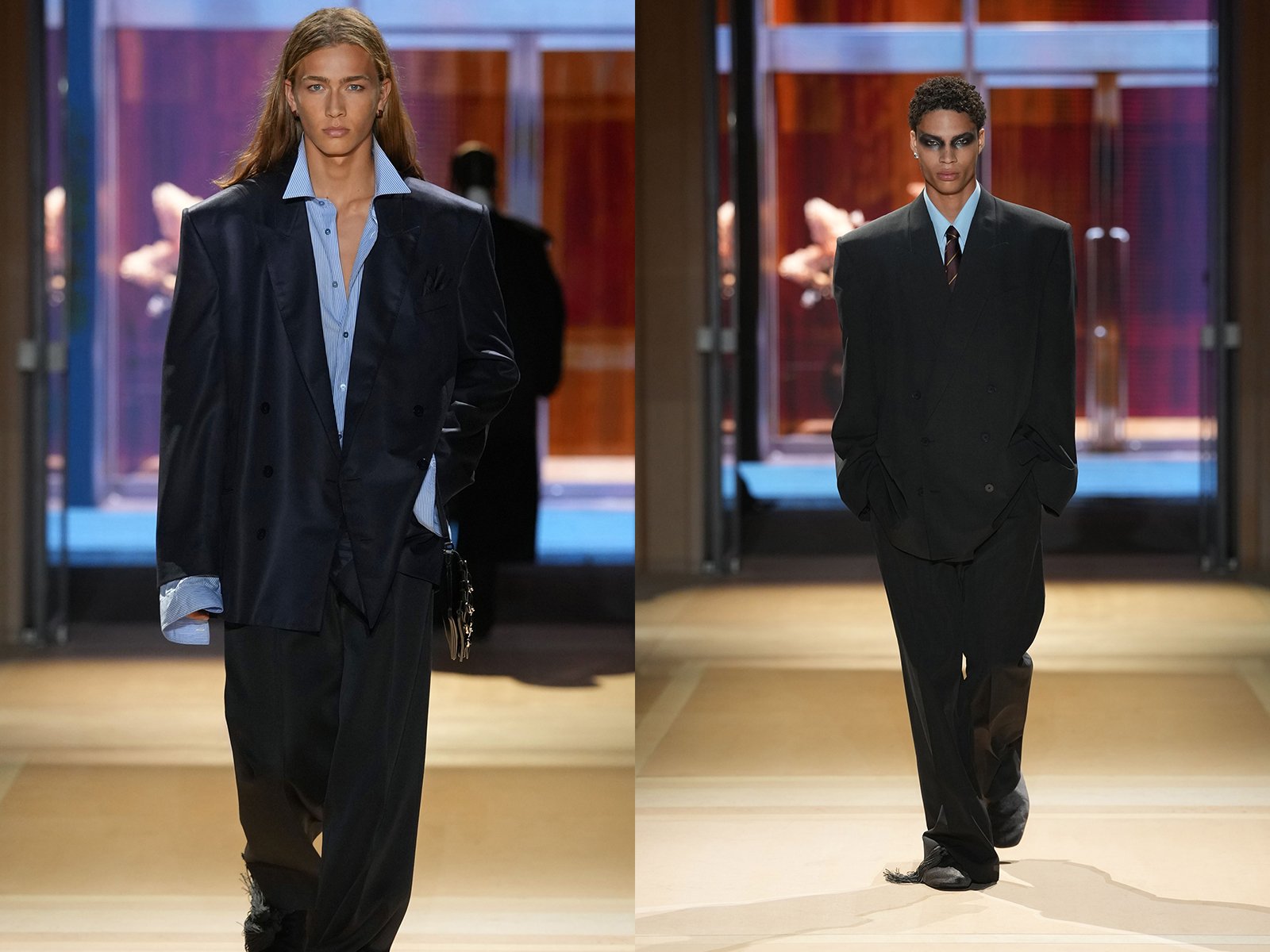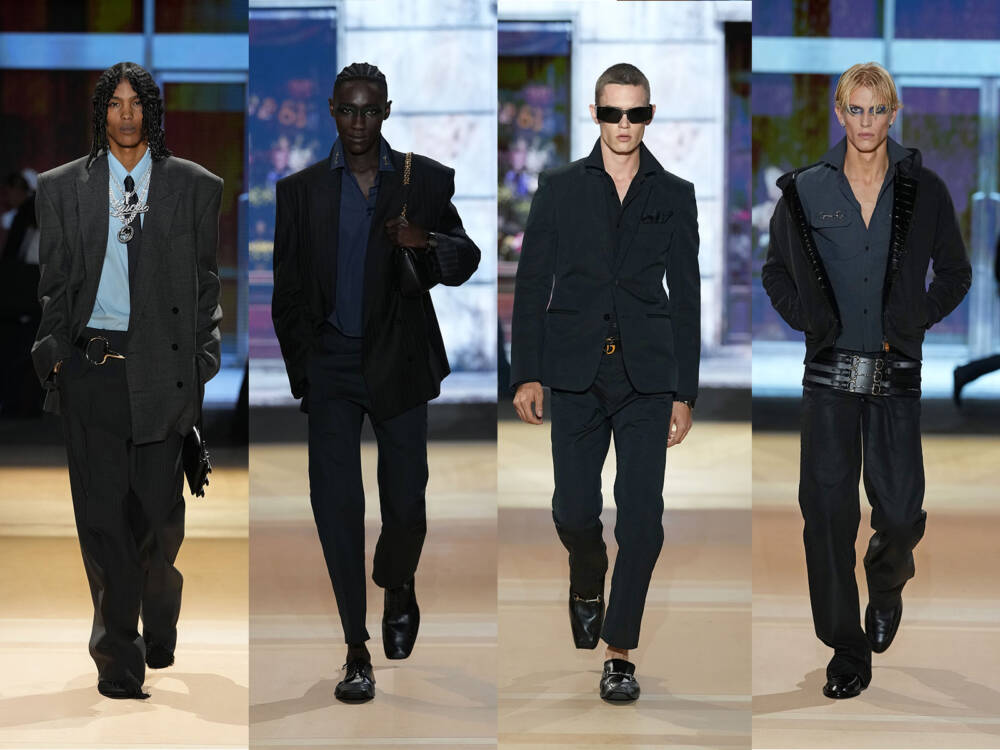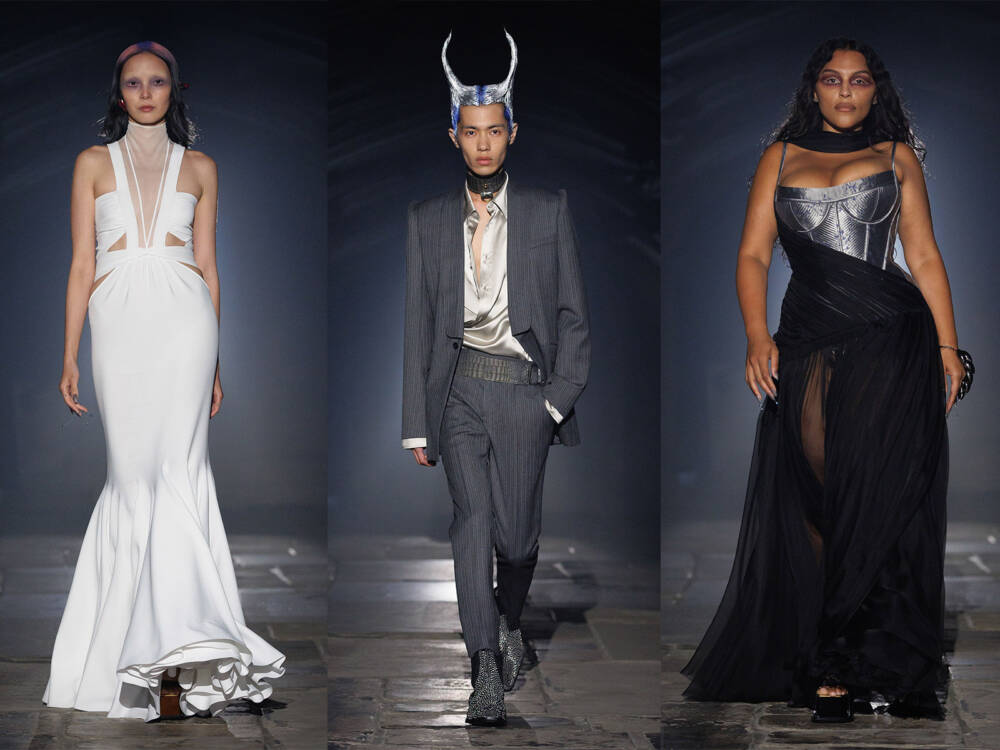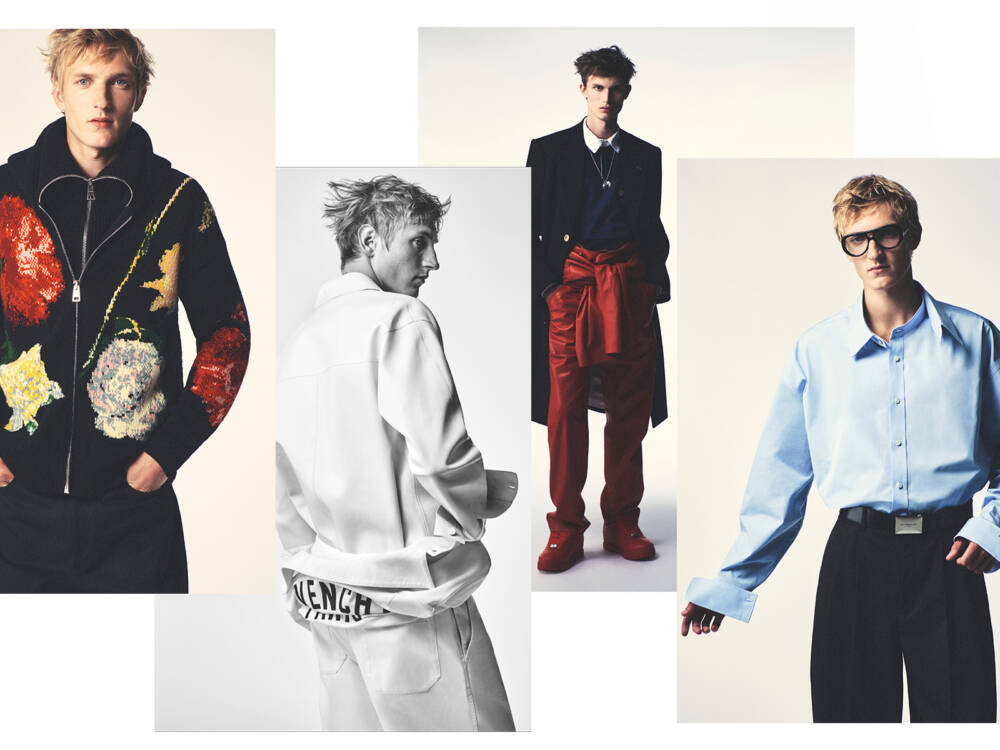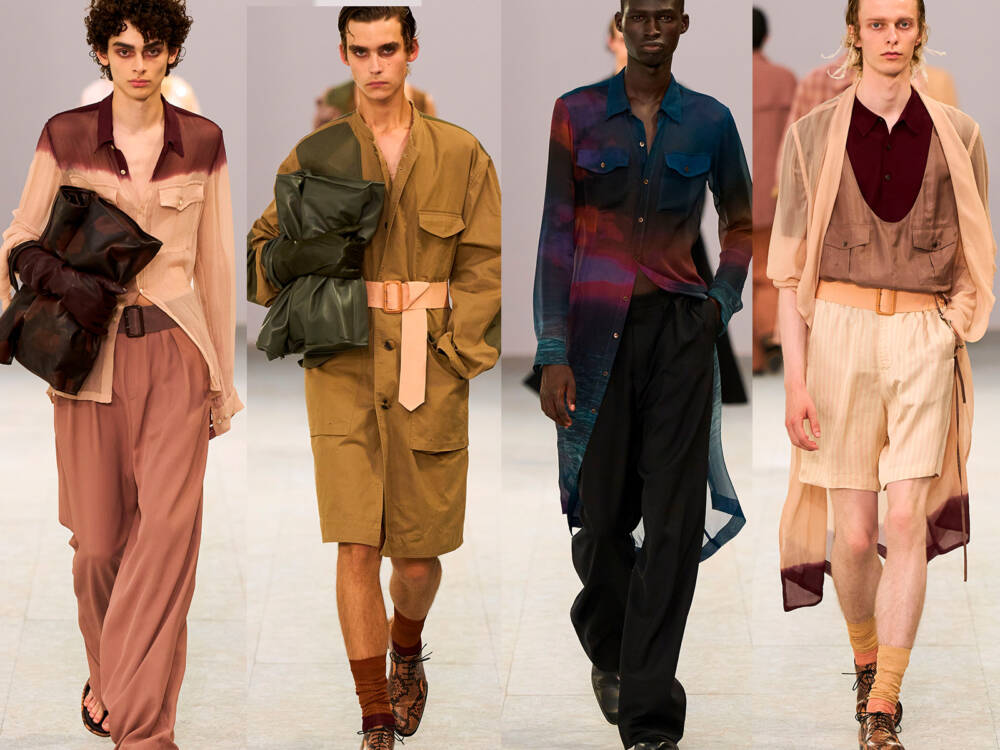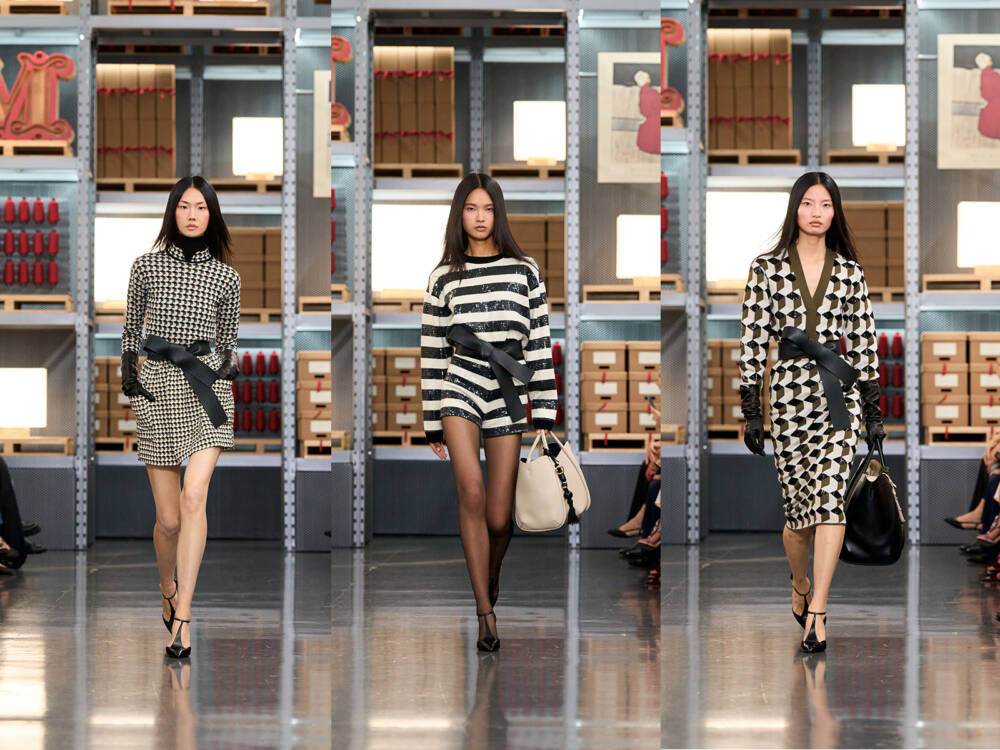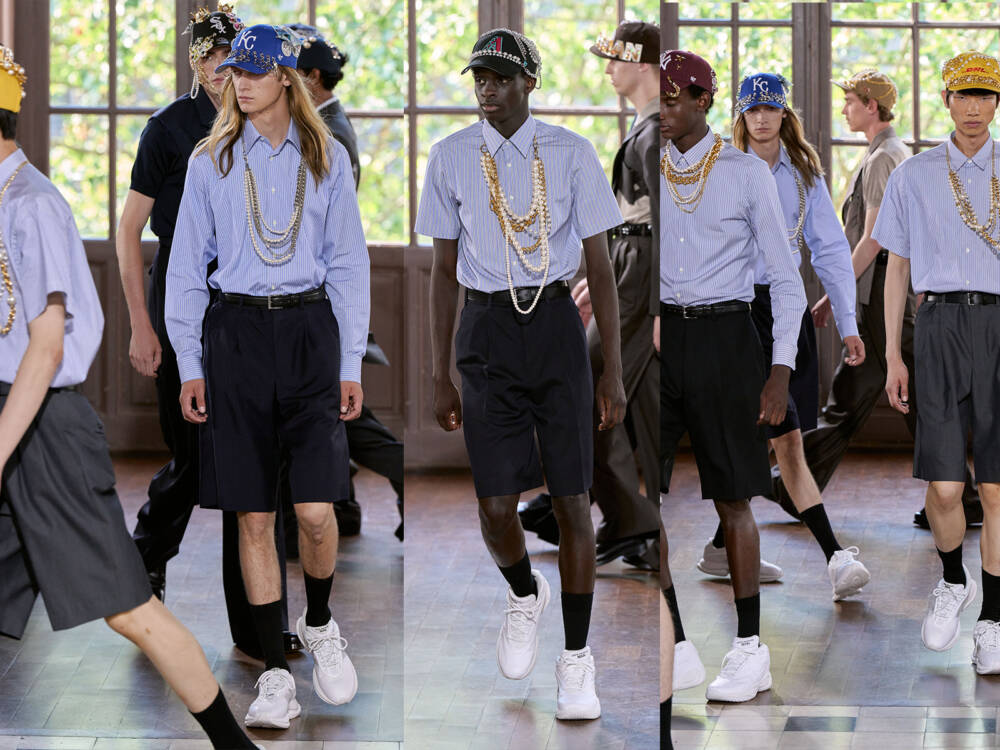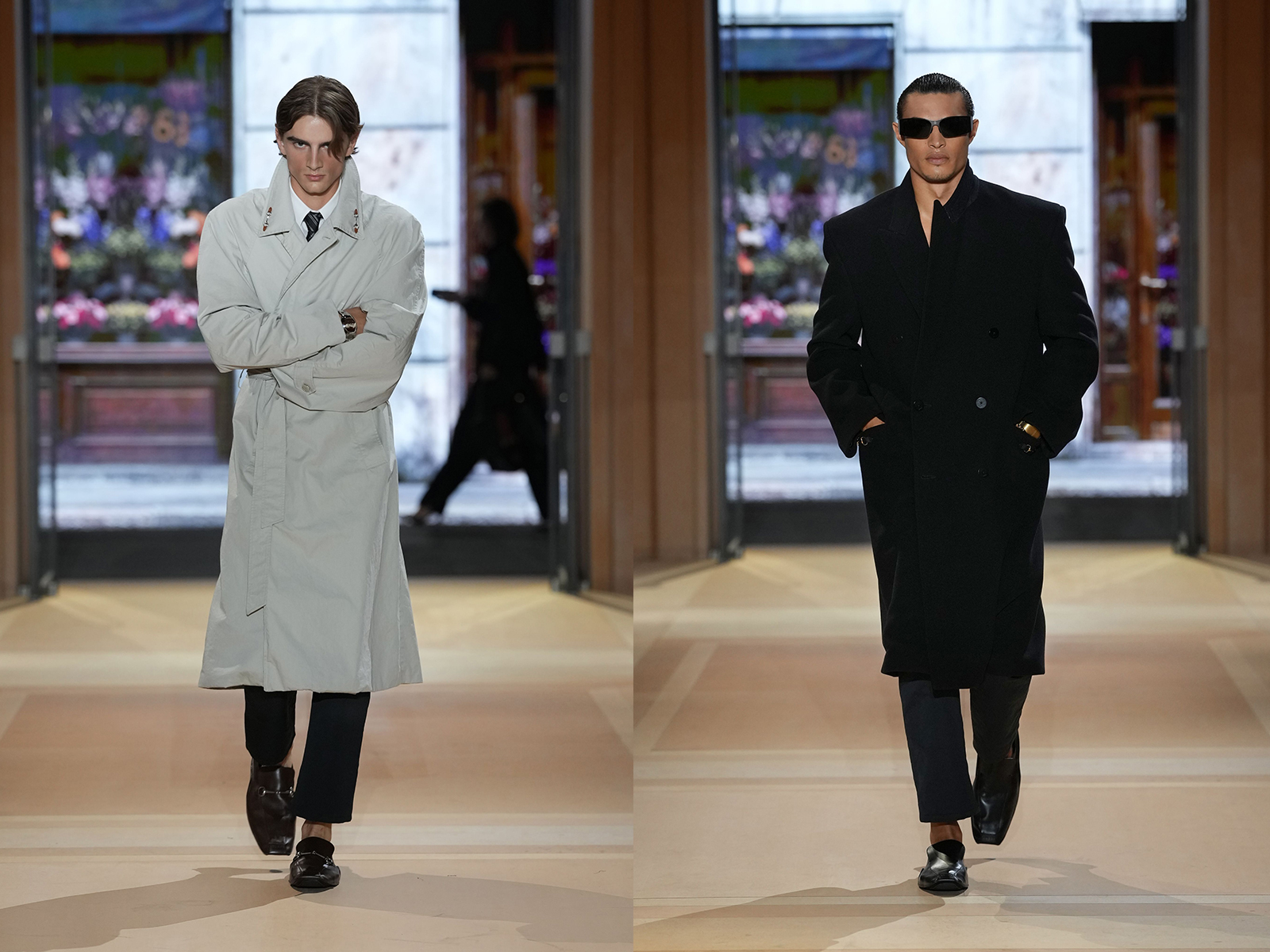

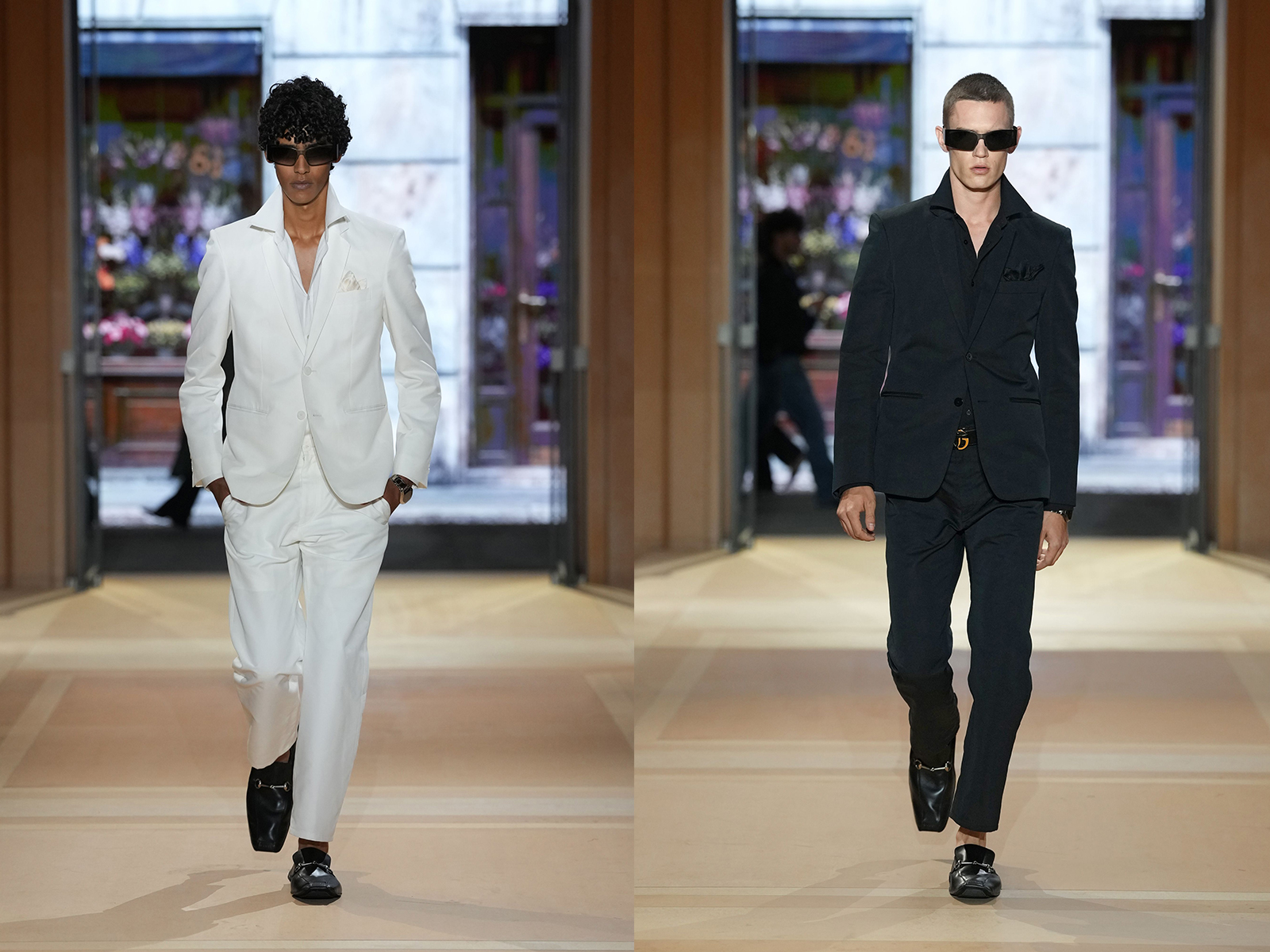
Demna’s Gucci man arrives with a wardrobe to shake up, but first he has to establish a few standards. The black suit. The white suit. The wool overcoat. The pea coat. The double-breasted coat. More black. More white. More tailoring. It is almost a checklist of menswear, which is precisely why the collection gets interesting when Demna starts messing with it.
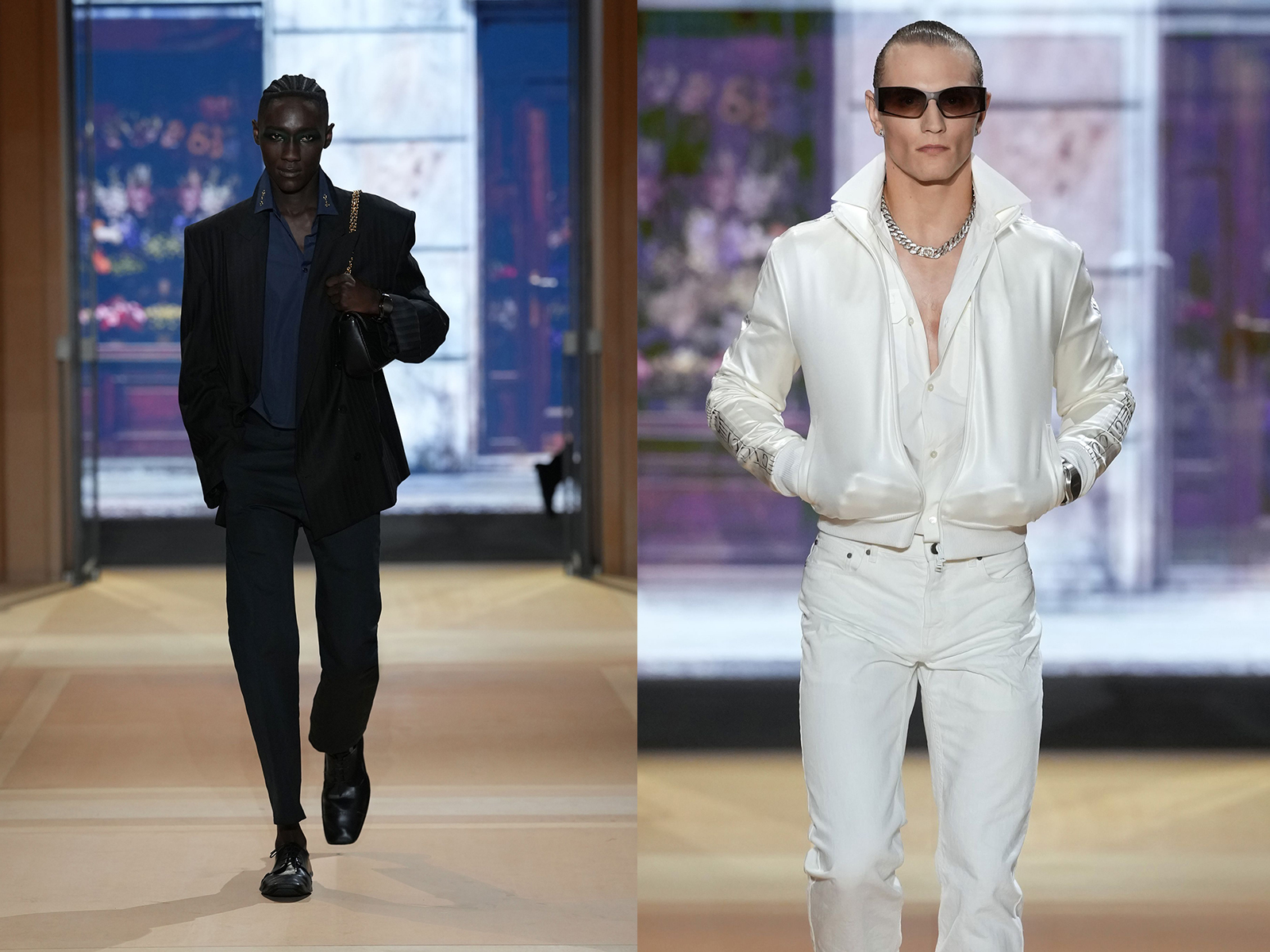
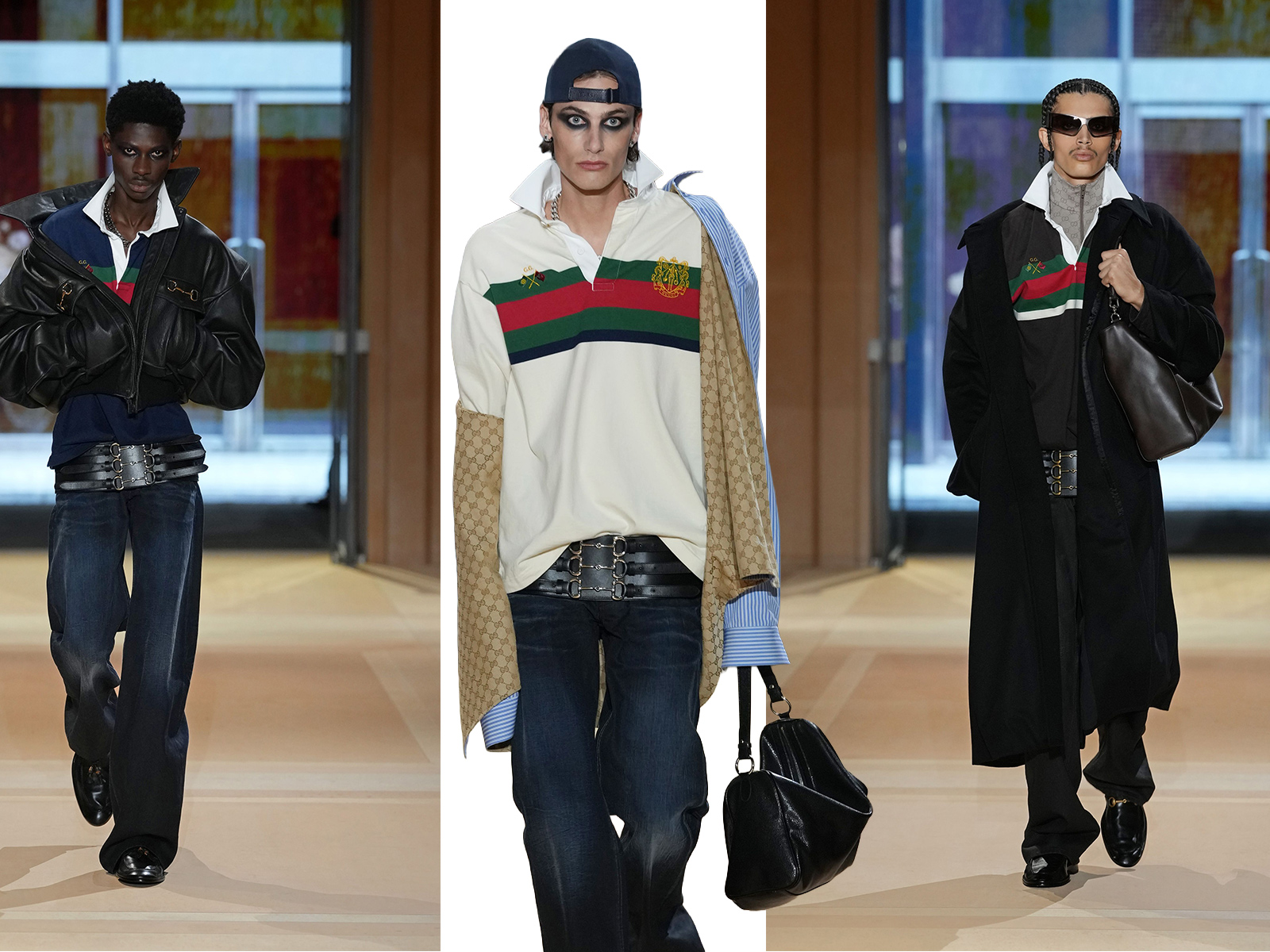
The first move is preppy, although Gucci’s version has little interest in behaving. White denim, rugby shirts, loafers, short bombers and tailored jackets pull from the familiar language of prep, then push it toward something more louche. There is a distinctly retro Gucci quality to it, which somehow makes it feel new again. Demna is resurrecting the house’s old-world Italian confidence without treating it too reverently. Vogue described the collection’s twisted preppy looks as “boarding schoolers gone bad,” which is about right.
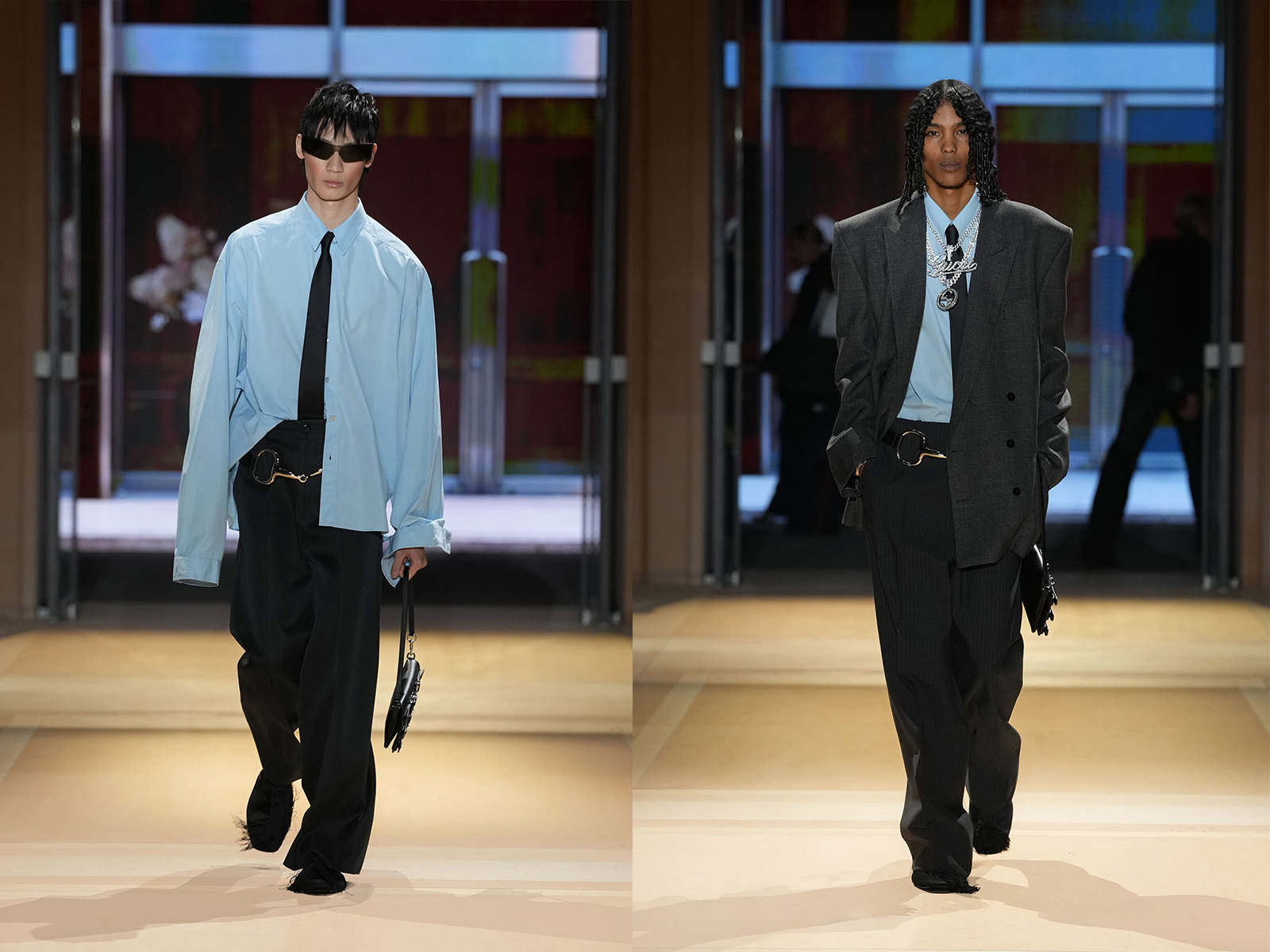
Then the clothes get a little less buttoned up. Jeans drop low on the hips, belts become oversized and the styling acquires a calculated dishevelment. The enormous multi-Horsebit belt is perhaps the most obvious gesture, turning the old low-slung-jean-and-visible-underwear attitude into a luxury-house proposition. It is fashion archaeology, but with very expensive hardware.
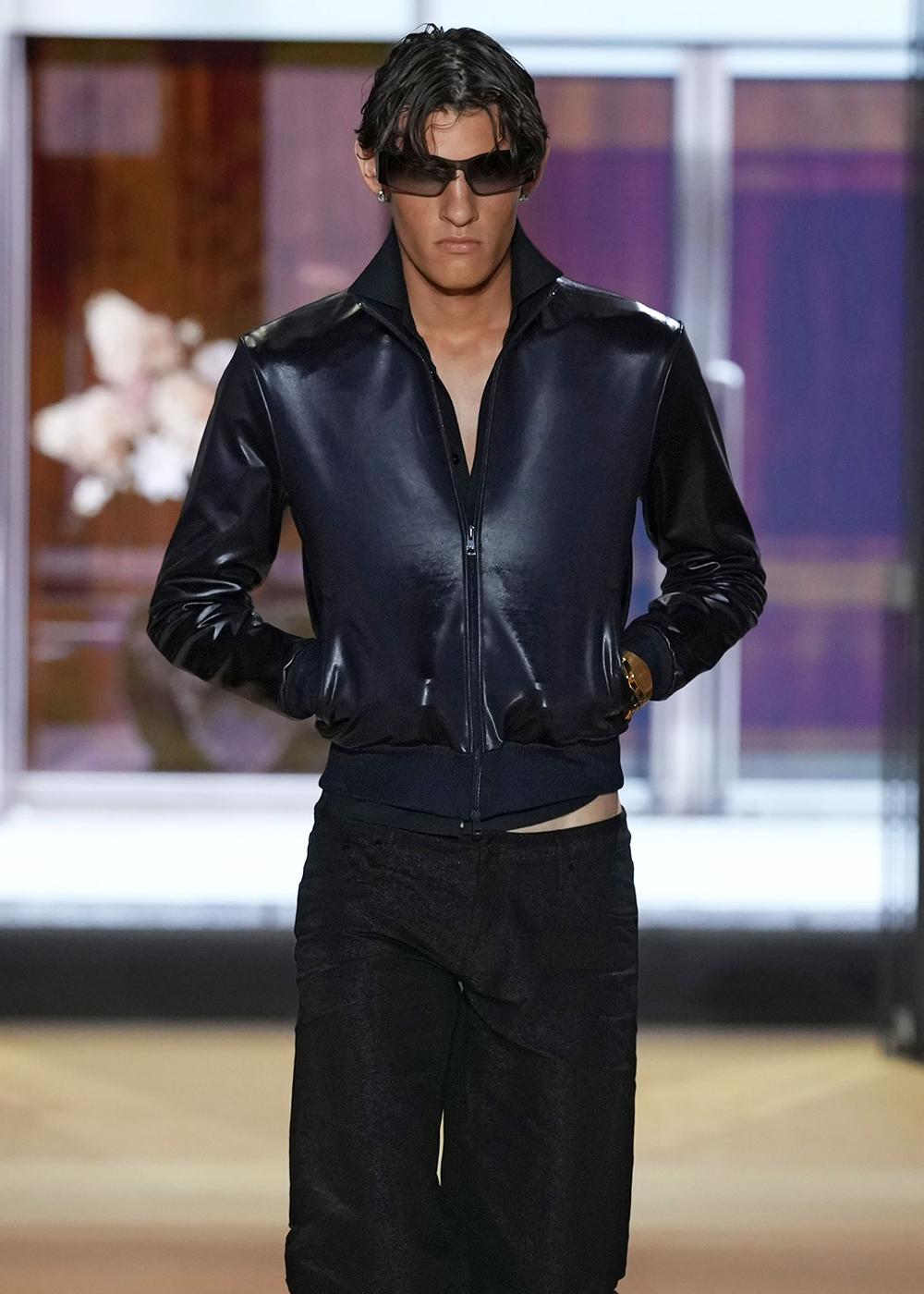
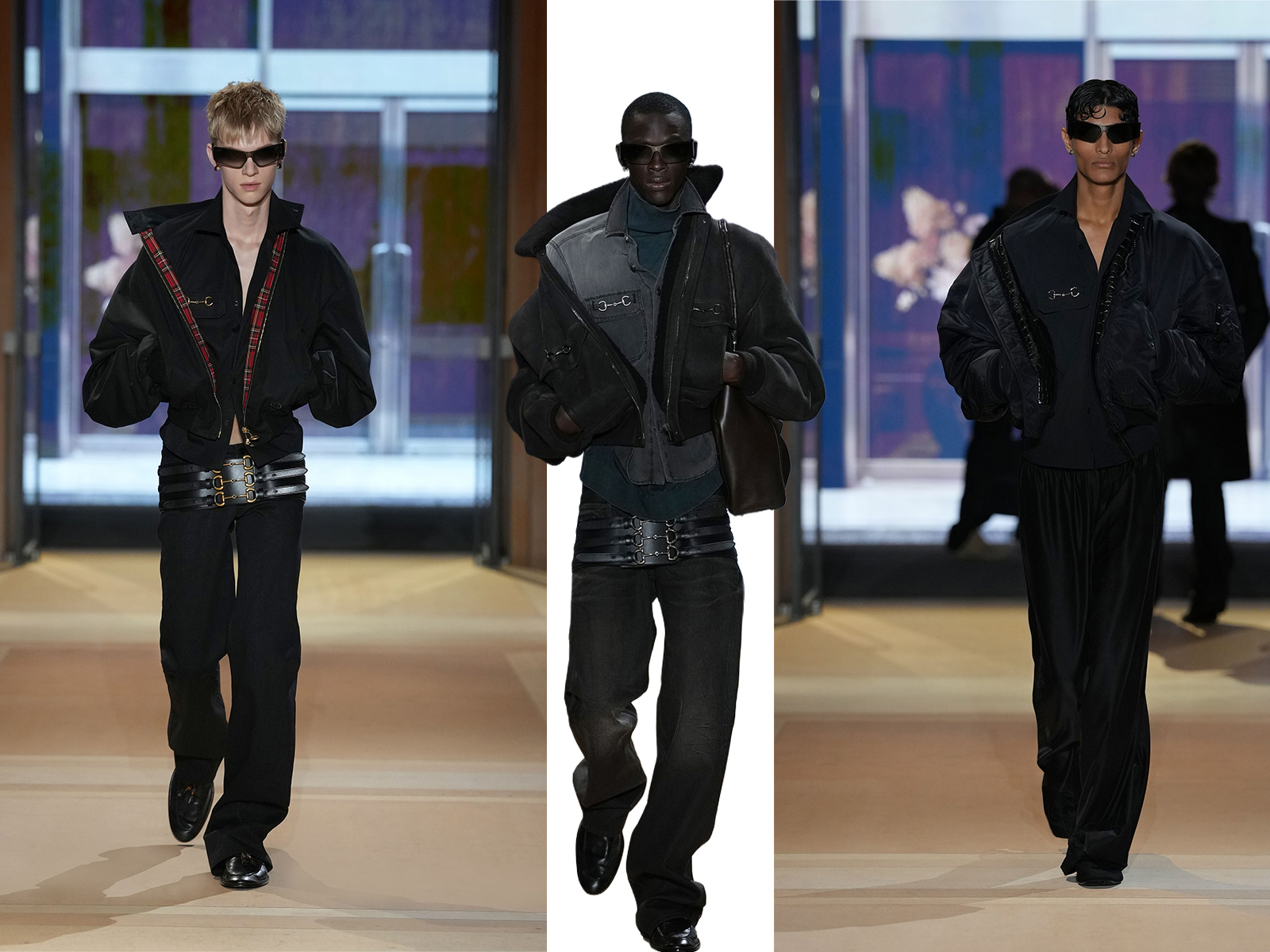
The tailoring is where Demna starts to show his hand. The shoulders are strong and the jackets often feel close to the body rather than swallowed by fabric. Long wool coats give the silhouette authority, while the double-breasted coats and oversized outerwear introduce a more generous proportion. Gucci’s own description of the collection emphasizes the importance of new silhouettes and statement outerwear, and that seems to be where Demna is most interested in moving the house forward.
After so much Gucci shorthand, the oversized pieces come as a welcome change. A huge white coat has real presence. Long, roomy coats make the more familiar tailoring feel newly proportioned. Even the small bomber jackets are interesting because they interrupt the parade of long coats and narrow trousers with something compact, rounded and youthful.
The best casual looks remain unmistakably Gucci: crisp, sexy, Italian, streamlined and just a little bit decadent. There is plenty here that a Gucci customer will immediately understand. But recognizable is not necessarily the same thing as fresh.
That is the tension in Demna’s second Gucci collection. He is clearly working through the house’s enormous cultural archive — the equestrian codes, Italian bourgeois dressing, ’90s Gucci, prep, sex, tailoring — and putting those ingredients back on the table.
Sometimes the result feels like Gucci rediscovered. Sometimes it feels like Gucci remembered.
The collection gets most interesting when Demna stops adding references and starts changing the proportions. That is where the new Gucci begins to appear. Gucci.