Jonathan Anderson’s first Resort collection for Dior transformed Los Angeles into a study in cinematic tension, where liquid bias-cut gowns, unraveling tweeds, and severe tailoring proposed a new vocabulary for red-carpet dressing — one rooted less in performance and more in atmosphere.
At the Resort 2027 presentation for Christian Dior at LAMAC, Jonathan Anderson proposed something else entirely.
Not rebellion exactly. But disturbance.
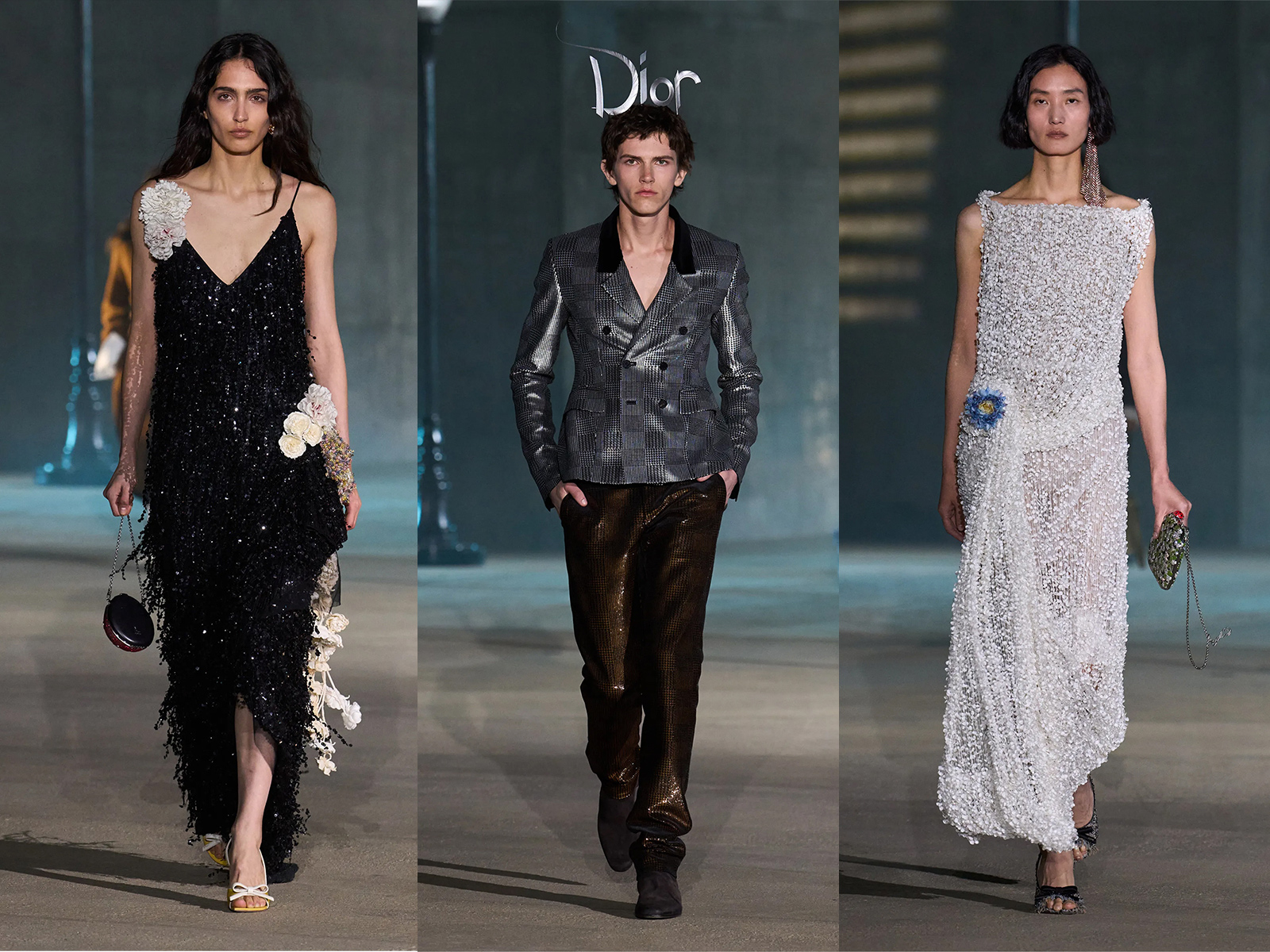

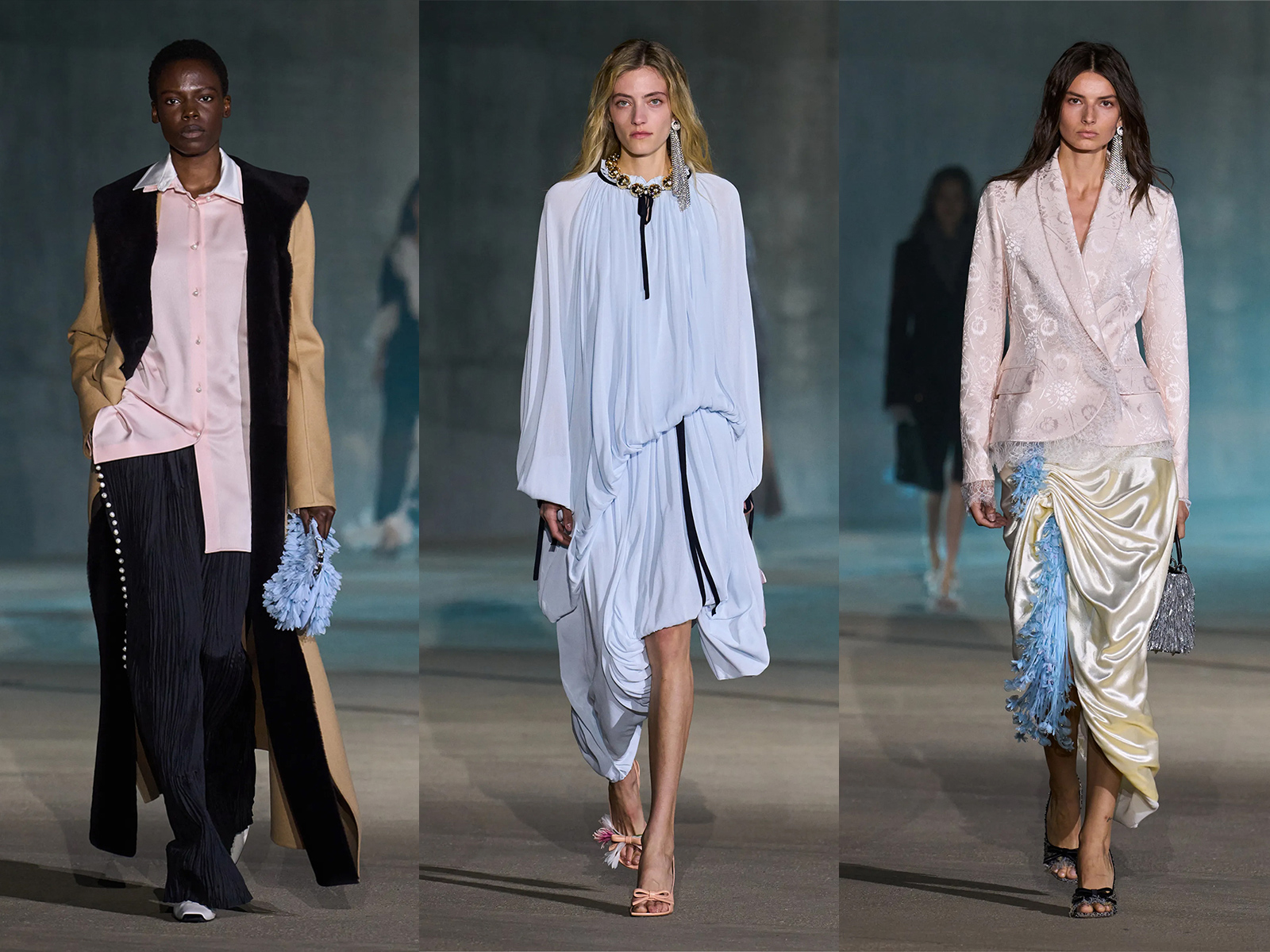
The collection unfolded like a cinematic montage assembled from fragments of old Hollywood, downtown Los Angeles severity, and the intellectual romance that has long haunted Dior at its best. Anderson looked toward Marlene Dietrich as both symbol and provocation — the woman who weaponized tailoring, blurred masculine and feminine codes, and understood that elegance becomes far more compelling when sharpened by contradiction.
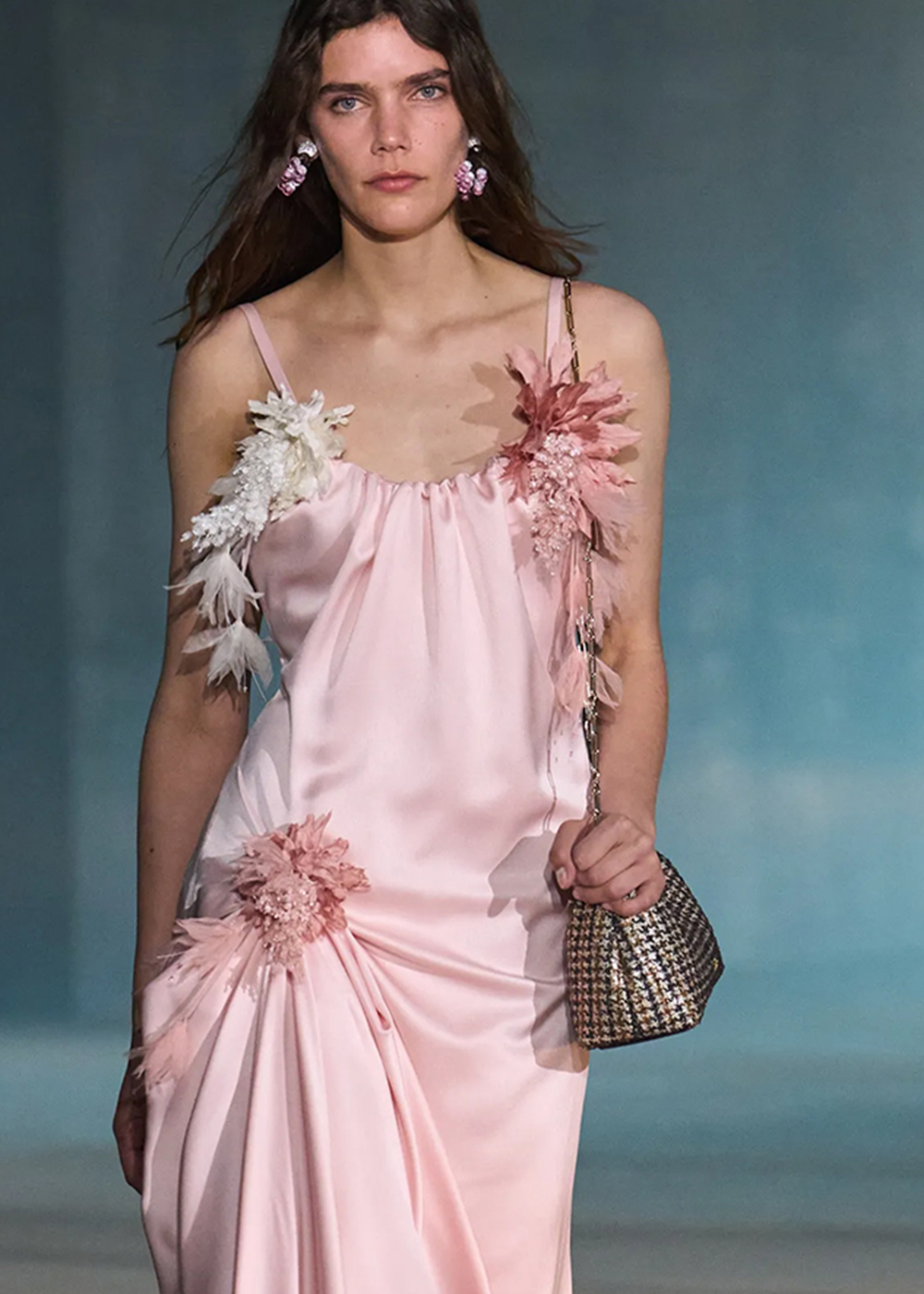
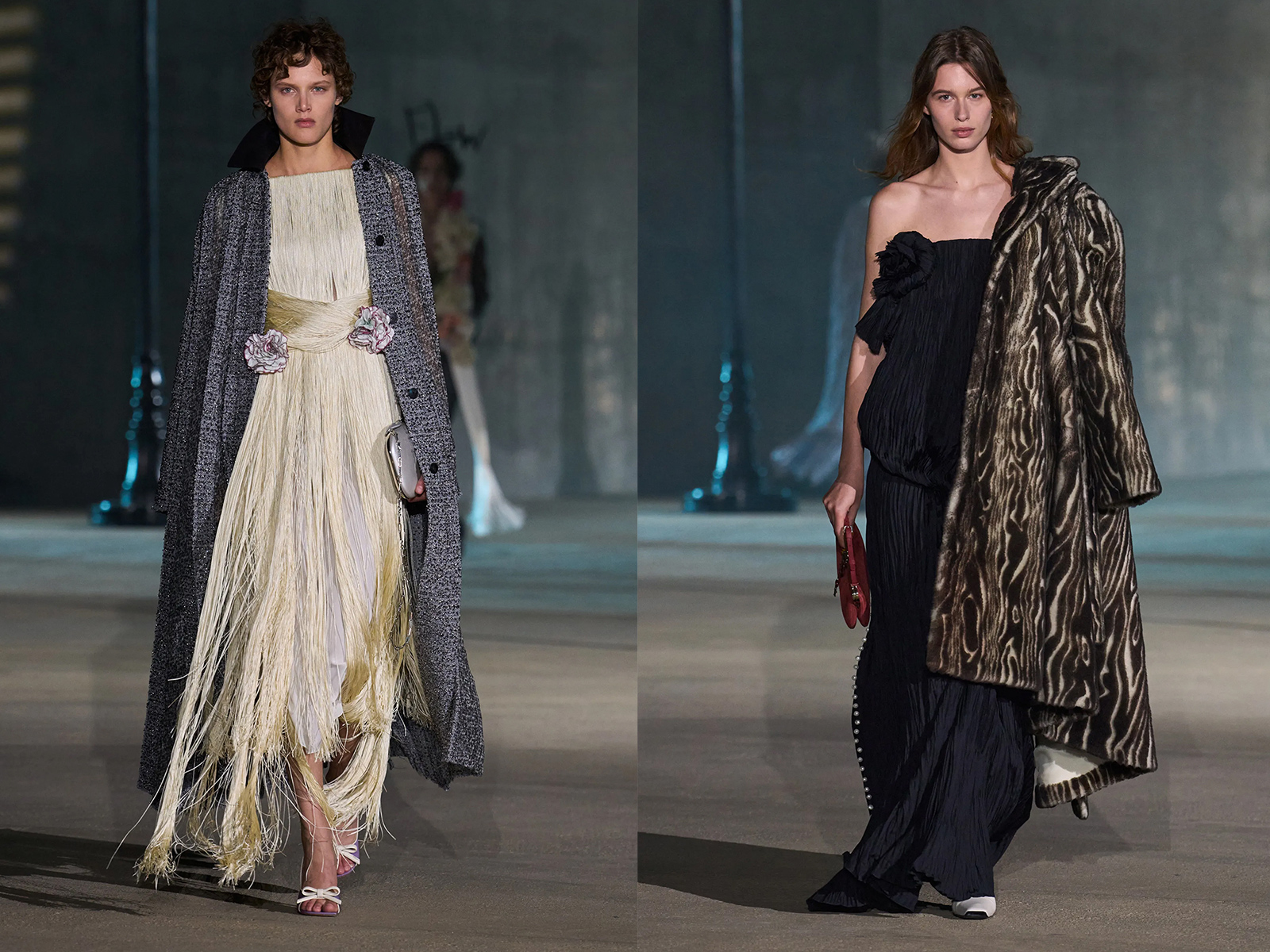
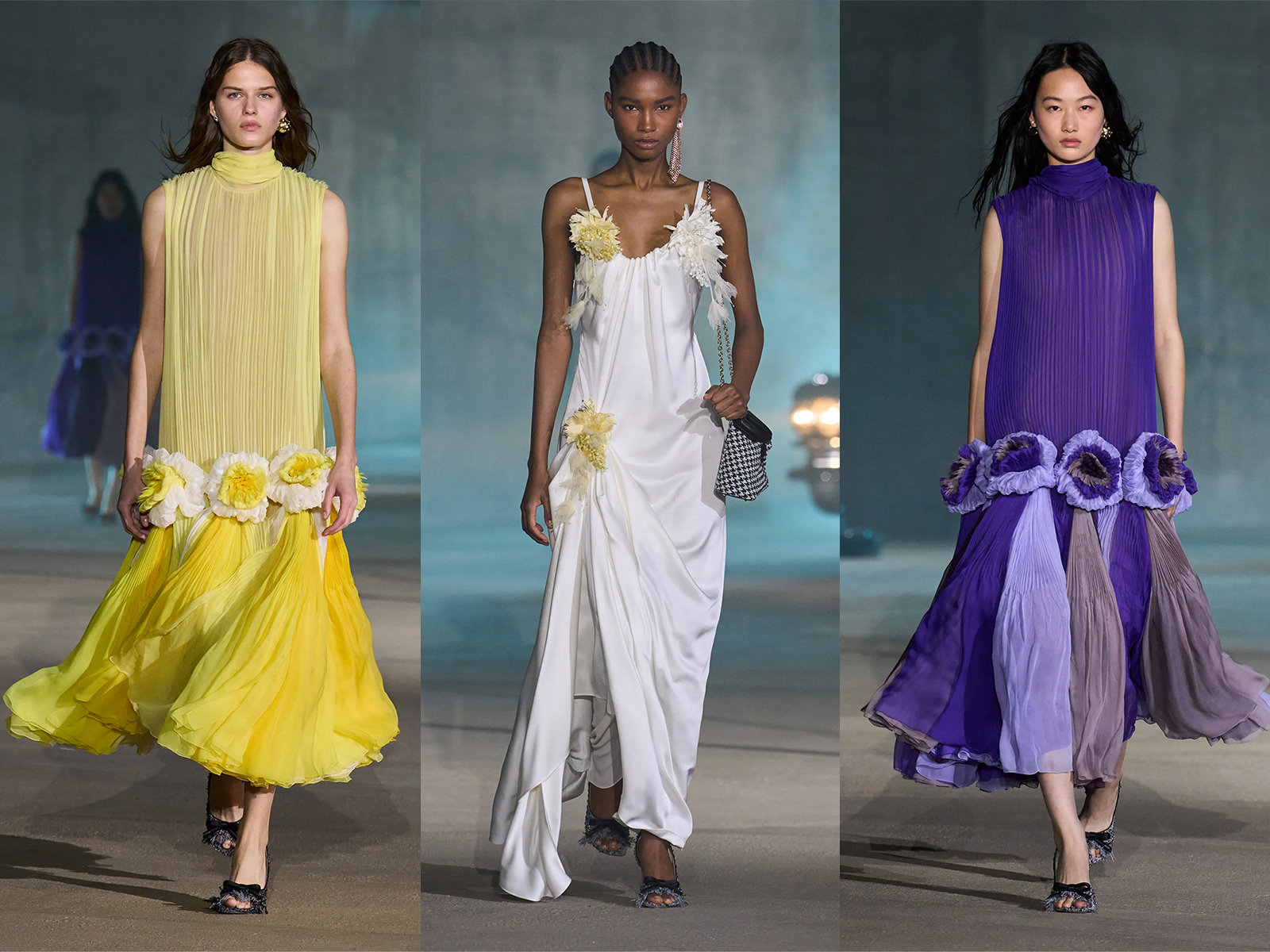
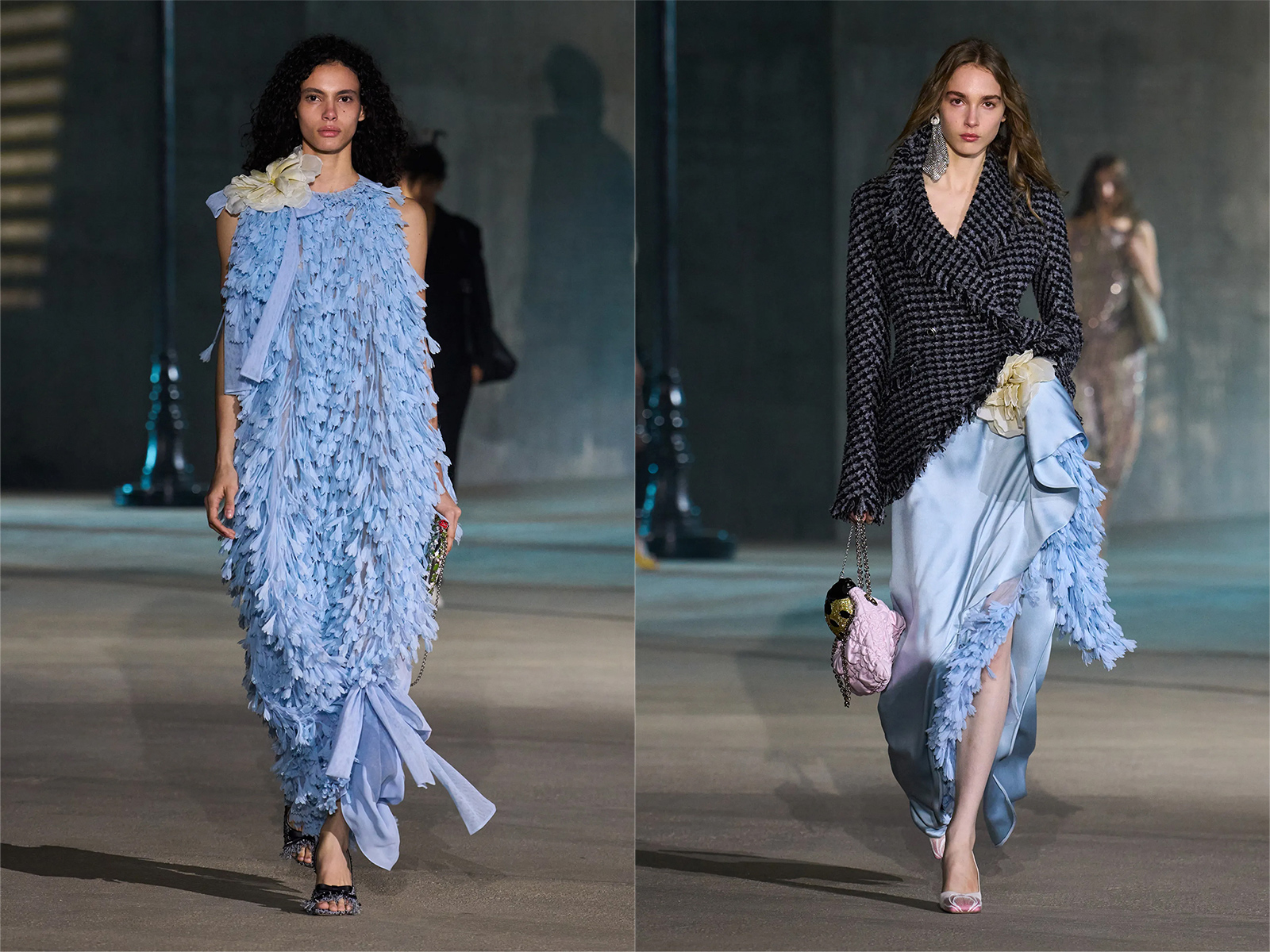
That tension coursed through the collection. Eveningwear was undone, elongated, loosened from its expected architecture. Dresses moved less like garments than weather systems. Threads trailed and drifted. Rope-like fringes swung from the body with the instability of sea grass underwater. Satin slipped diagonally across hips in asymmetric cuts that felt improvised and impossibly precise at once.
It was a parade full of exquisite things and deceptively plain-seeming things: bias-cut satin slivers caught mid-motion, Donegal Bar jackets dissolving into filamented threads, chiffon twisted into bruised rosettes, gowns buried beneath fields of floral appliqué, and trailing constructions that hovered somewhere between boas and unraveling opera costumes.
The womenswear carried a remarkable sense of suspension. Fabrics never appeared fixed. Silk, chiffon, sequins, and gauzy netting were manipulated to create movement before the wearer had even taken a step. Anderson seemed fascinated by garments that refuse stillness — clothing designed not merely to photograph, but to sway, drag, flicker, and unravel under light.
Floral embellishments emerged not as sweetness but as interruption: bruised blossoms pinned at the hip, rosettes collapsing into fabric, blooms that looked halfway between couture decoration and cinematic decay.
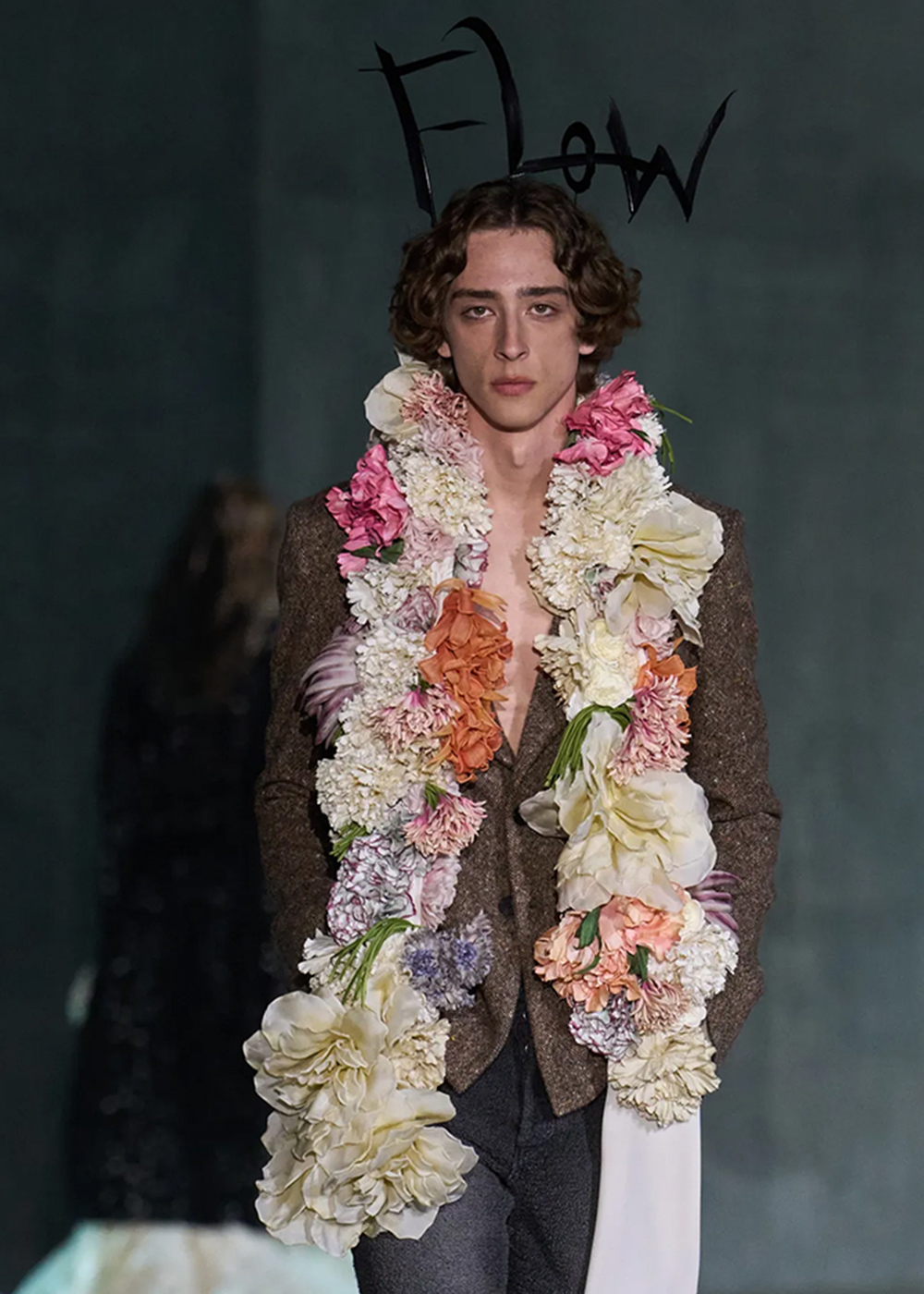
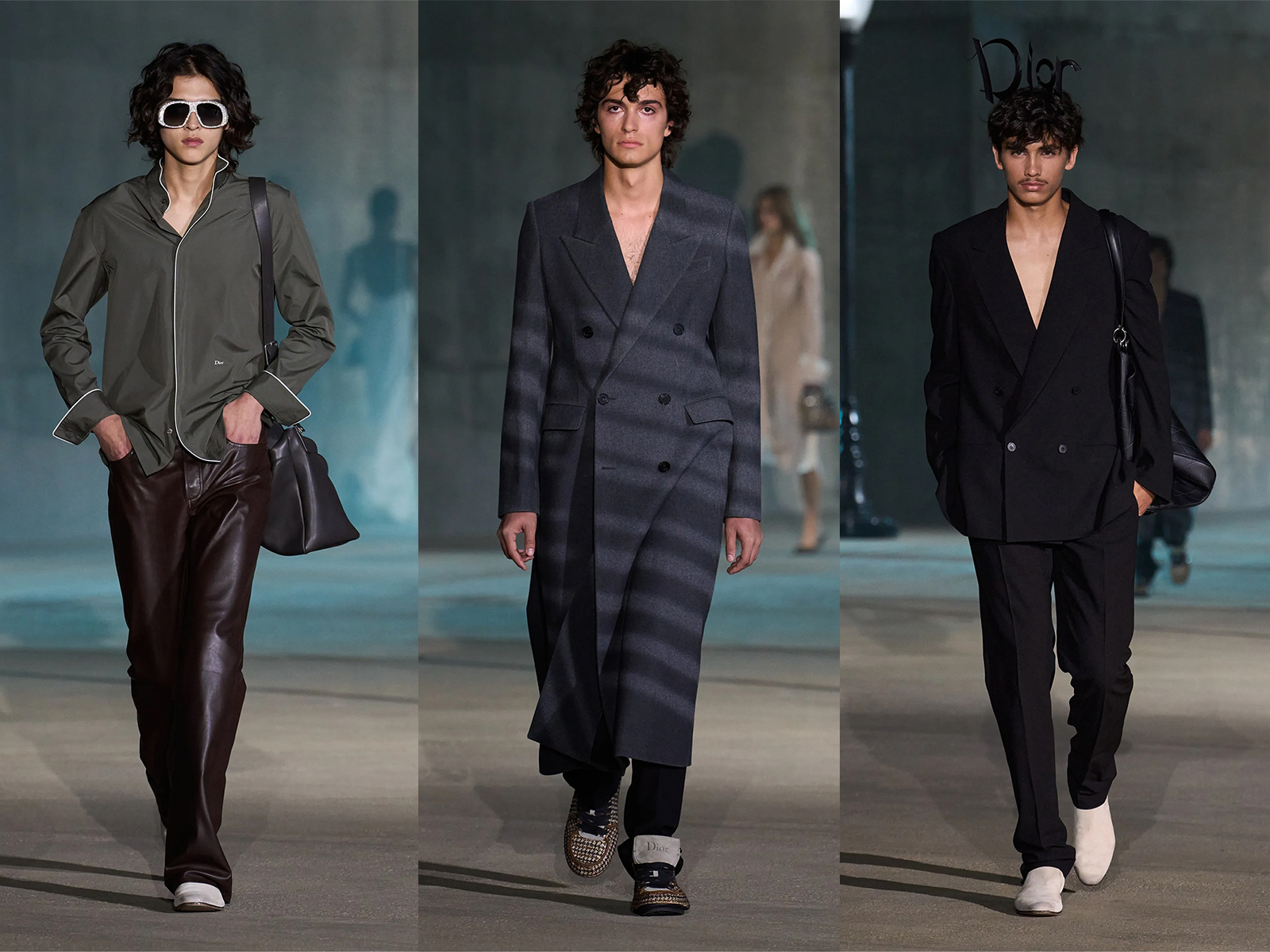
The menswear, meanwhile, distilled the same atmosphere into a darker register. Anderson’s tailoring avoided the aggressively sculpted proportions dominating contemporary red carpets. Jackets fell with a deliberate looseness. Double-breasted coats carried a long, elegant severity reminiscent of Dietrich’s tuxedo years, while narrow trousers and soft boots elongated the figure without theatricality. Black dominated, though never flatly; the fabrics absorbed light with a matte richness that felt deeply cinematic.
The collaboration with Philip Treacy added moments of surreal punctuation. Treacy’s millinery introduced exaggerated silhouettes and shadow-play that pushed certain looks toward dream imagery rather than nostalgia. Meanwhile, the contribution of Ed Ruscha grounded the collection firmly in Los Angeles mythology. Ruscha’s text-based sensibility and longstanding fascination with the vernacular landscapes of Southern California echoed through the presentation’s atmosphere — a reminder that Los Angeles is not only glamour, but signage, emptiness, asphalt, dusk, and distance.
Anderson’s dialogue with Dior’s history felt especially intelligent because it resisted quotation. Rather than reproducing signatures from former creative directors, he seemed to absorb their emotional vocabulary. There were flashes of the intellectual rigor associated with Yves Saint Laurent at Dior, echoes of the theatrical fragility that marked certain John Galliano collections, and an undercurrent of refined severity recalling Raf Simons. Yet none of it felt archival or referential in the predictable sense.
Instead, Anderson proposed a new silhouette language for a city addicted to spectacle.
In Los Angeles — where red-carpet dressing has become its own industrial category — this collection introduced drape, asymmetry, texture, and instability back into the conversation.
The most compelling looks in the collection felt unfinished in the best possible way — garments alive enough to continue transforming after leaving the runway. And perhaps that was Anderson’s sharpest observation about Los Angeles itself: beneath all its image-making machinery, it remains a city obsessed with becoming.