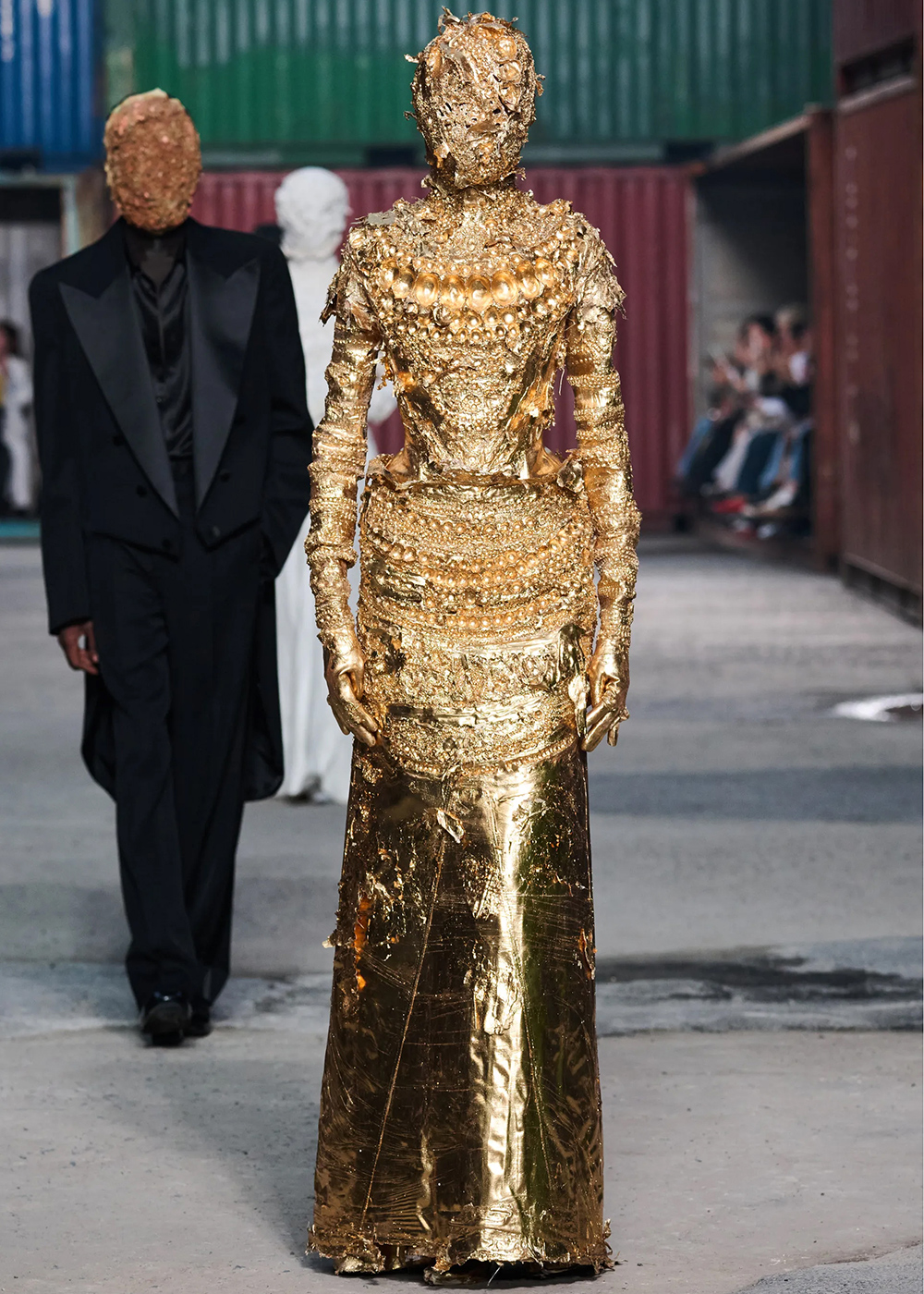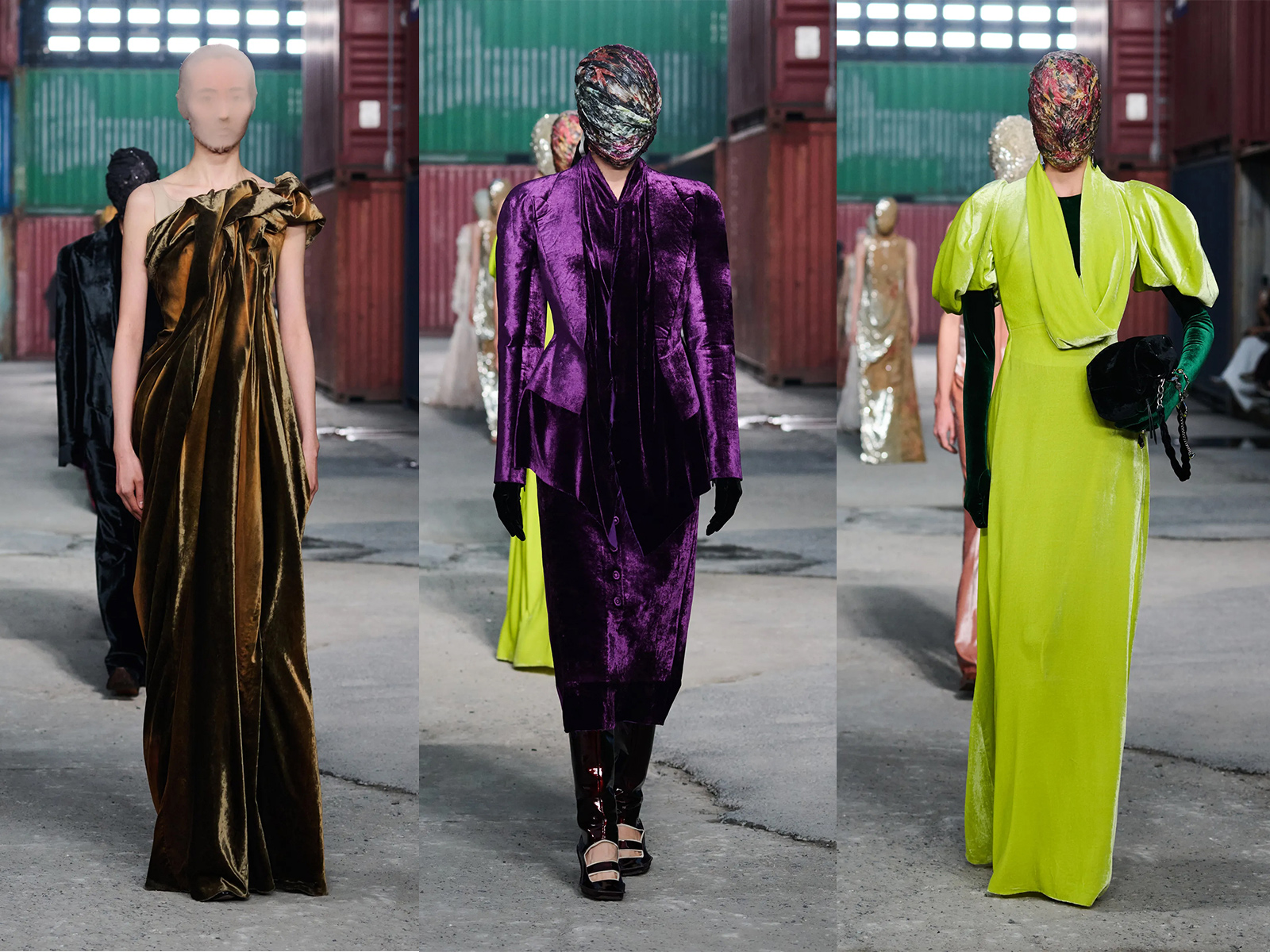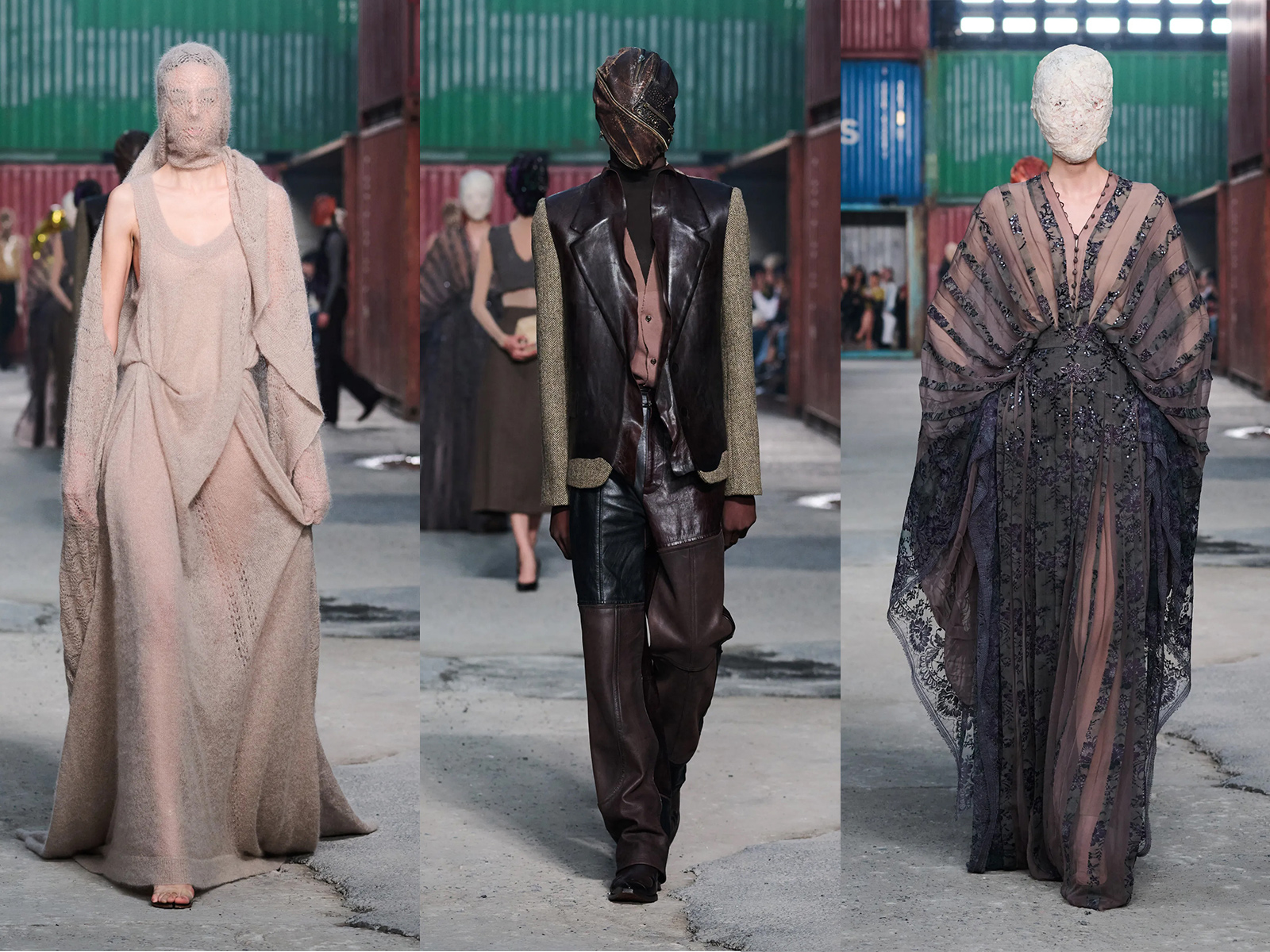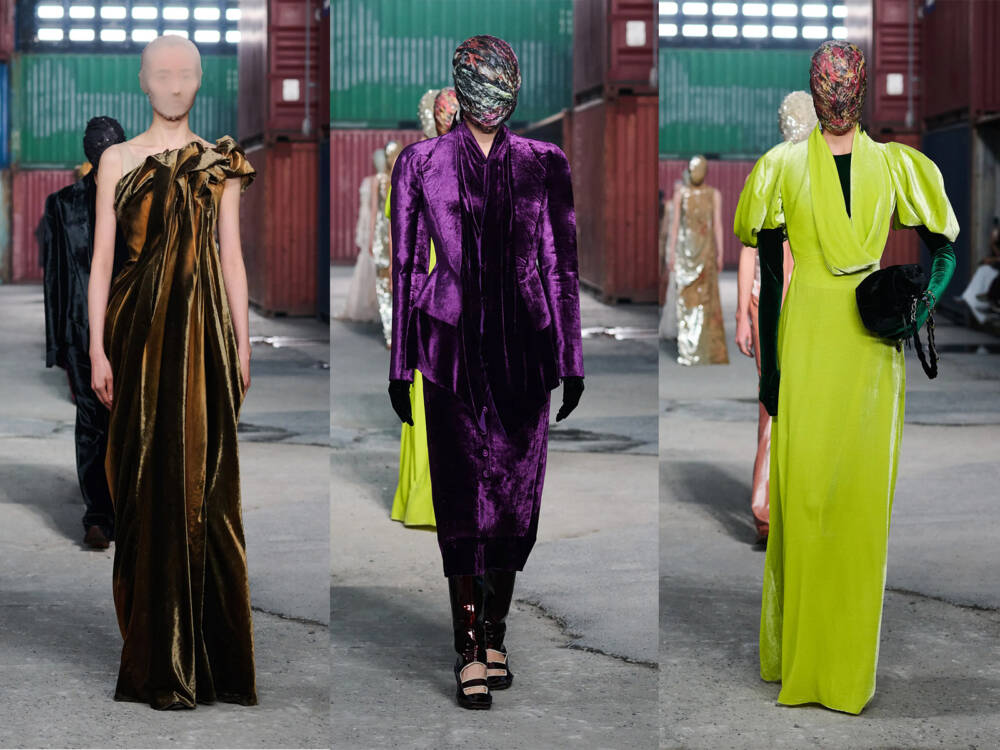

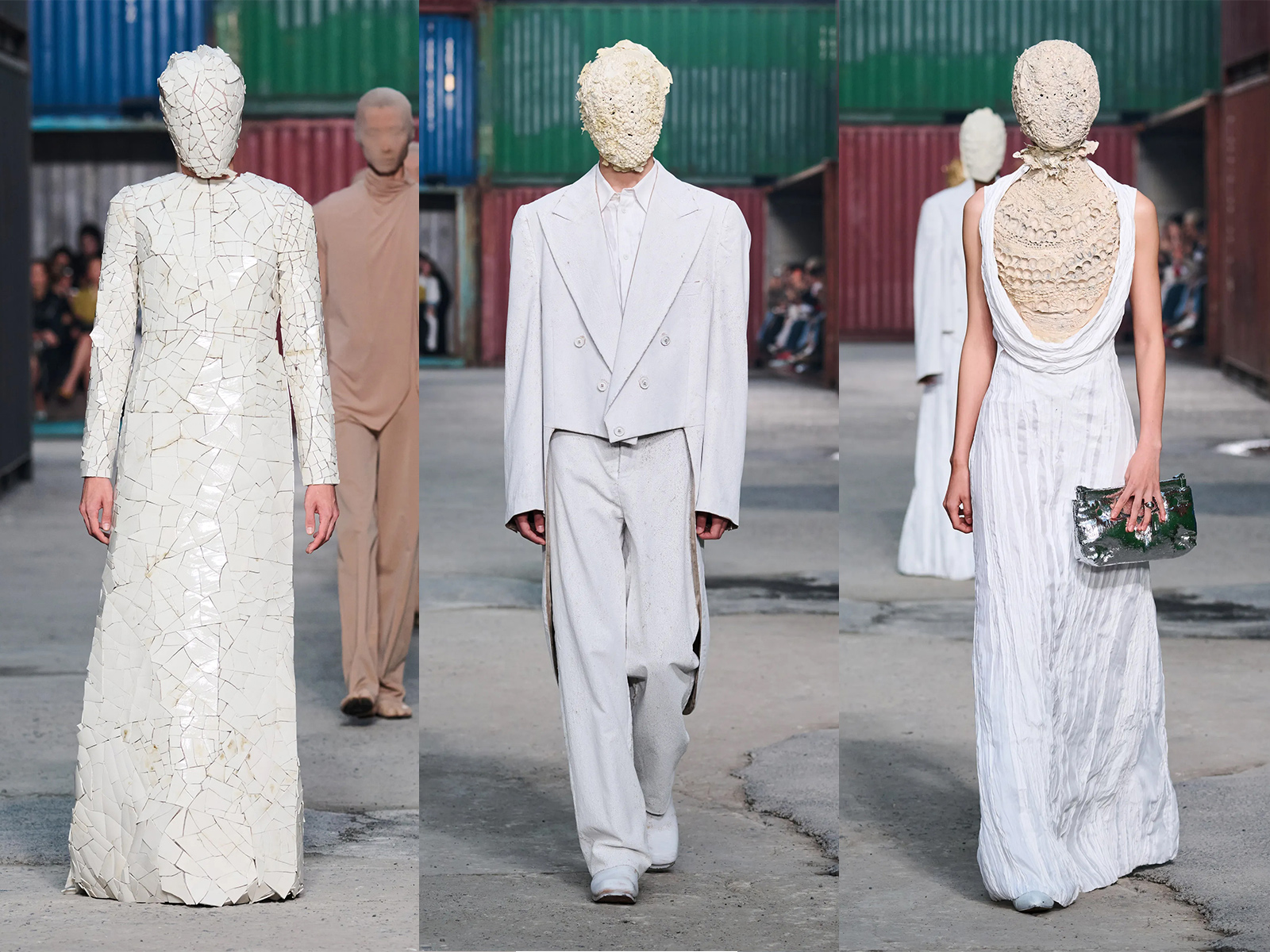
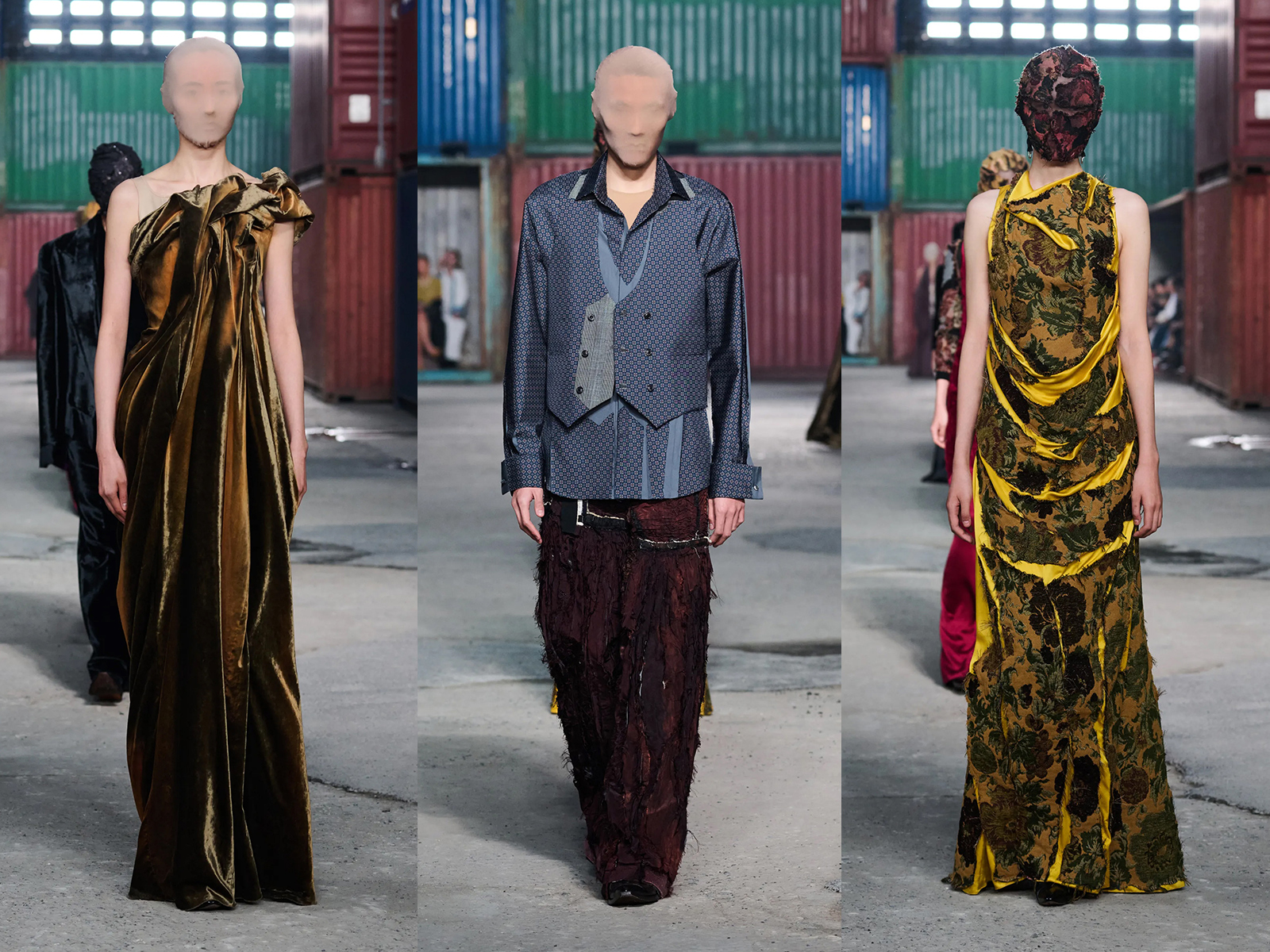
The Fall 2026 collection from Maison Margiela, presented in Shanghai, operates with a stricter, more controlled language than initially suggested—less theatrical fragmentation, more containment. The garments do not unravel. They hold.
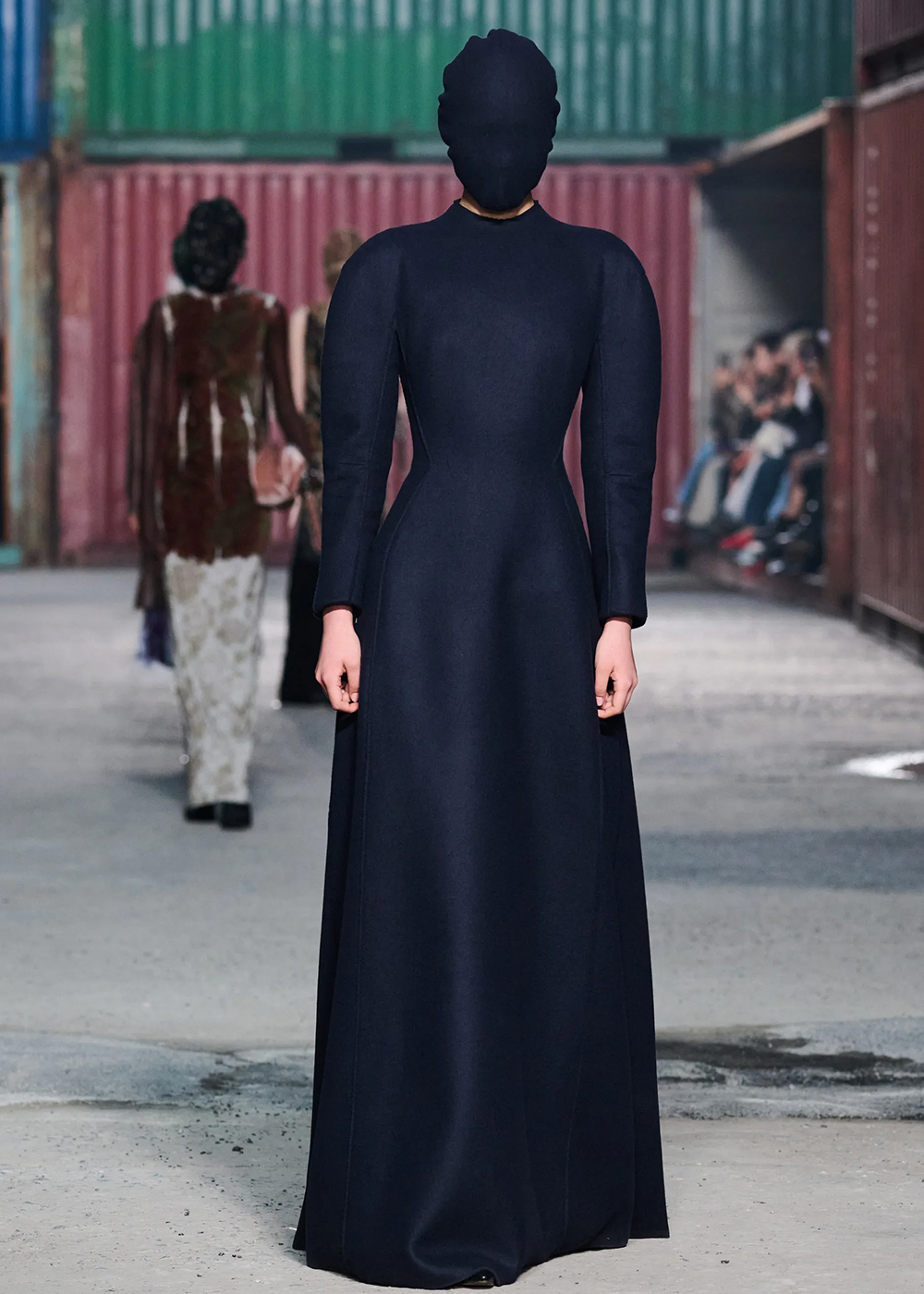
Nowhere is this more precise than in the blue dress.
It stands as a kind of axis for the collection. Severe, uninterrupted, and almost devotional in its construction, the silhouette recalls late 19th-century restraint, but without quotation or sentimentality. The line is exacting: a high, closed neckline, elongated sleeves, and a continuous fall to the floor that refuses interruption. There is no gesture toward ornament. No softness offered to the viewer.
And yet—it is undeniably beautiful.
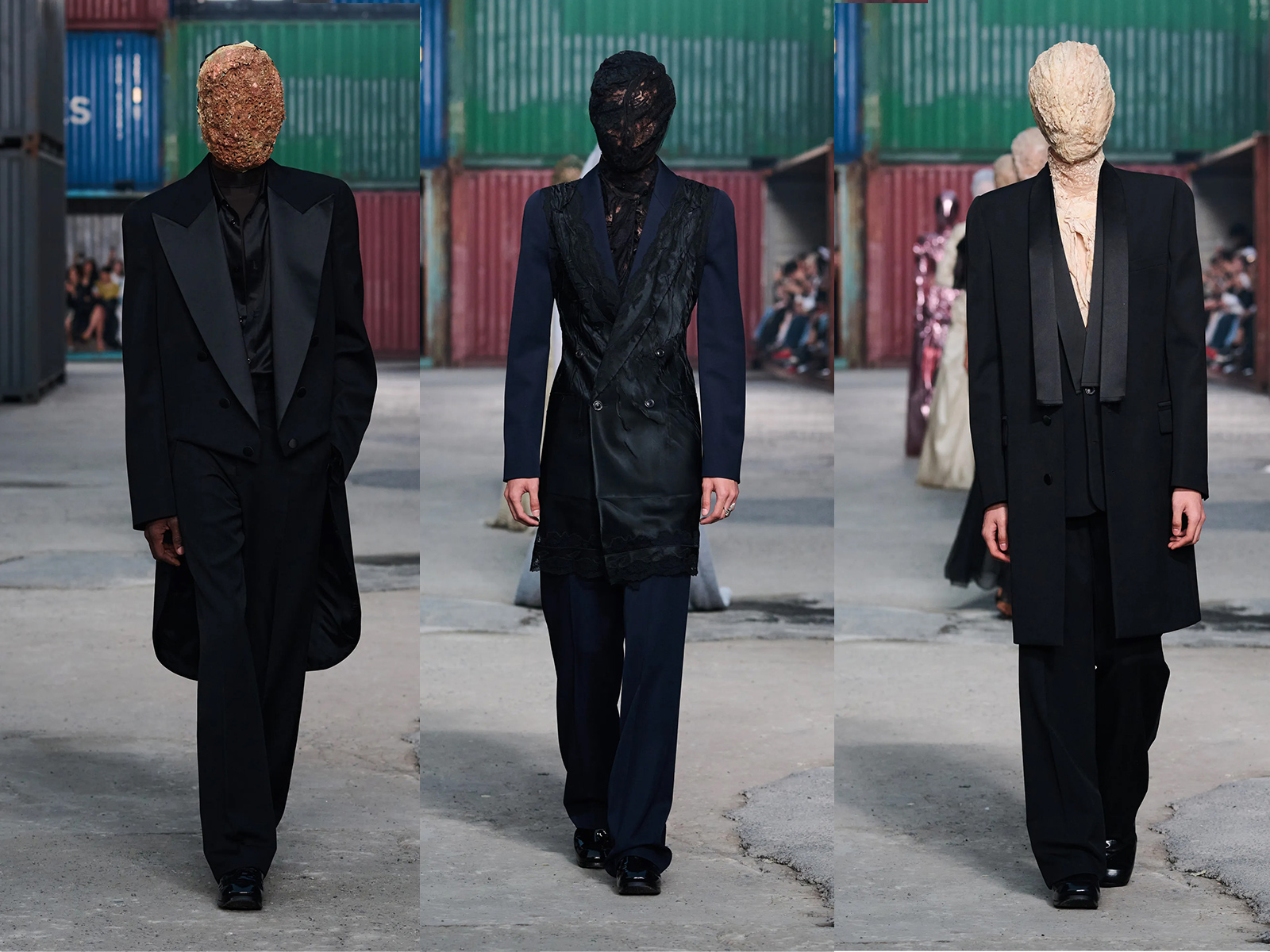
The fabric appears dense, possibly felted or heavily treated, absorbing light rather than reflecting it. It does not move with the body so much as govern it. The figure becomes secondary, nearly abstracted into a vertical presence. The covered face completes this removal. Identity is not obscured for drama—it is simply irrelevant.
This is where the collection’s material logic becomes clear.
The use of beeswax-treated garments—particularly those derived from 19th-century dresses—is not about decay or romantic ruin. It is about fixing time in place. The wax does not embellish; it arrests. Fabrics are sealed, stiffened, quieted. What was once pliable becomes resistant. What once followed the body now exists independently of it.
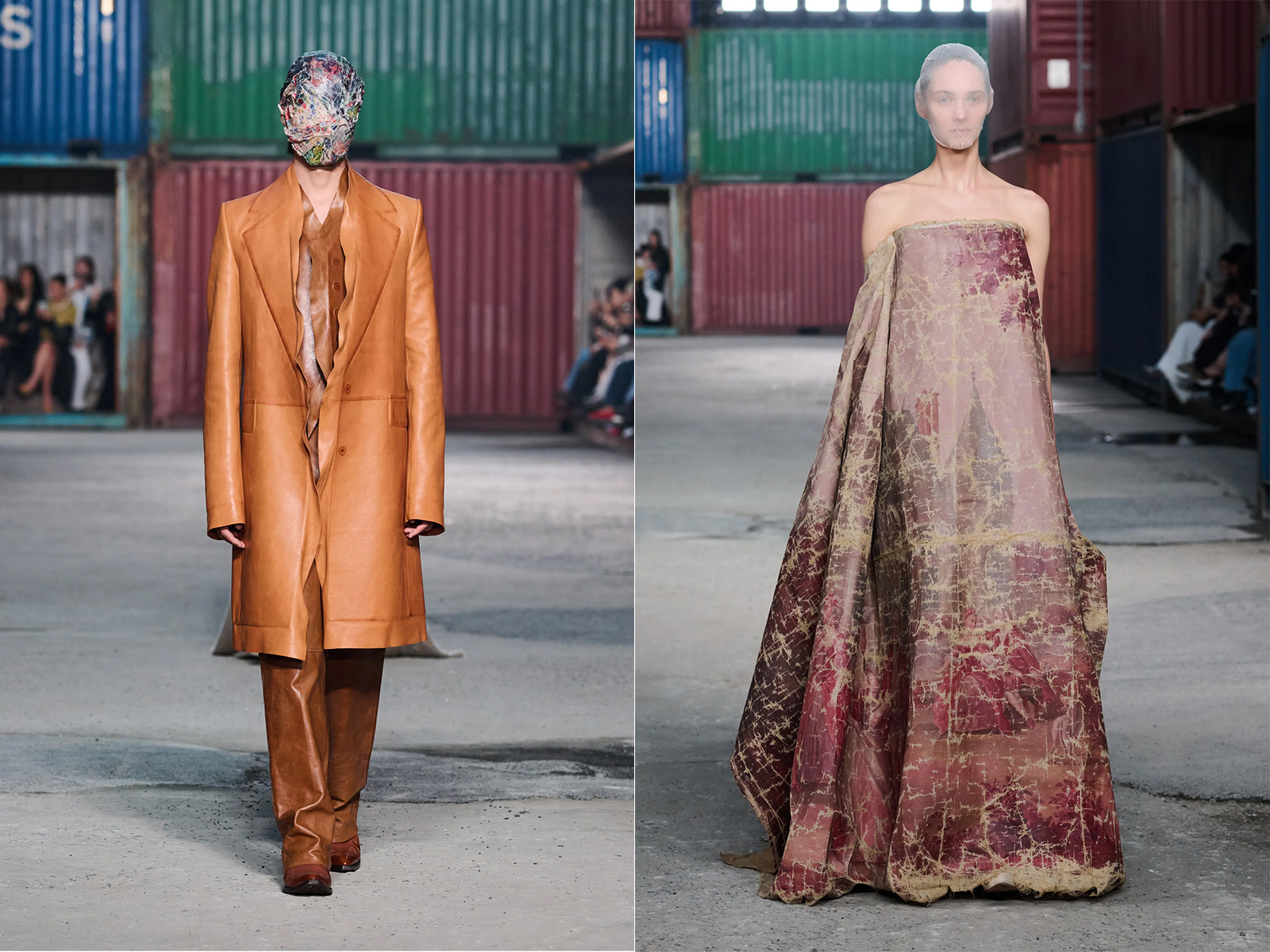
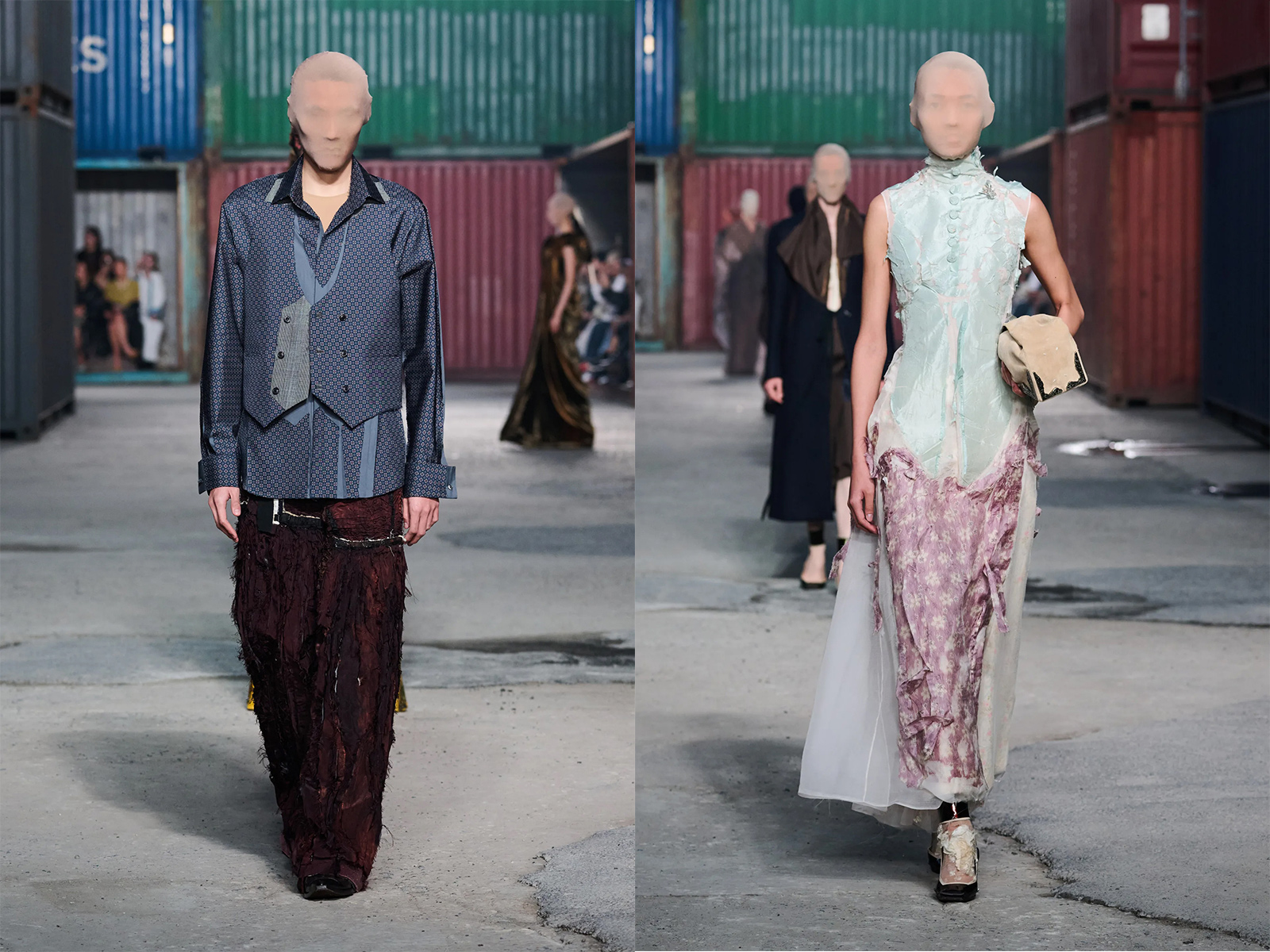
Across both womenswear and menswear, this tension holds. Tailoring appears familiar at a distance—coats, jackets, elongated forms—but up close, something is slightly off. Proportions resist ease. Surfaces feel treated, altered, or withheld. There is a subtle refusal of fluidity.
In contrast, moments of sheer fabric—organza, gauze—do not reveal the body in any conventional sense. Instead, they create a secondary layer of distance. The sheer becomes atmospheric, not intimate. It separates rather than exposes.
What distinguishes this collection from other recent returns to period reference is its lack of nostalgia. There is no attempt to revive or reinterpret historical beauty. These garments are not inspired by the past—they are processed through it. Preserved, altered, and repositioned into a present that feels uncertain of its own continuity.
This is why the collection feels relevant now.
There is a growing cultural preoccupation with preservation—of objects, of identity, of meaning—alongside a simultaneous awareness that preservation changes the thing itself. Margiela leans directly into that contradiction. These clothes do not pretend to survive untouched. They show the cost of endurance.
And perhaps that is where the blue dress resonates most strongly.
It reads as puritanical, yes—but also as resolved. In a collection where many garments feel suspended between states, this one feels absolute. Not nostalgic, not futuristic. Simply fixed. Entire.
By the end, the faces—covered, erased, neutralized—recede almost completely from consideration. What remains are the garments themselves, standing in quiet opposition to the idea that fashion must move, seduce, or explain.
Here, it simply exists.