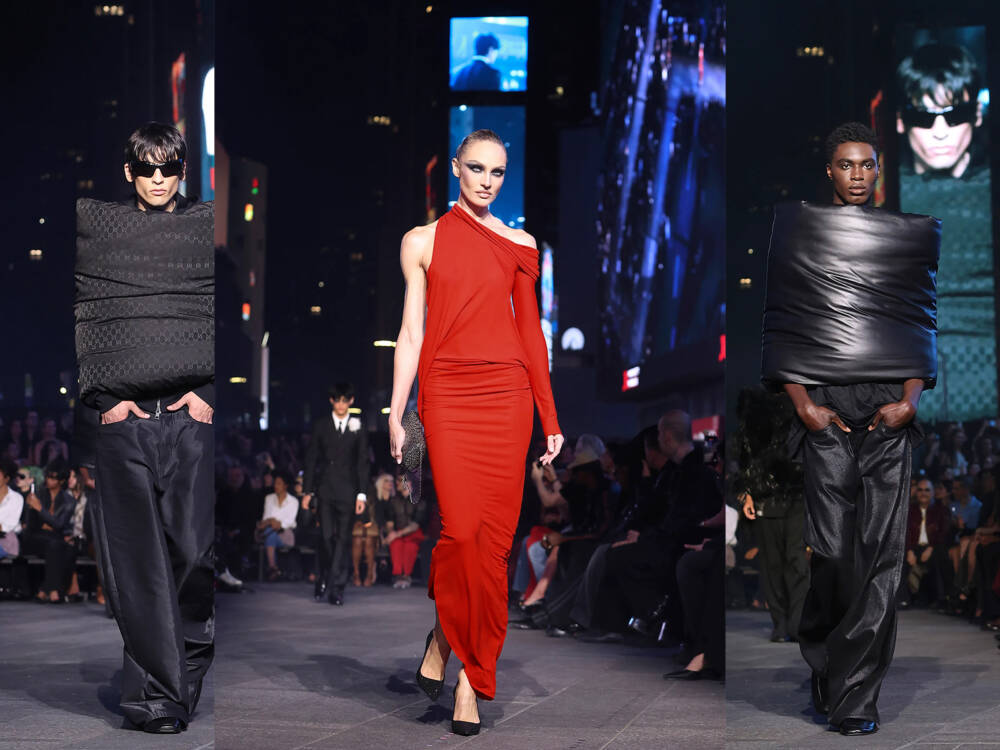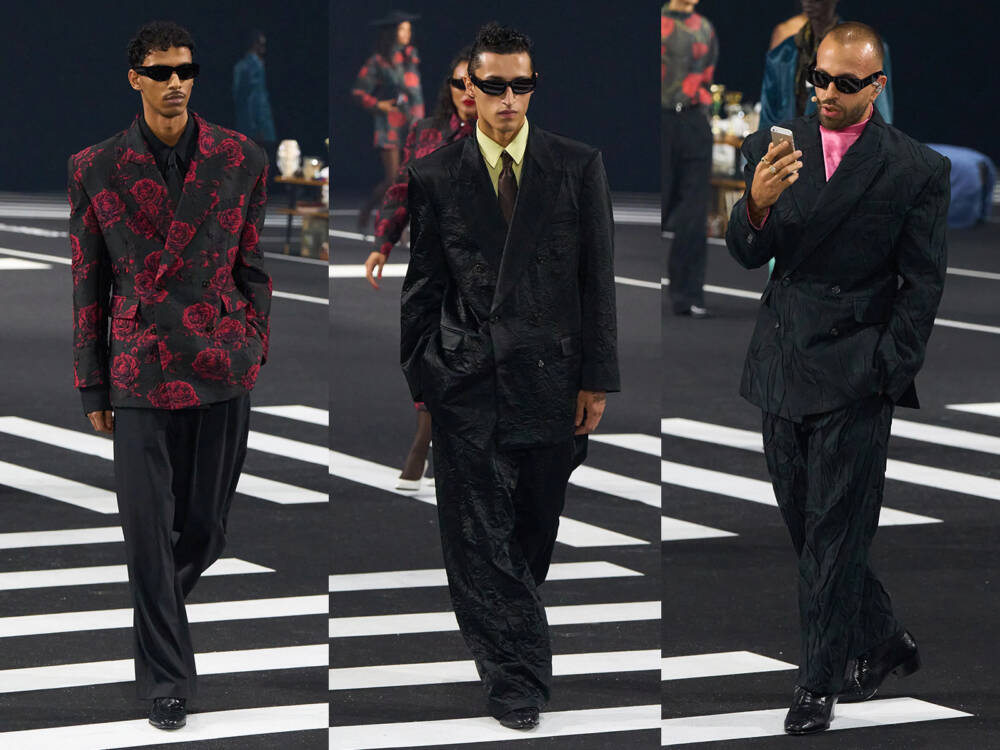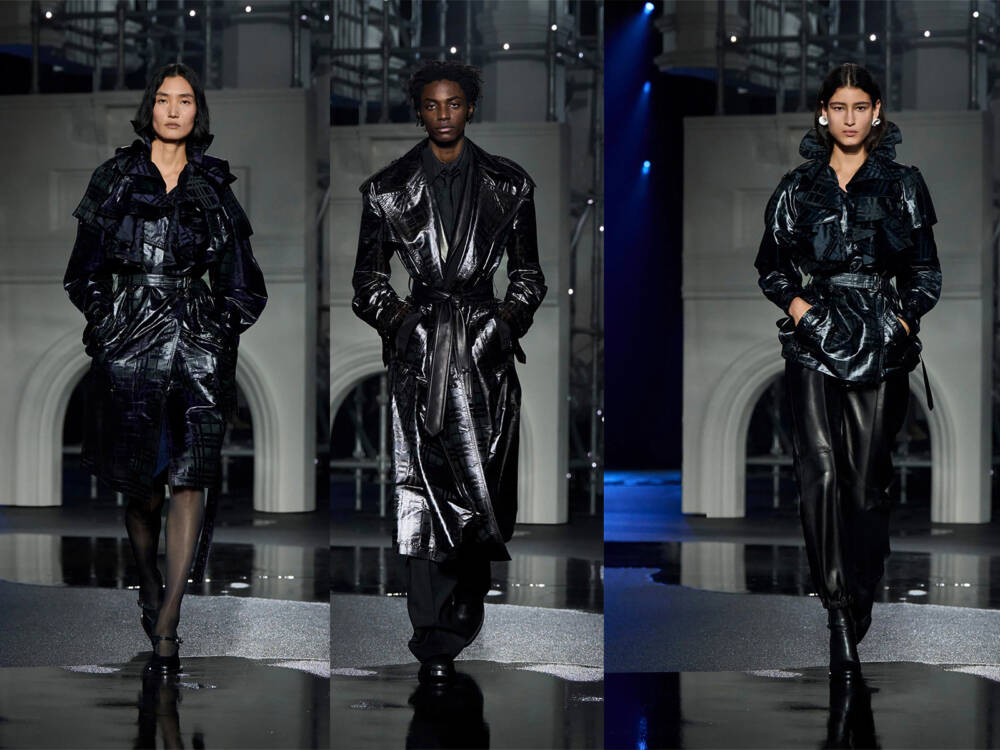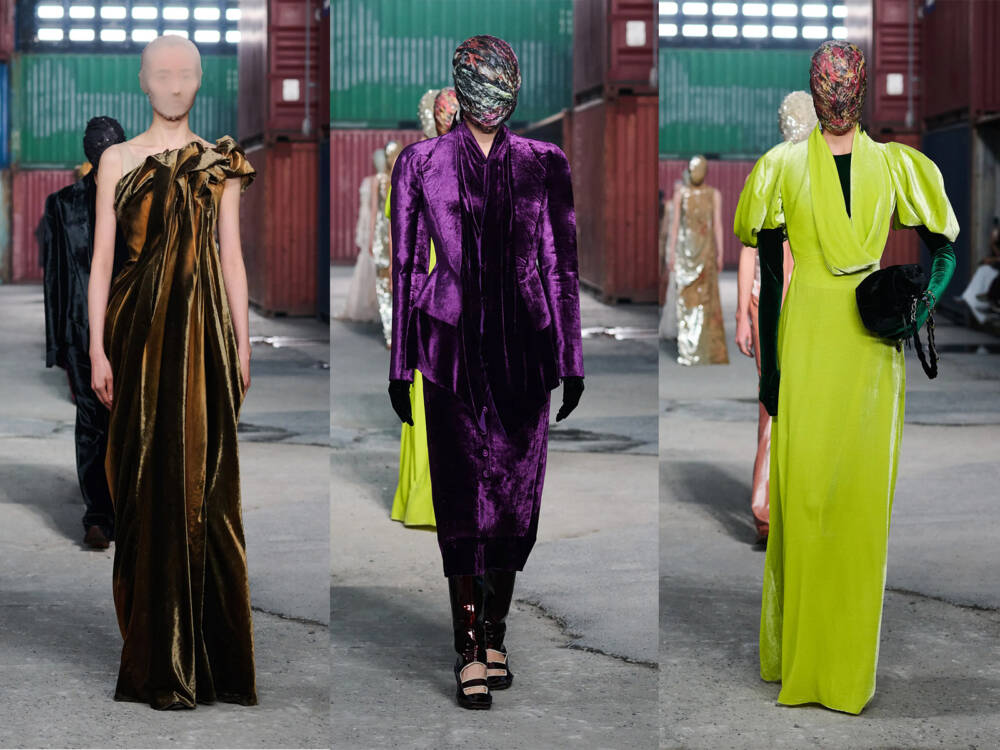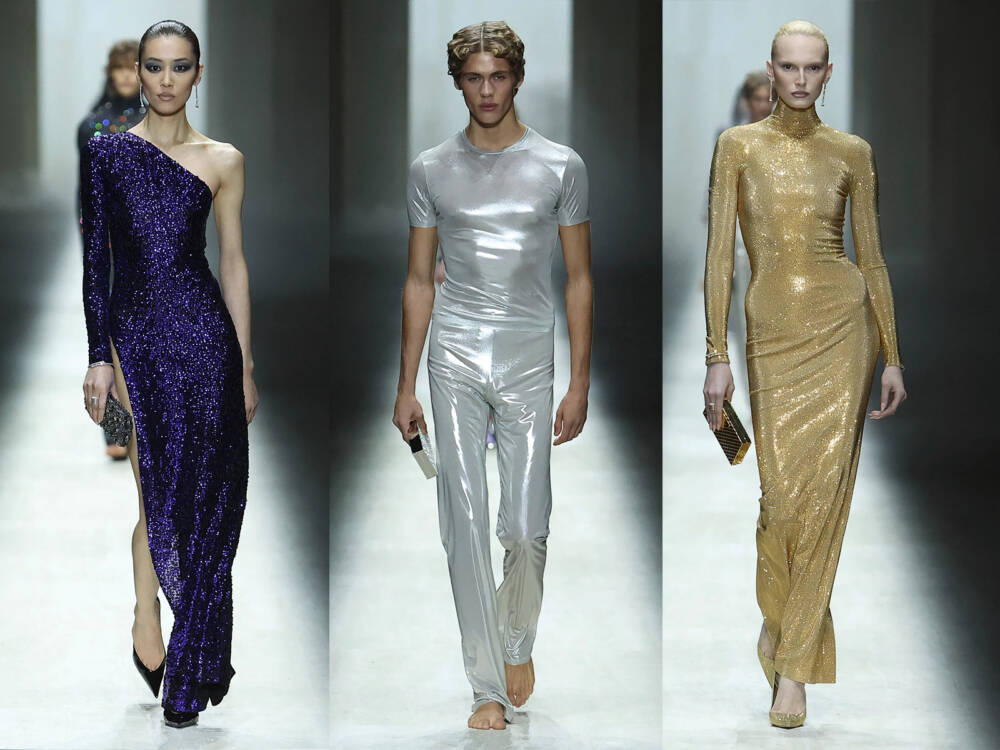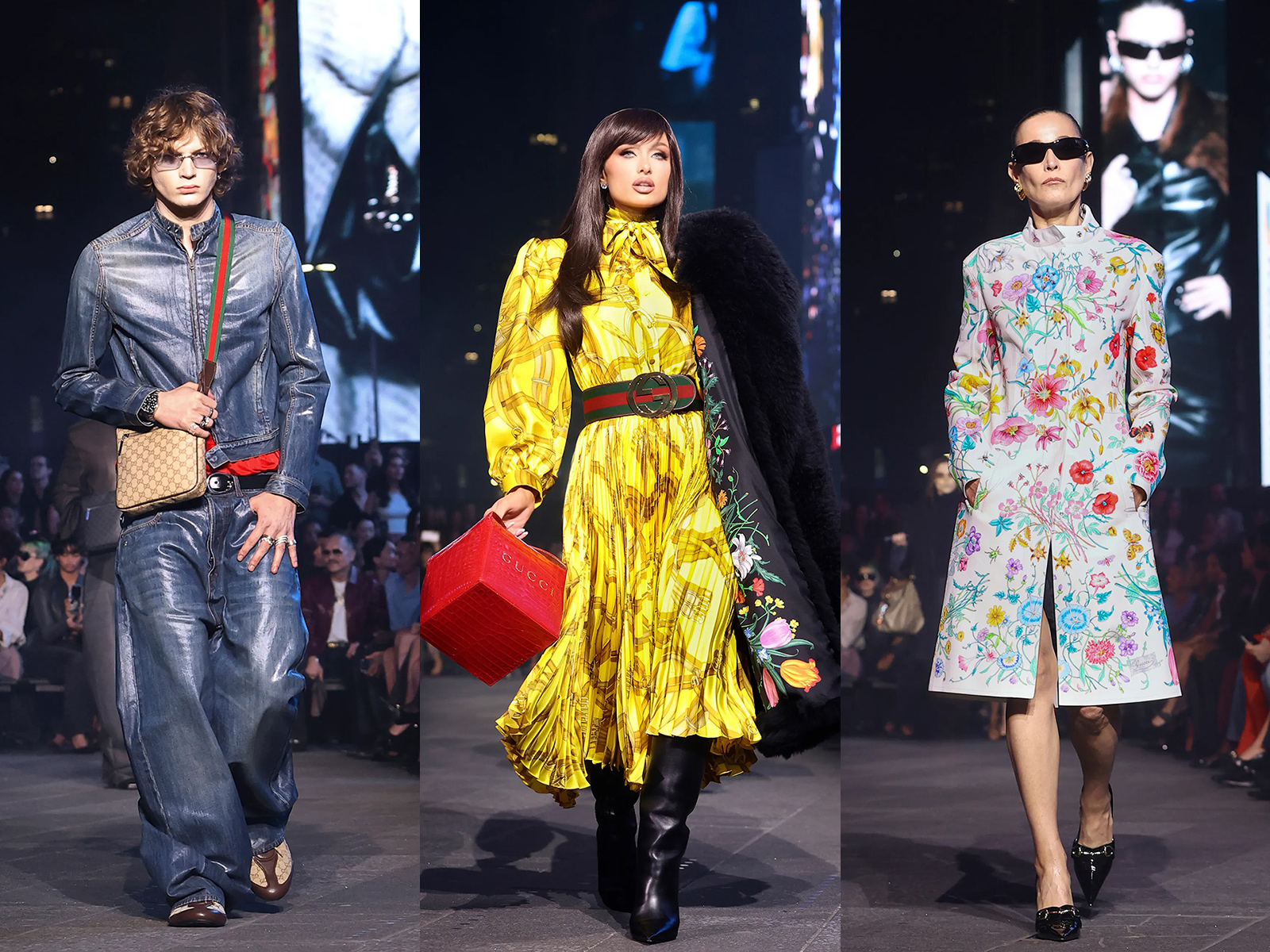

Gucci transformed Times Square into a sprawling runway spectacle for Resort 2027, mixing razor-sharp tailoring, faux fur, sequined eveningwear, denim, and celebrity glamour into a collection that captured New York style at its loudest and most theatrical.
The house turned Midtown Manhattan into an open-air stage where fashion, celebrity, tourism, spectacle, and performance blurred together under towering LED screens and relentless camera flashes. It was less a traditional runway show than a citywide event — loud, crowded, glamorous, and unapologetically excessive.
Actors, musicians, models, athletes, and downtown fixtures packed the audience and, in some cases, the runway itself. Among those attending or participating were Cindy Crawford, Paul Mescal, Julia Garner, Bad Bunny, A$AP Rocky, and Daisy Edgar-Jones — a crowd that made the evening feel closer to a film premiere than a fashion presentation.
Gucci approached New York through accumulation rather than restraint, presenting a wardrobe that mirrored the layered personalities of the city streets. Uptown polish collided with downtown eclecticism. Tailoring gave way to denim and streetwear before circling back toward sequined evening glamour. The collection unfolded almost like a walk through Manhattan itself.
The opening section was the strongest and most focused. Sleek Gucci pencil suits established a sharp, controlled mood with narrow skirts, sculpted jackets, dark sunglasses, and elongated tailoring that recalled late-1990s Manhattan sophistication. These were power looks — polished, cinematic, and built for the rhythm of New York after dark.
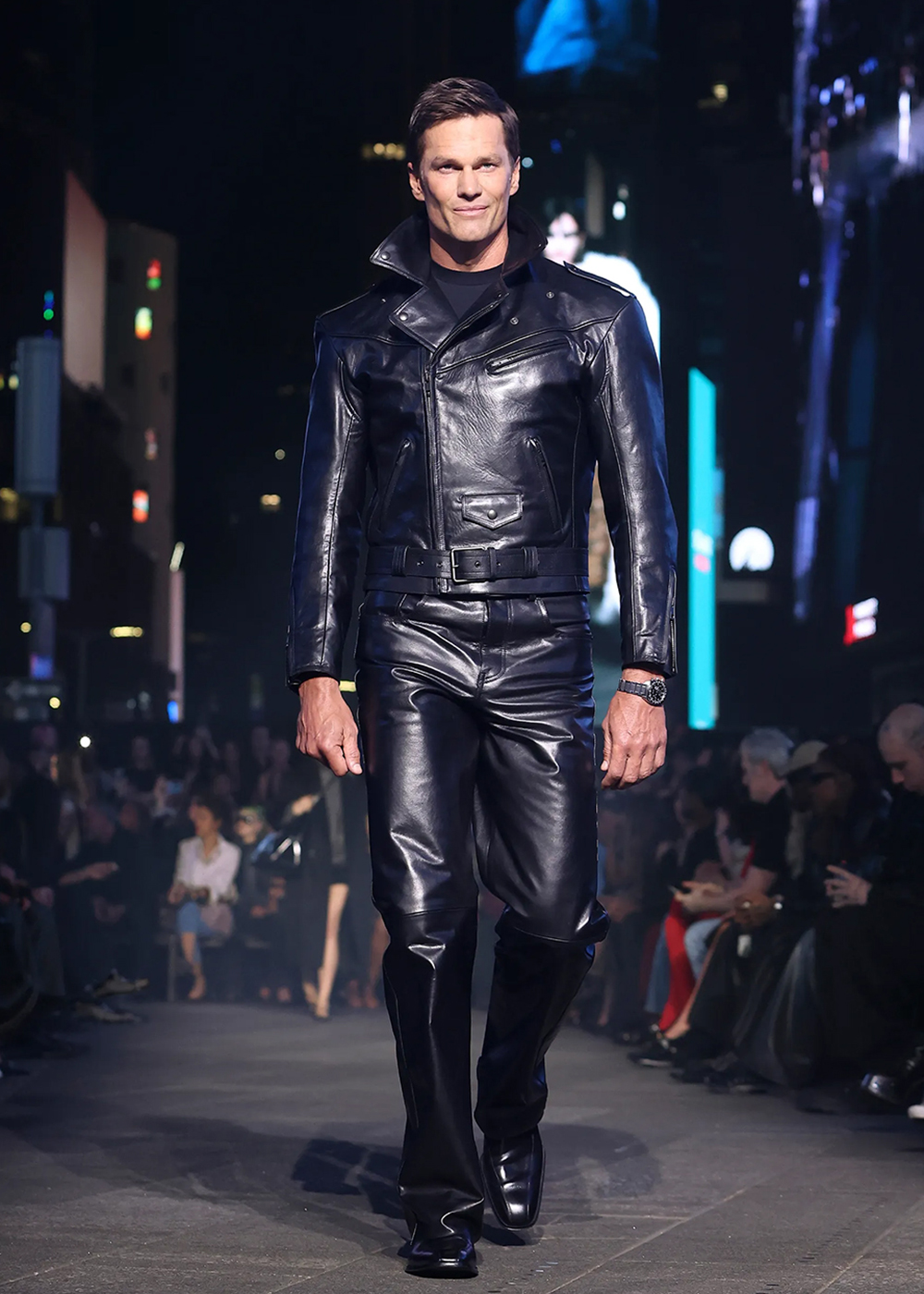
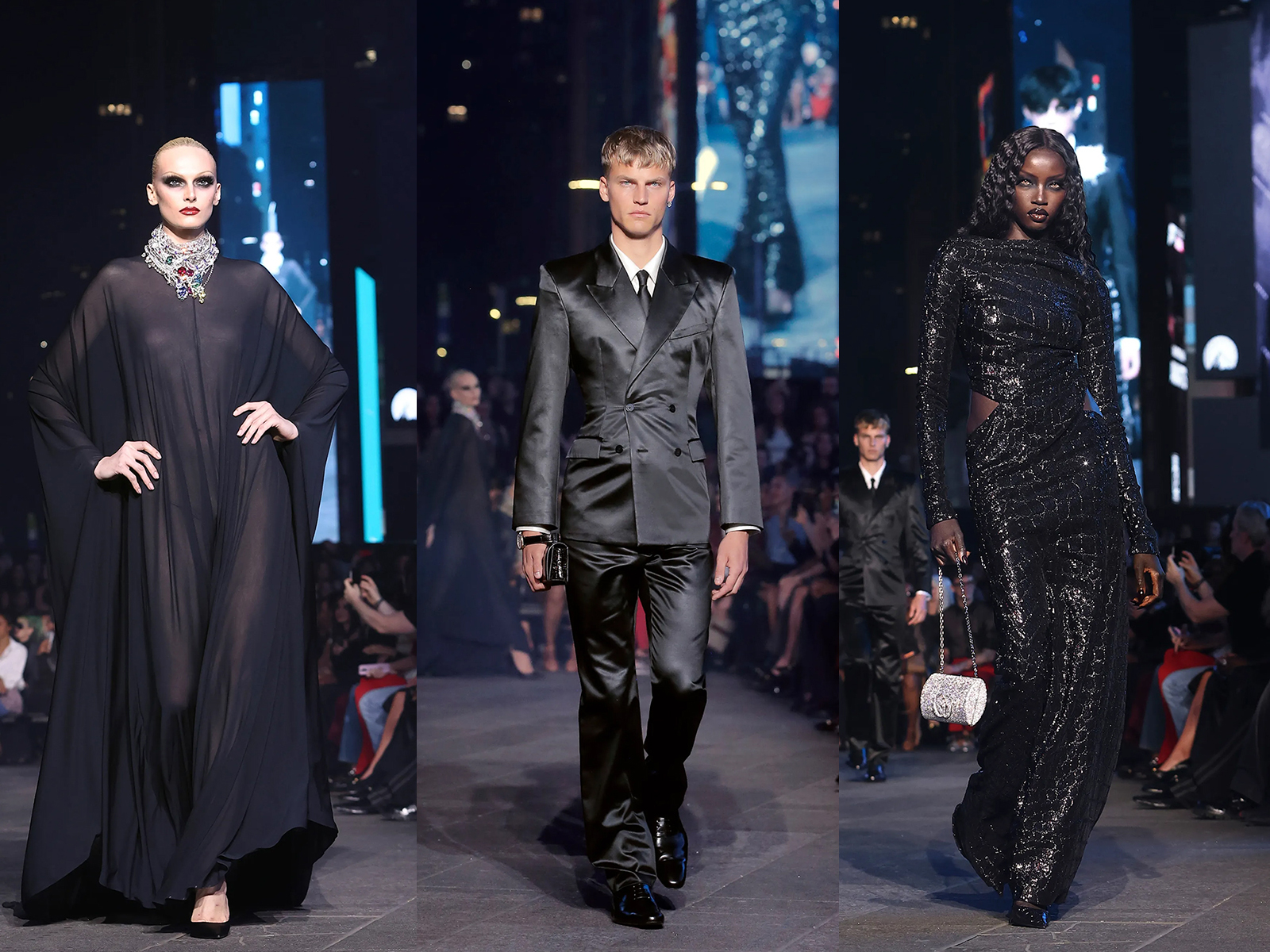
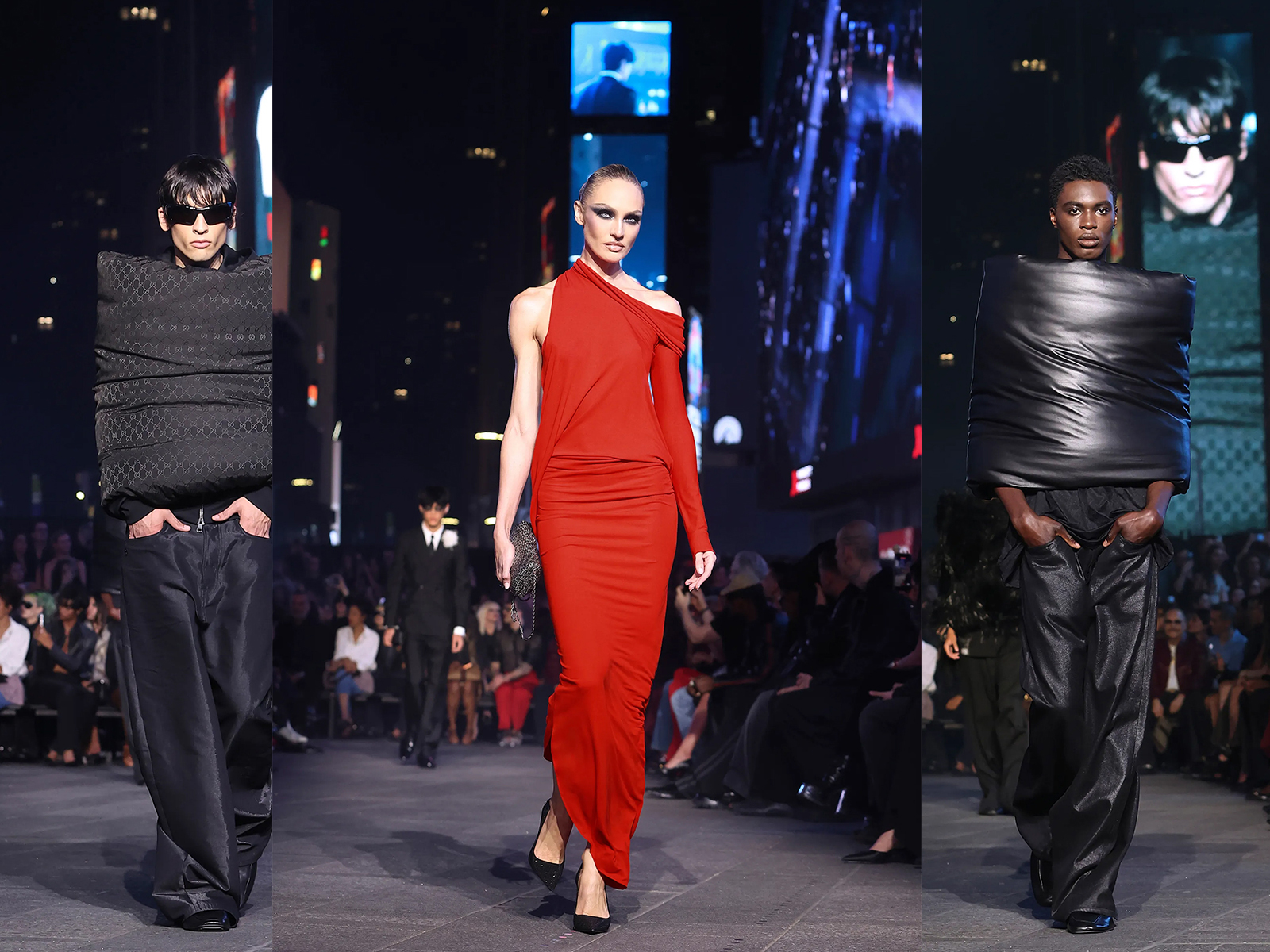
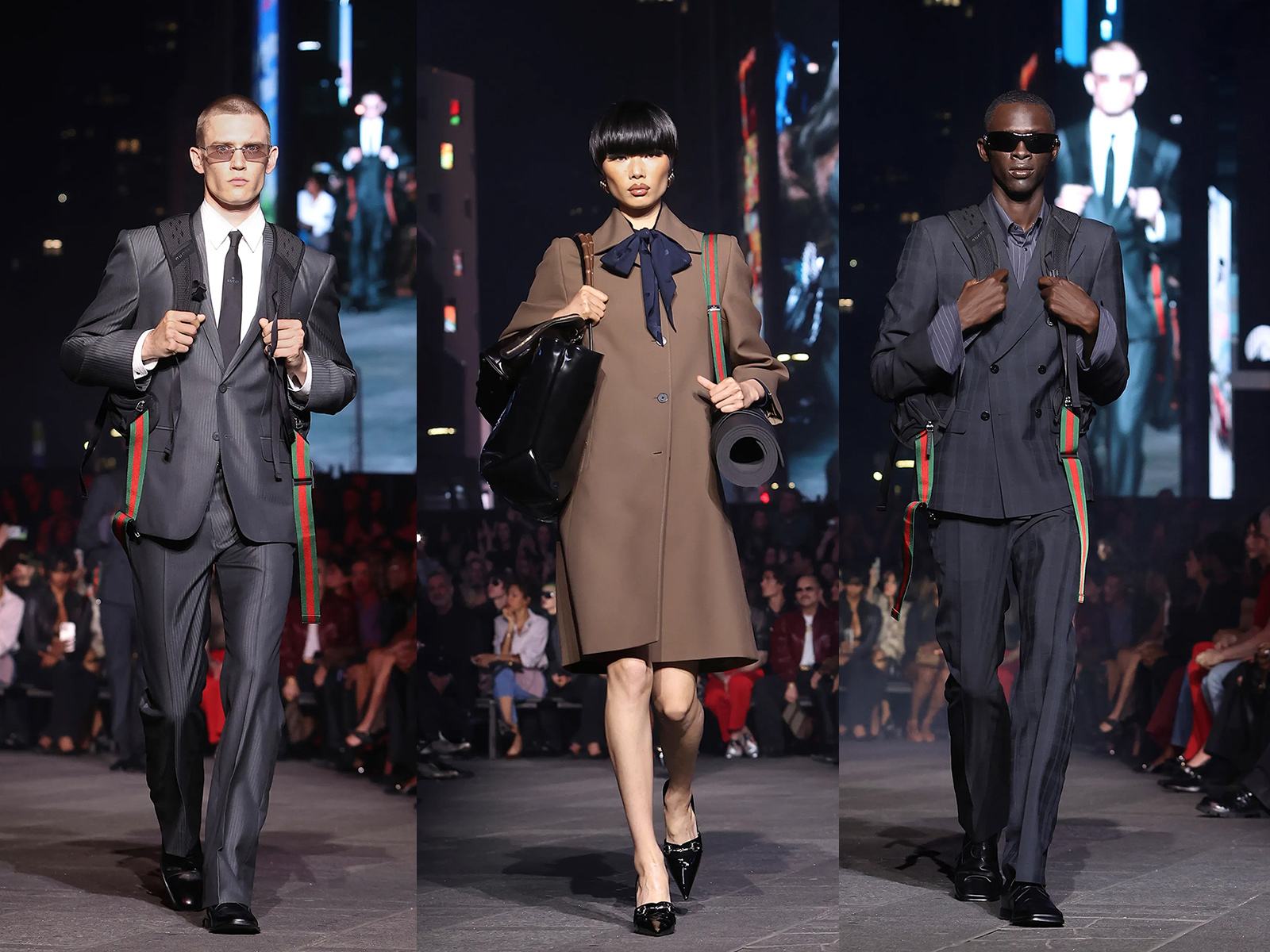
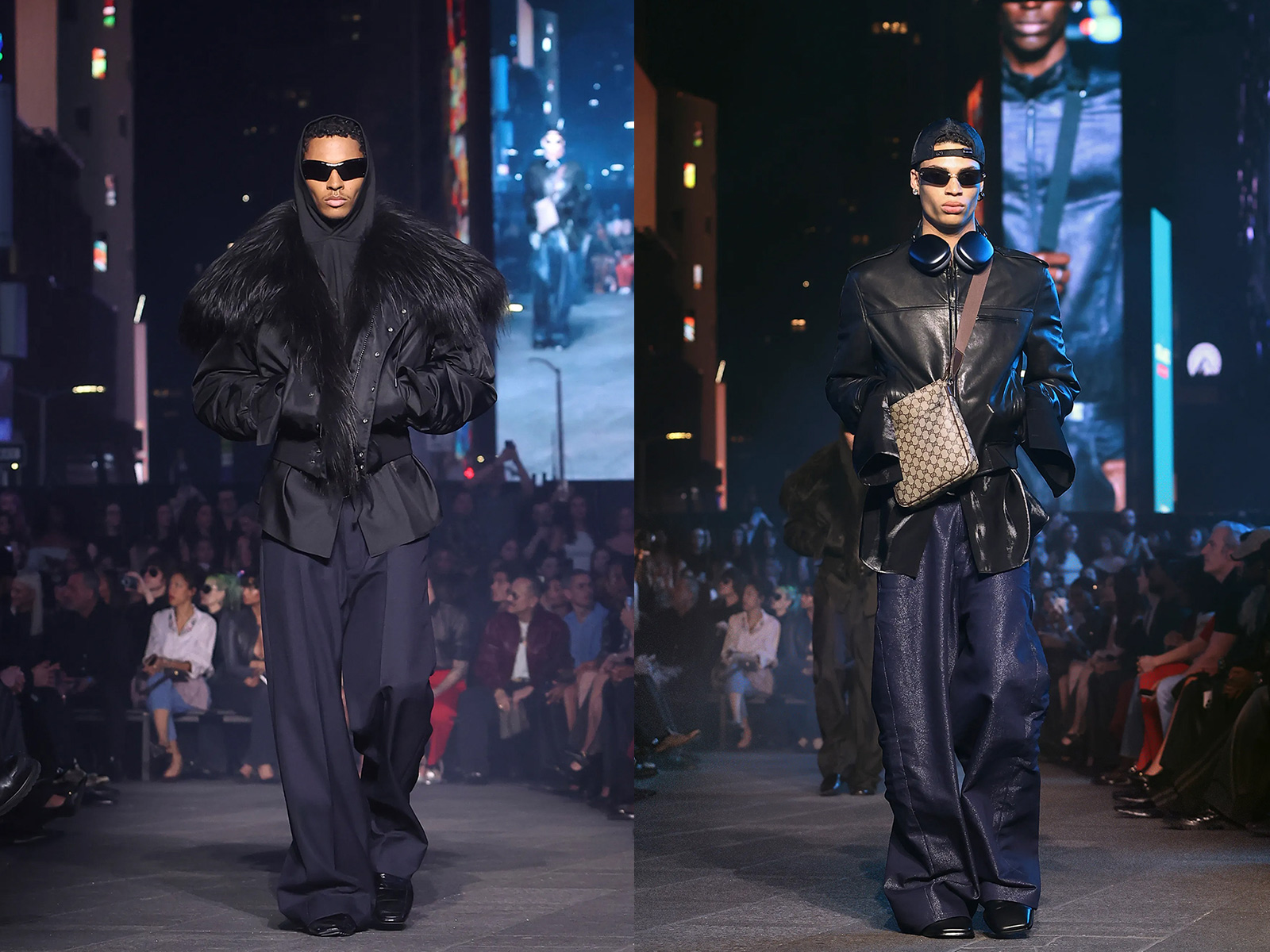
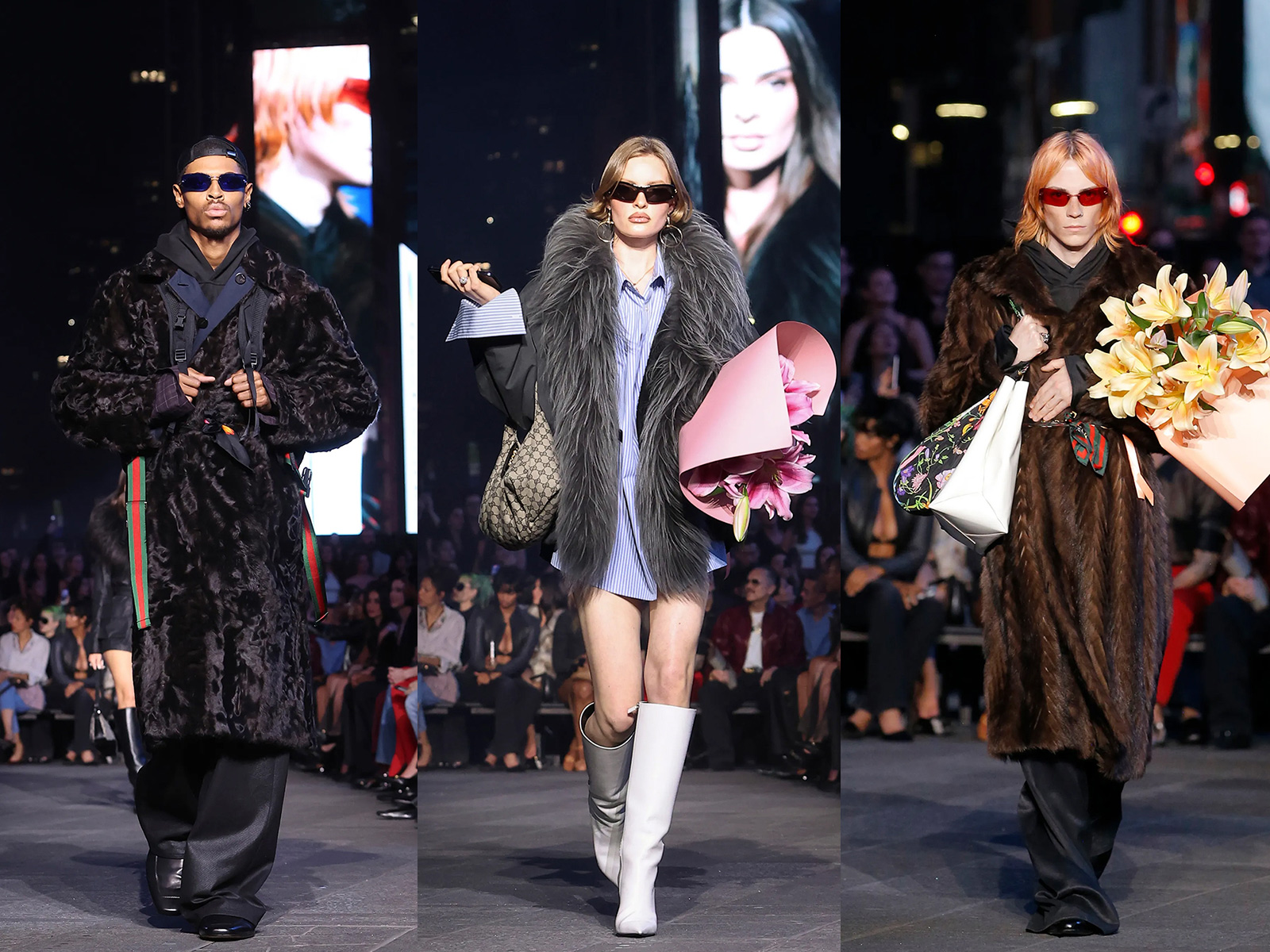
From there, the collection loosened into something more eclectic. Denim, oversized outerwear, layered shirting, and relaxed streetwear entered the runway, reflecting the collision of personal styles visible across the city every day. The styling felt intentionally mismatched at times, echoing the unpredictability of New York sidewalks where luxury fashion, vintage clothing, sportswear, and club dressing all coexist within the same block.
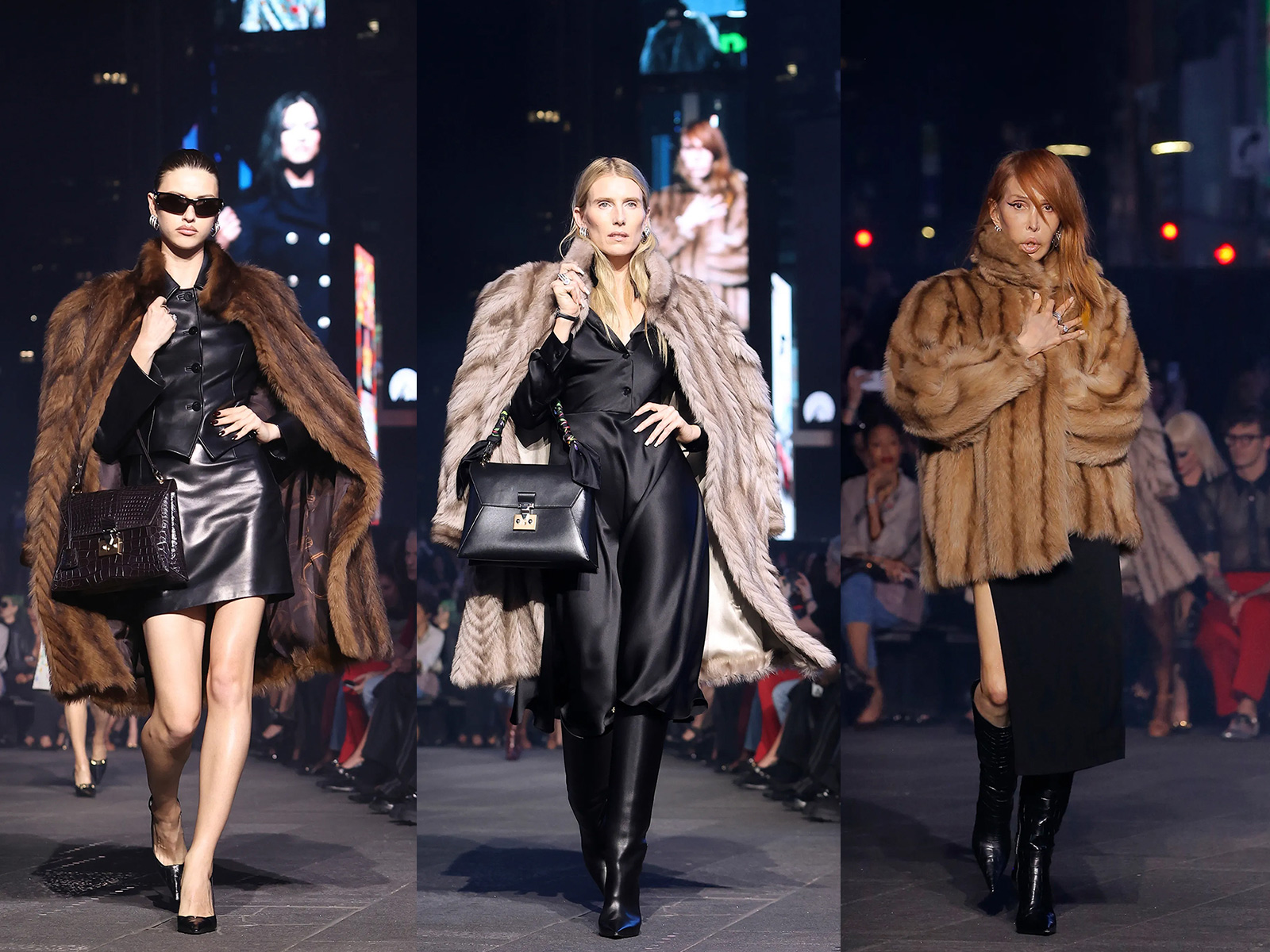
Fur — or what largely appeared to be faux fur and treated shearling — became one of the show’s recurring visual themes. Gucci has publicly moved away from traditional animal fur in recent years, and the oversized textured coats shown here appeared to continue that direction.
If the collection did not introduce a radically new silhouette or particularly forward fashion proposition, it nevertheless succeeded in capturing something authentic about New York style. Fashion here has never been about purity or minimalism. It is about energy, layering, personality, and visibility.
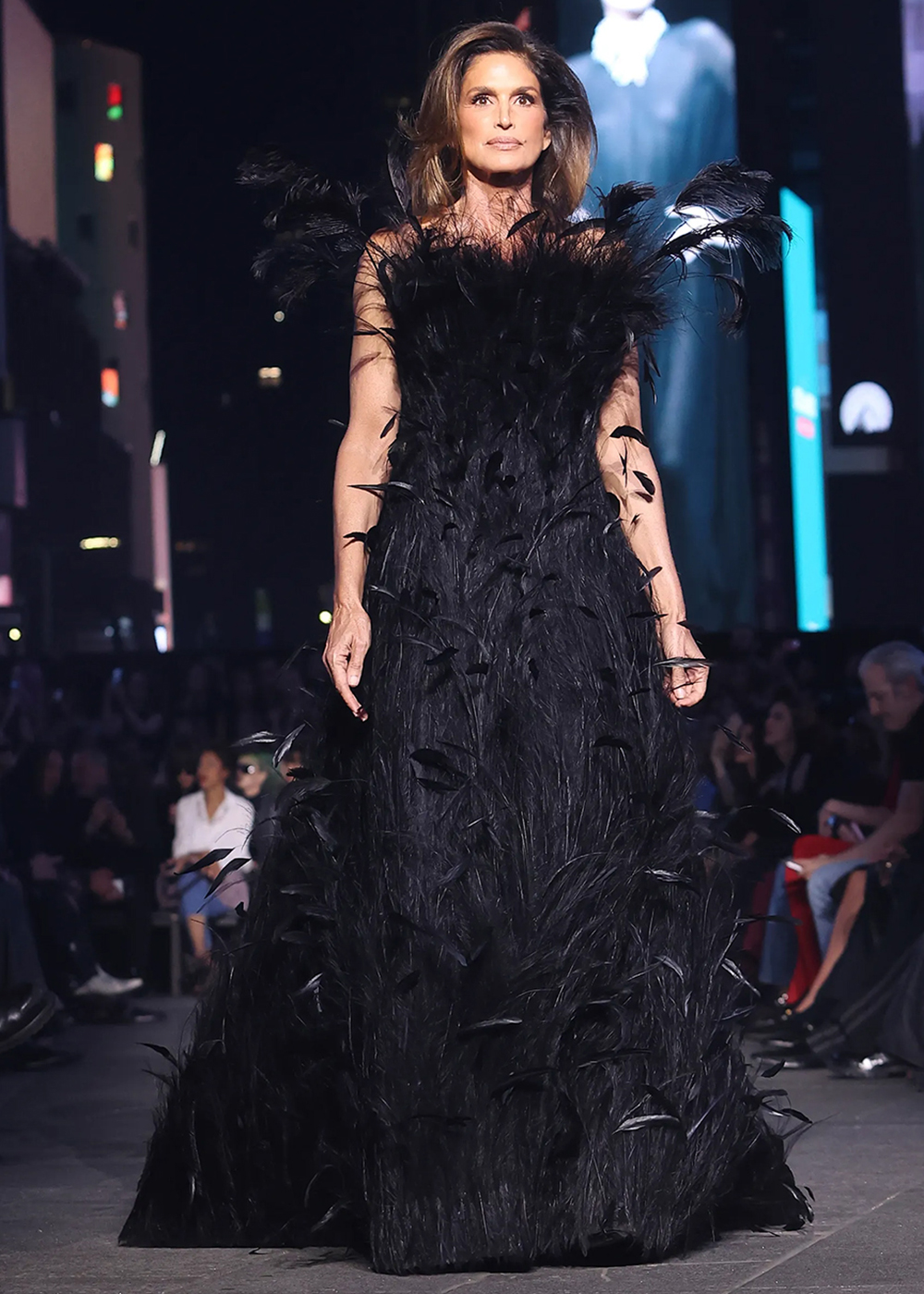
The finale belonged to Cindy Crawford, who closed the presentation in a sweeping, grand gown that leaned fully into classic supermodel glamour. It was a knowingly theatrical ending — fashion embracing recognition, celebrity, and spectacle without apology.
The collection often felt less interested in invention than in amplifying the familiar visual language now associated with Gucci itself — a collision of celebrity glamour, eclectic tailoring, faux fur, sequins, and downtown excess that has effectively become Gucci Core.
The collection understood the city’s appetite for performance, glamour, contradiction, and reinvention. In Times Square, subtlety would have disappeared into the noise.
So Gucci chose volume instead. Gucci.