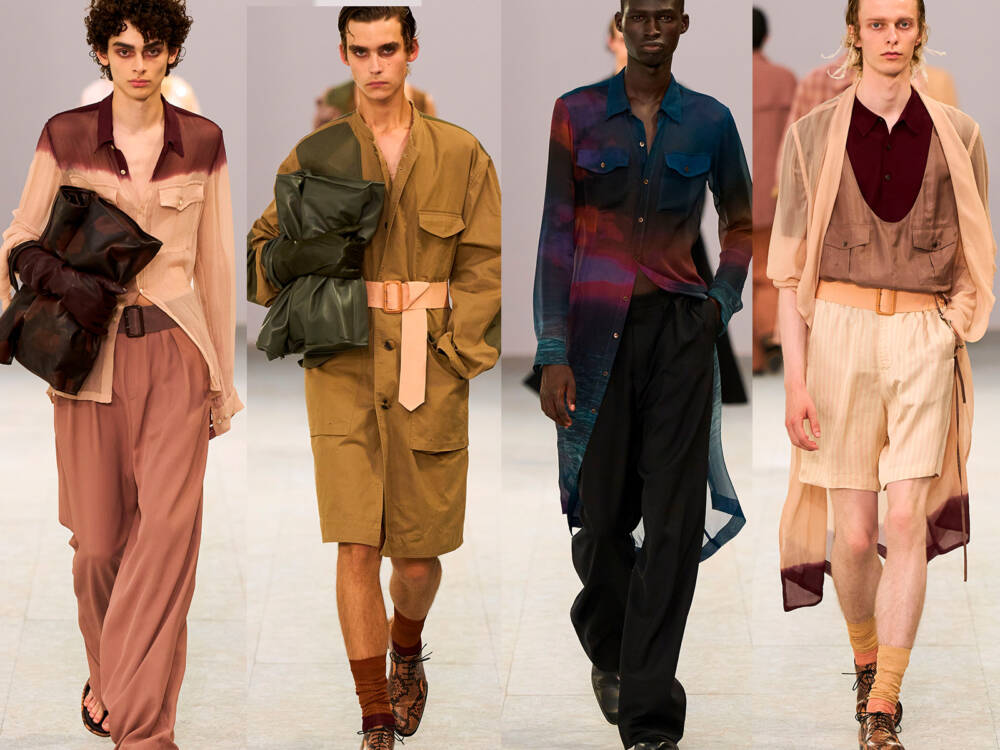

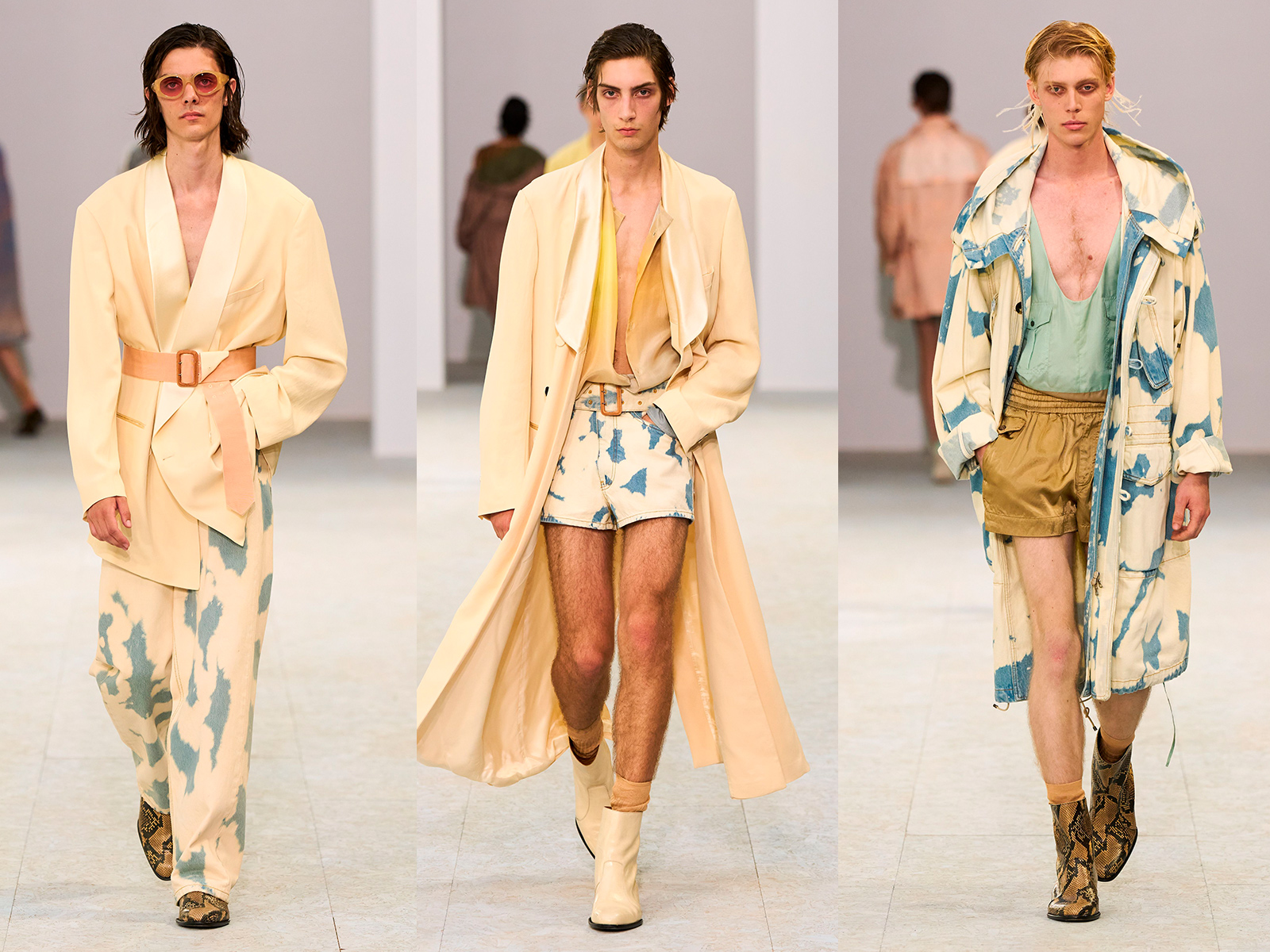
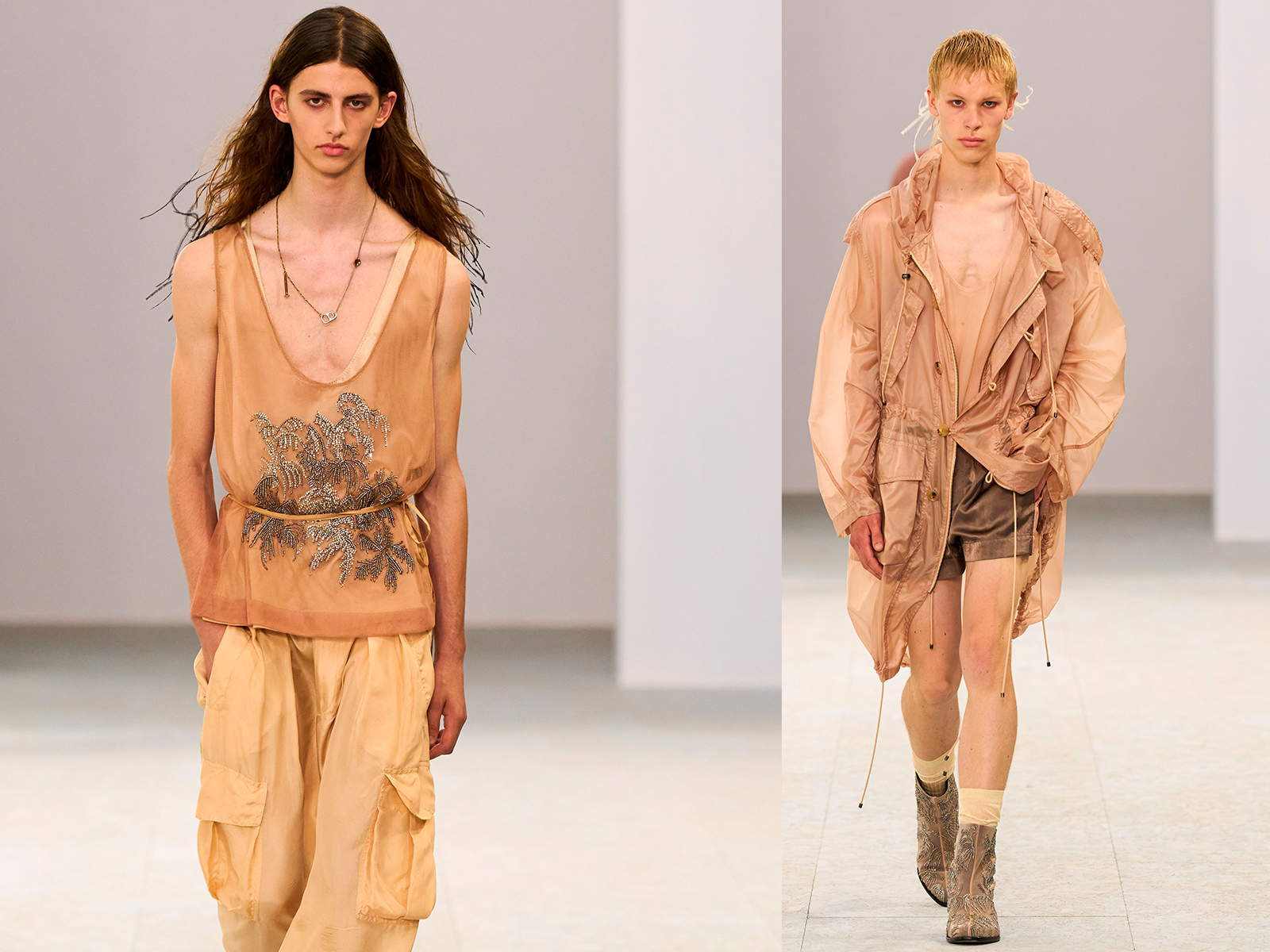
For Spring/Summer 2027, Julian Klausner seems less interested in answering the question than in quietly letting it go. His third men’s collection for Dries Van Noten is light, sensual and slightly dreamlike, a wardrobe in which many of the usual rules of masculine dressing have simply dissolved.
The inspiration came from Stéphane Mallarmé’s L’Après-midi d’un faune, the 19th-century poem about a half-man, half-animal creature caught between dream and reality. Debussy turned it into music; Nijinsky turned it into dance. Klausner found the poem in the Dries Van Noten studio in Antwerp and began imagining a collection with the same sense of uncertainty and fantasy.
“The idea of sensuality guided many of our choices,” Klausner says, describing clothes that should feel soft, intimate and ready to move.
They do.
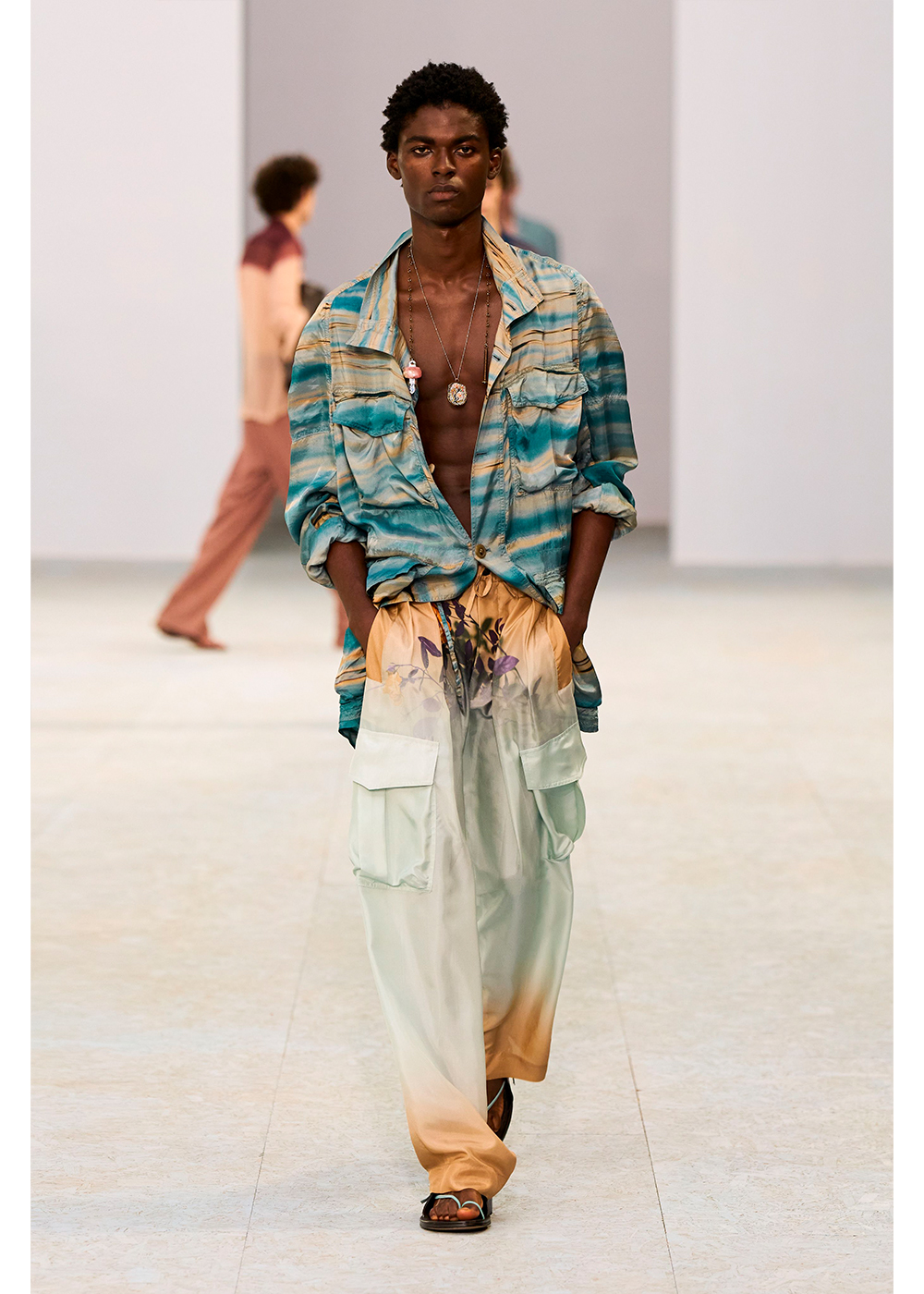
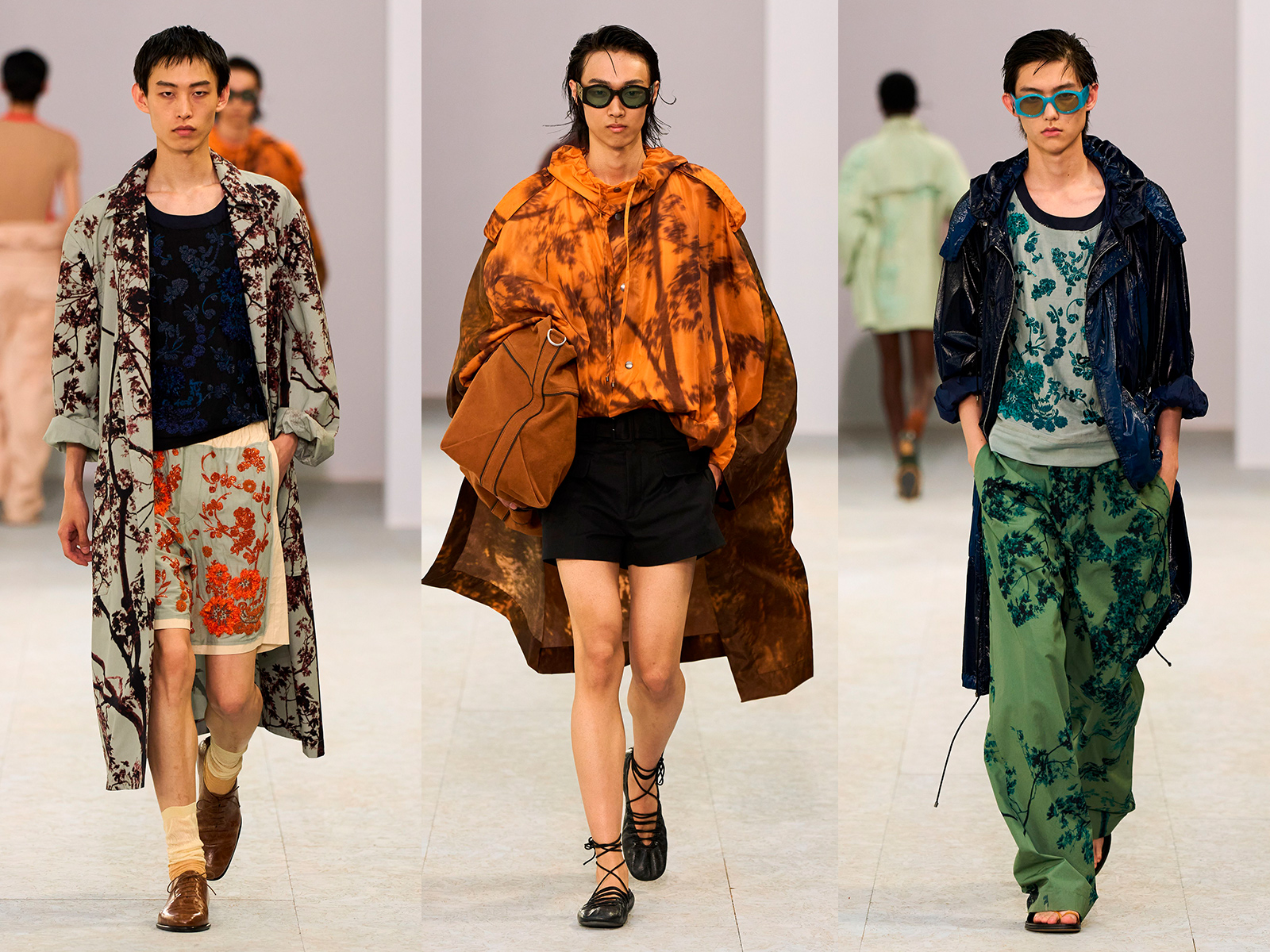
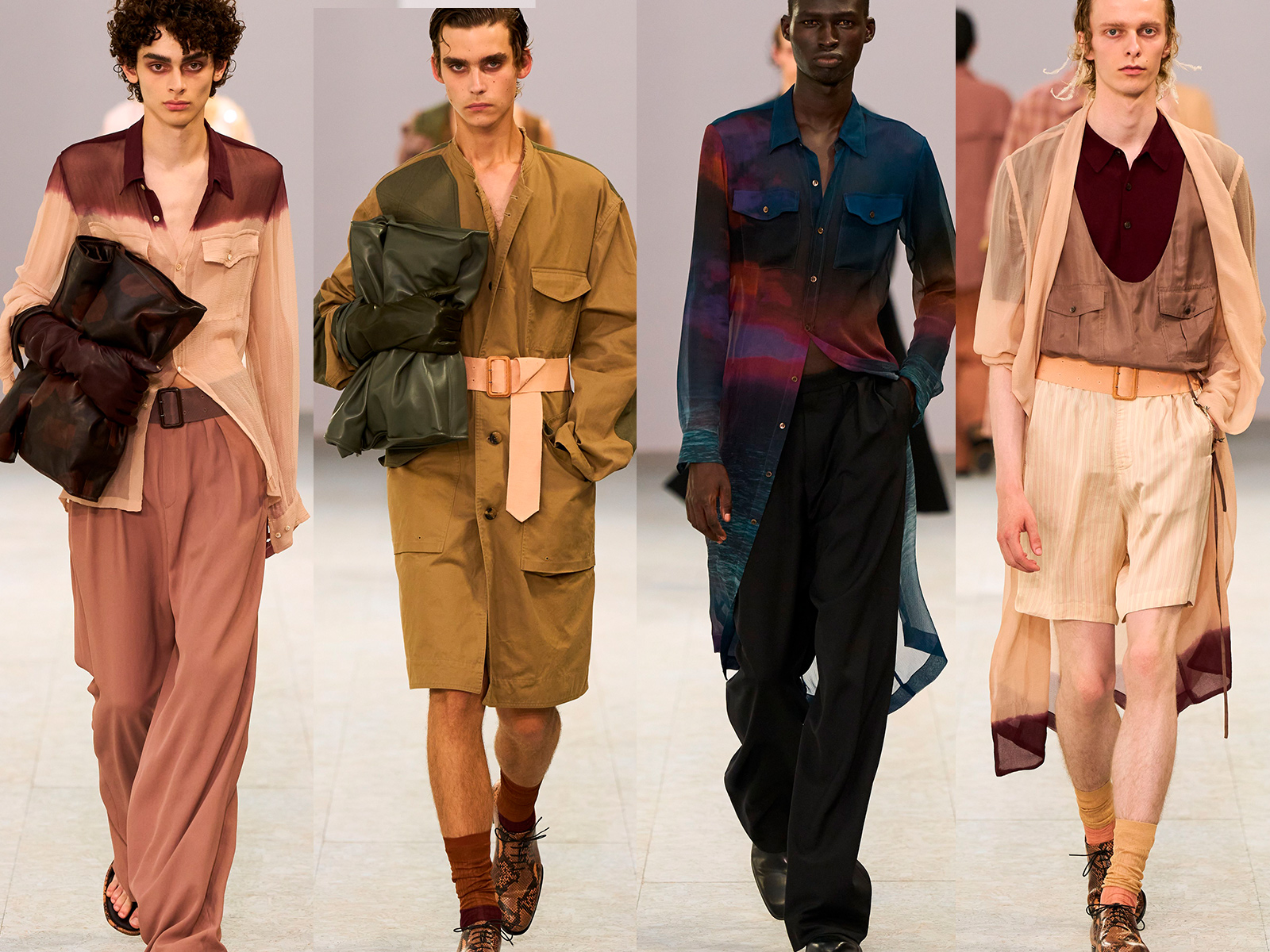
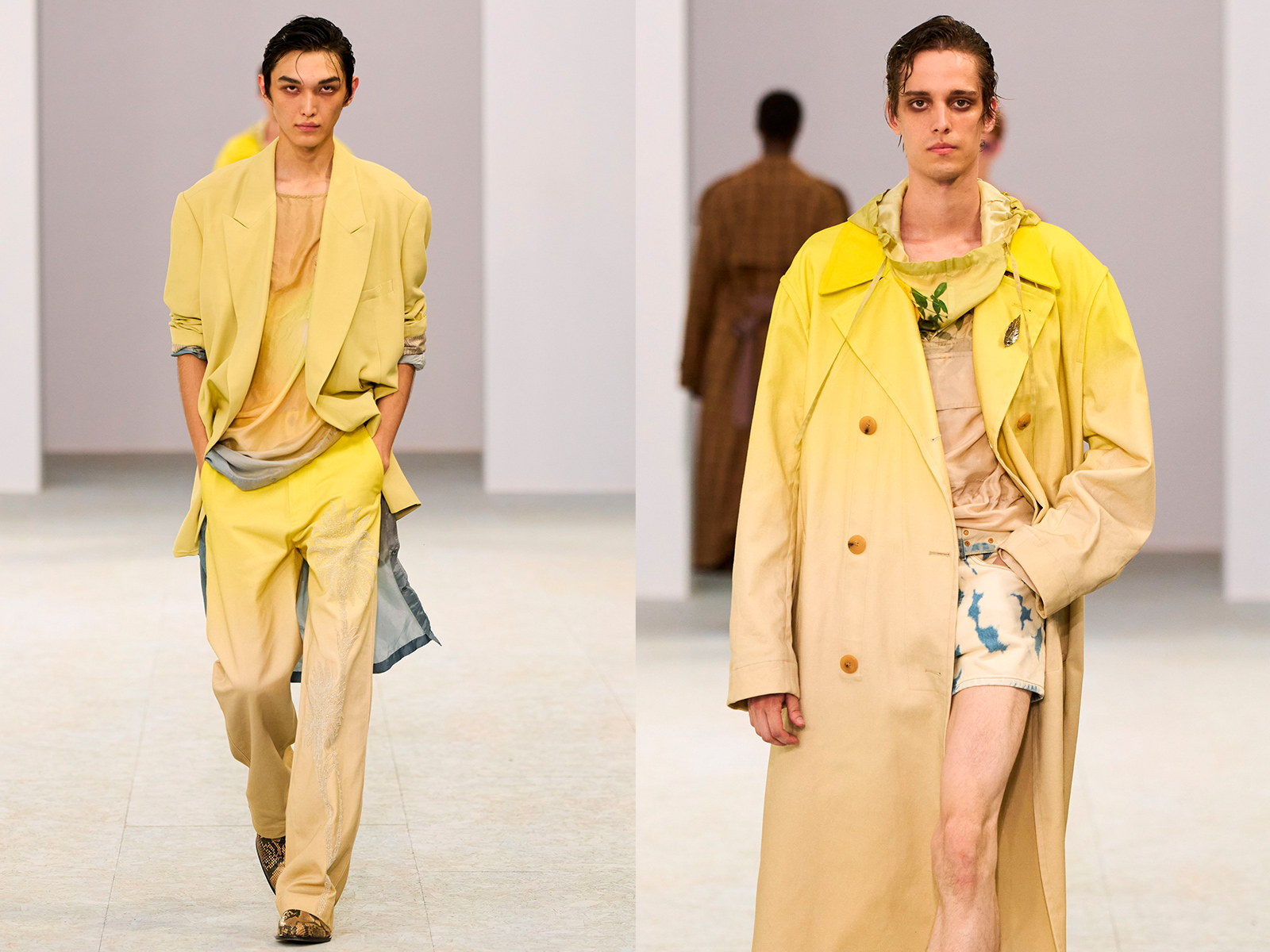
There are loose silk trousers, lightweight parkas, flowing coats and shirts that barely seem to touch the body. Chiffon, viscose, washed silks and transparent layers replace some of the stiffness traditionally associated with menswear. Floral and botanical prints move across the collection alongside forest jacquards, leopard and soft, faded colours.
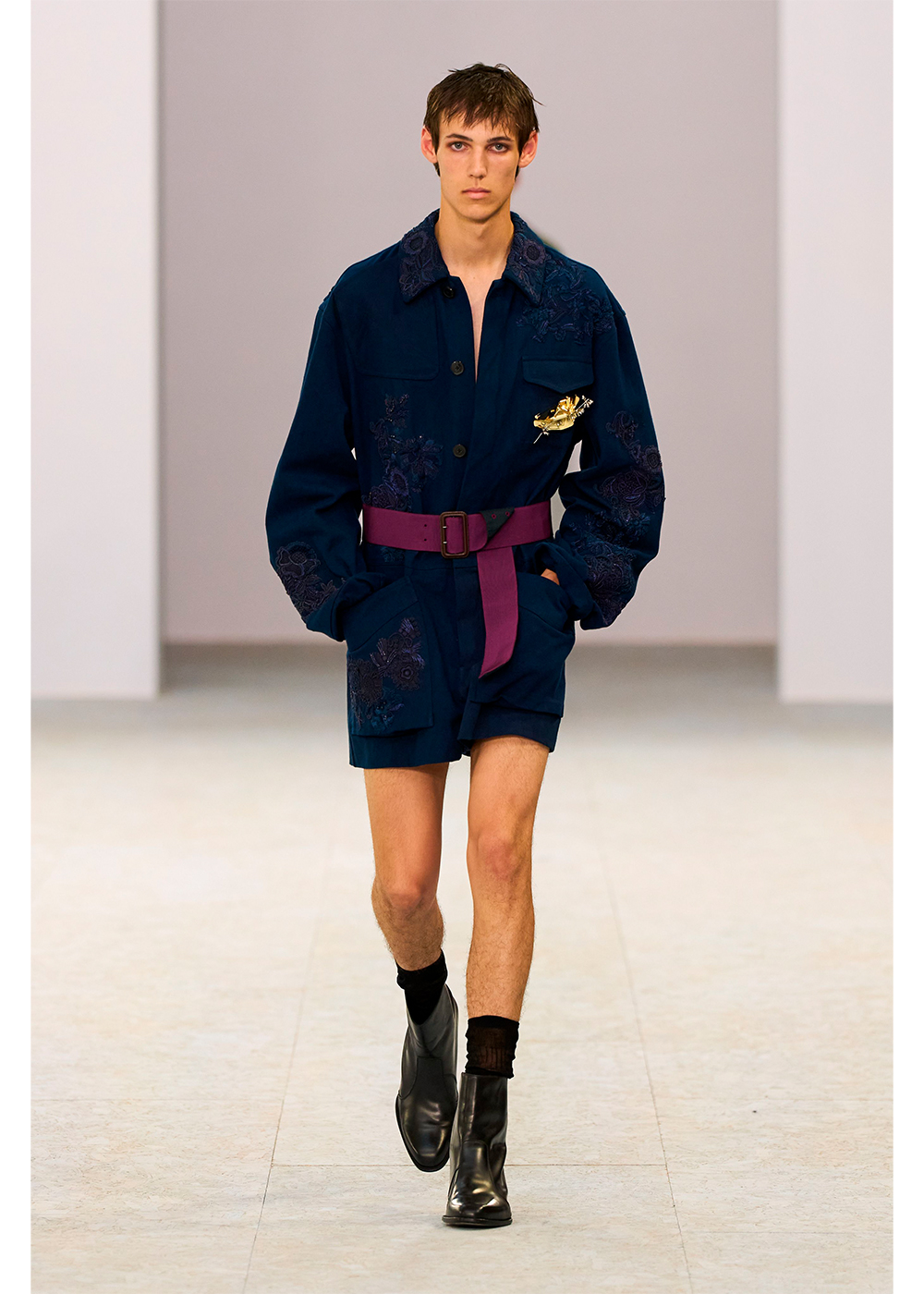
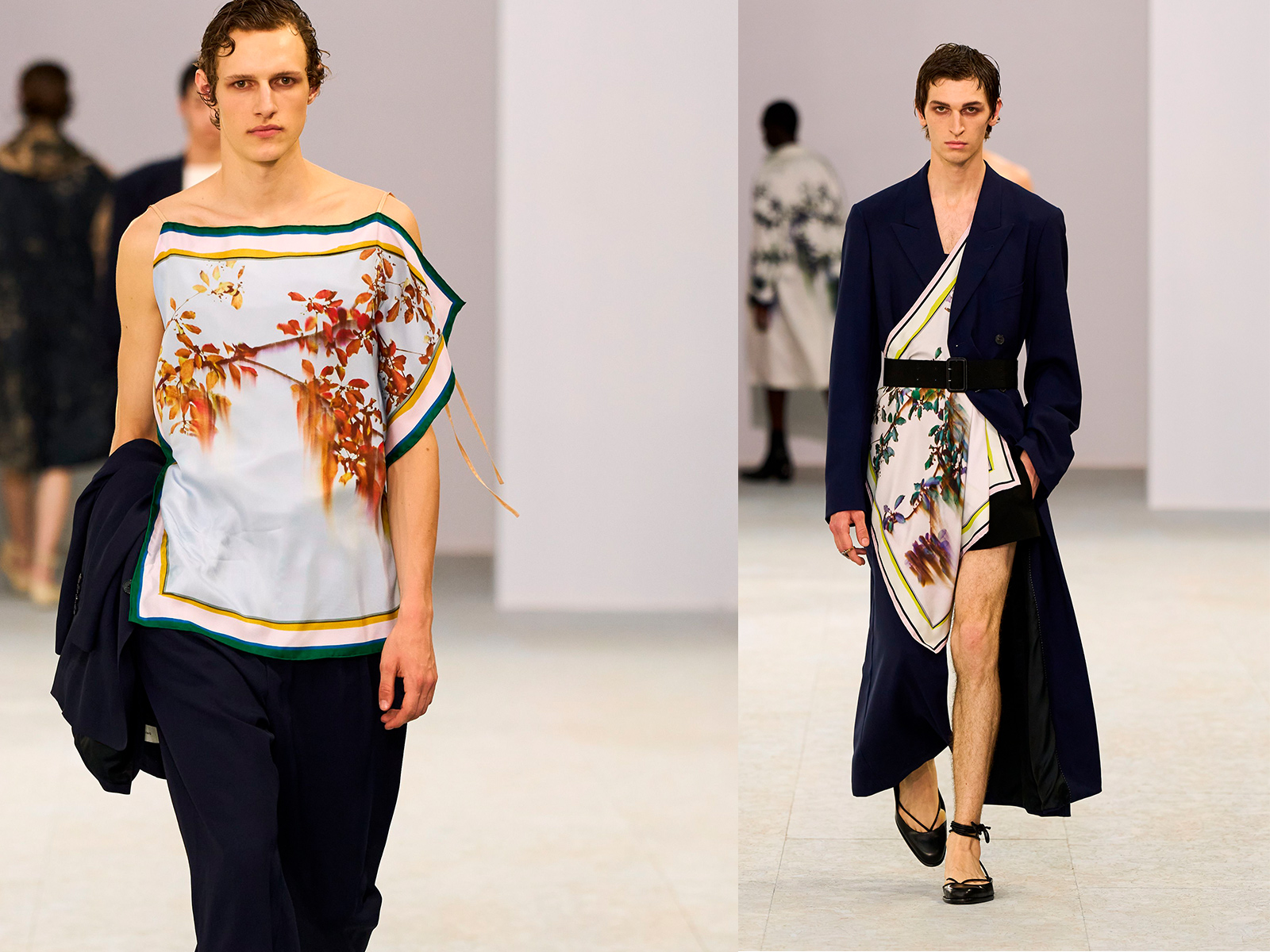
Then there are the distinctly feminine touches.
Lingerie becomes a point of departure, appearing in delicate camisole-like tops, straps and sheer layers. Printed scarves become tops, tied around the body with ribbons. Feathers appear in the hair. Pink ballet flats replace the expected masculine shoe.
These details could easily feel like fashion’s familiar exercise in provocation. Here, they don’t.
There is an eroticism here because the masculinity of the model transcends the clothes.
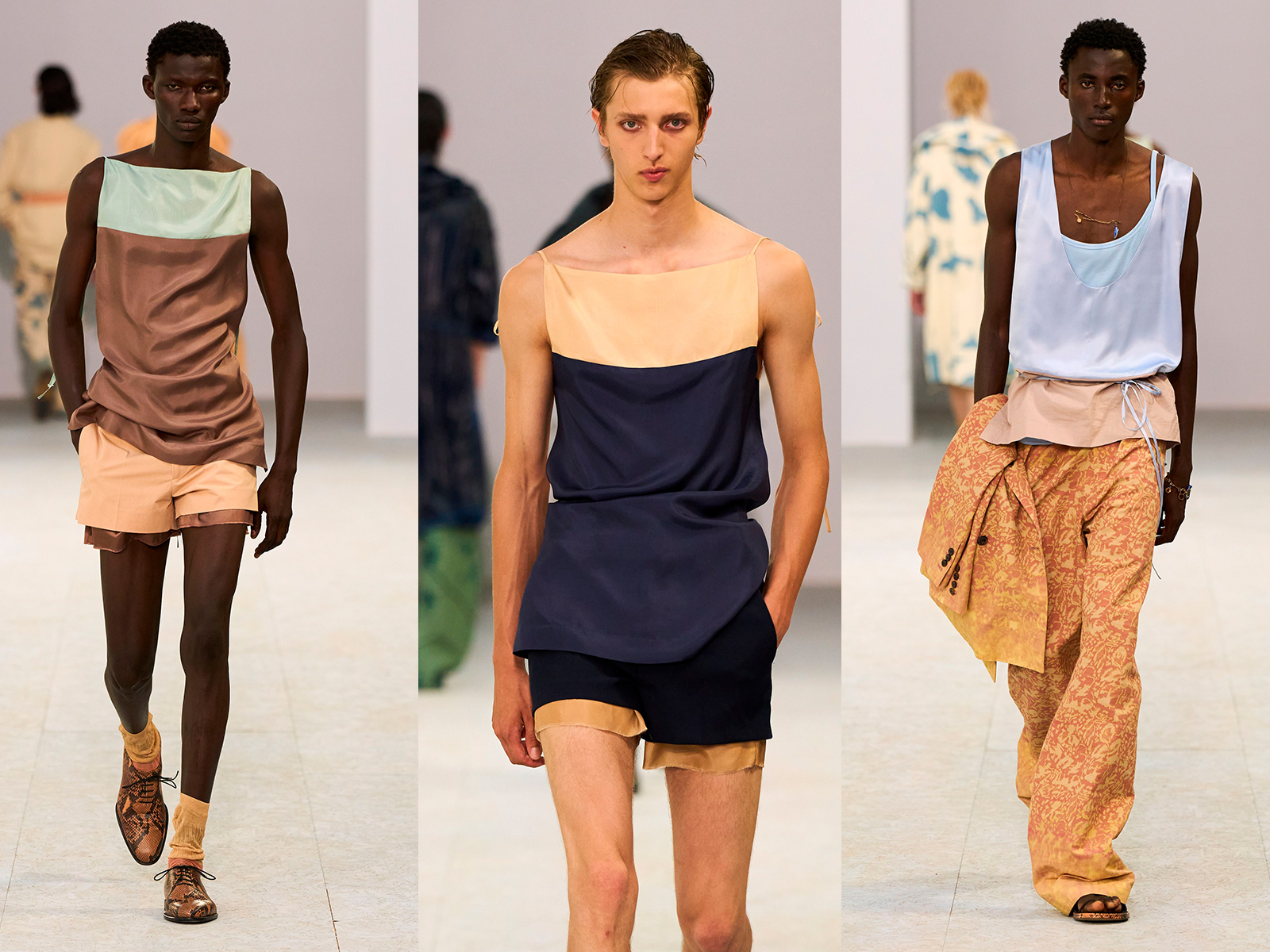
The man remains completely himself. The clothes do not feminize him so much as reveal how little femininity has to do with abandoning masculinity in the first place. A scarf can become a shirt. A camisole can become menswear. A ballet flat can simply be a shoe.
That freedom makes sense coming from Klausner, who spent years working within Dries Van Noten’s womenswear studio before taking over the men’s collection. His experience with womenswear seems to have permitted him to approach menswear without accepting all of its inherited rules.
Dries Van Noten has always been particularly good at that kind of collision. Its clothes have rarely respected a strict division between masculine and feminine, practical and romantic, tailored and decorative. Klausner is not abandoning that language. He is finding his own way into it.
The collection still has plenty of familiar menswear: cargo trousers, parkas, trenches, tailored jackets. But everything has been loosened. Utility becomes sensual. Tailoring becomes fluid. The masculine wardrobe is still recognizable, but there is suddenly more air around it.
The colours contribute to the dream. Sand, caramel, peach and taupe give way to watery blues, lavender, green and deeper forest tones. Florals and landscape prints seem to float across the clothes rather than sit on them.
The result is romantic without being sentimental and feminine without becoming a statement about femininity.
Perhaps that is the most compelling thing about it.
Menswear has spent a very long time defining itself through structure: the suit, the shoulder, the trouser, the uniform. Klausner doesn’t destroy any of those things. He simply loosens them. He lets the body move. He allows decoration, softness, and sensuality to enter without asking permission. Dries Van Noten.