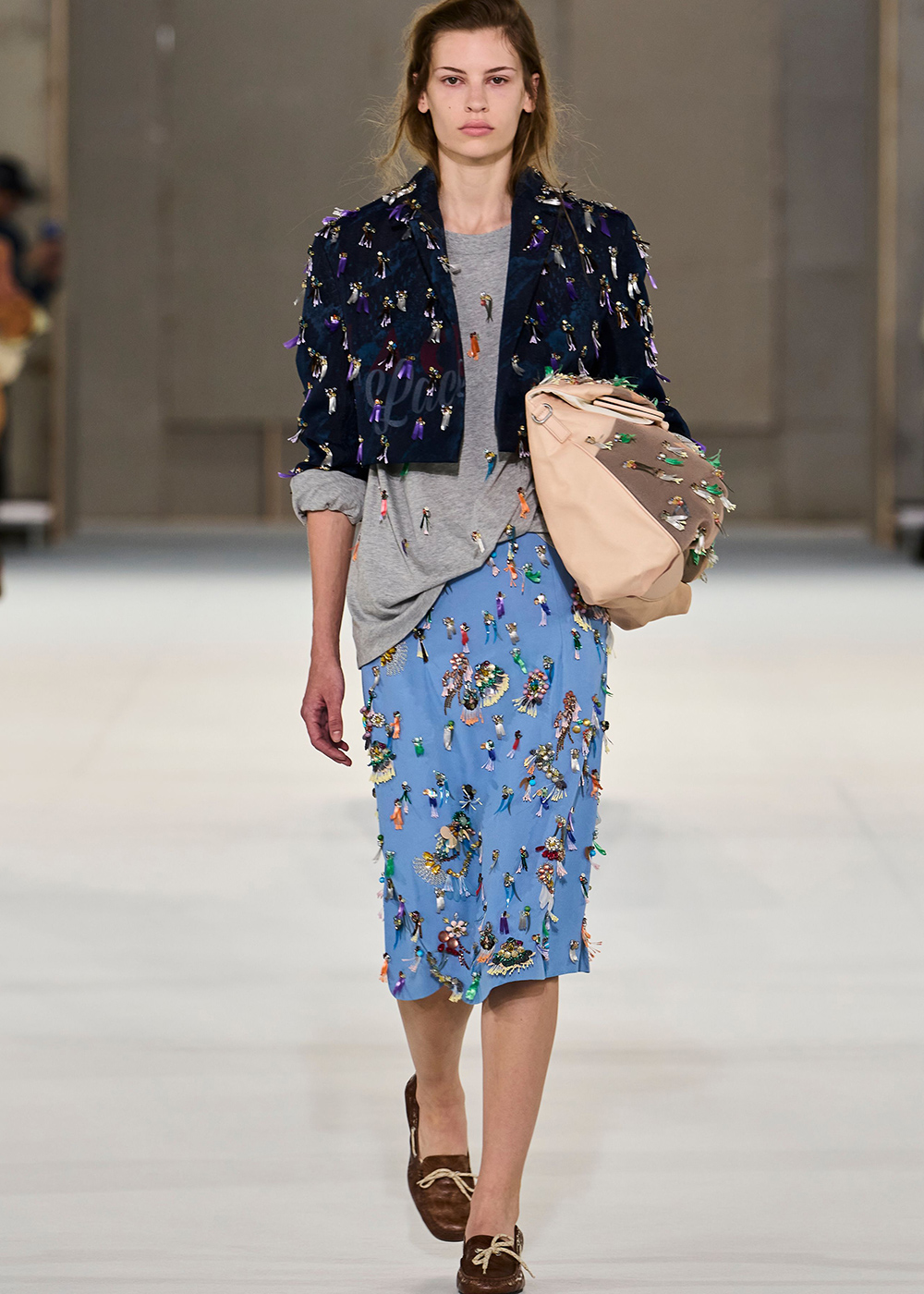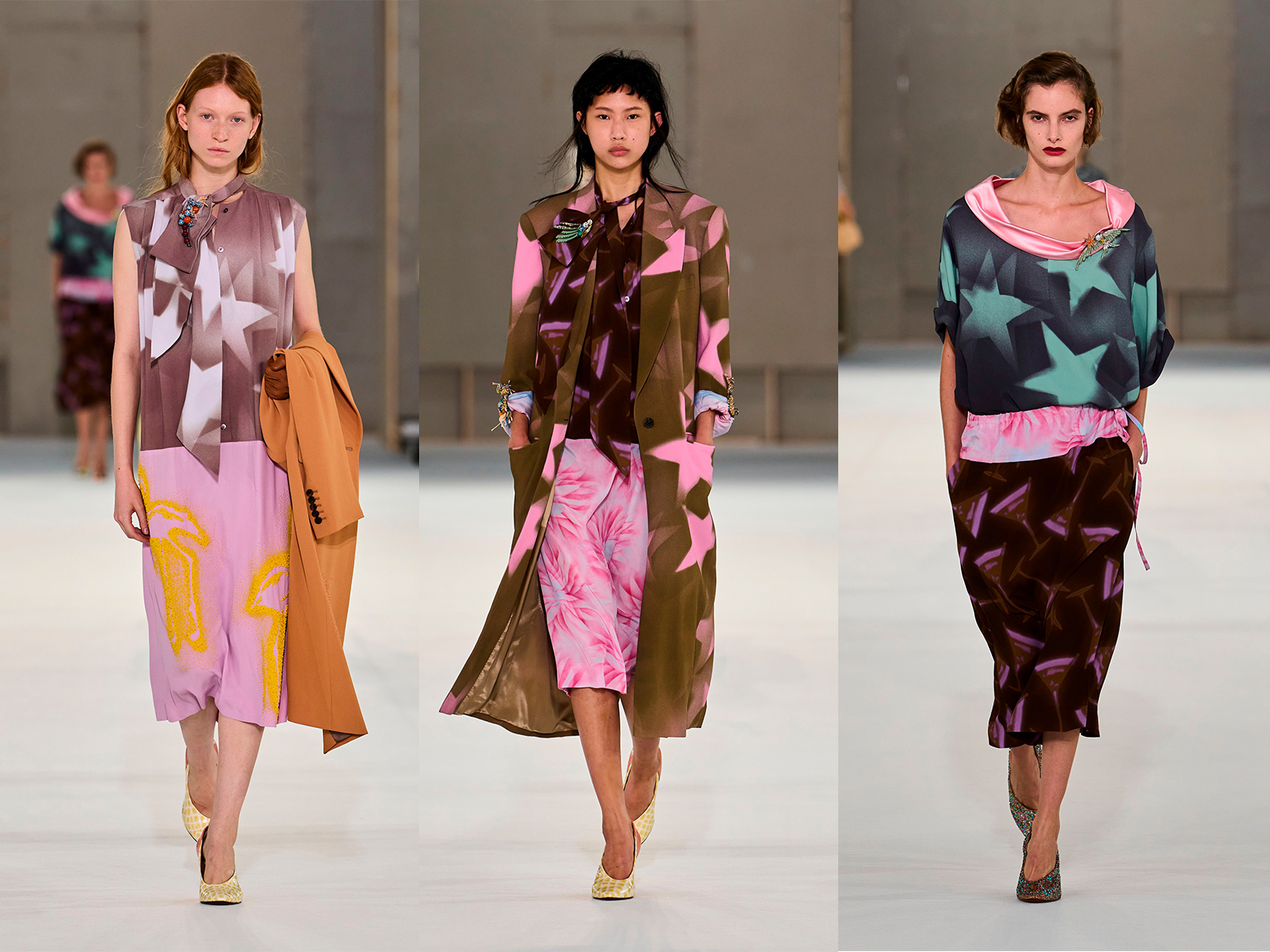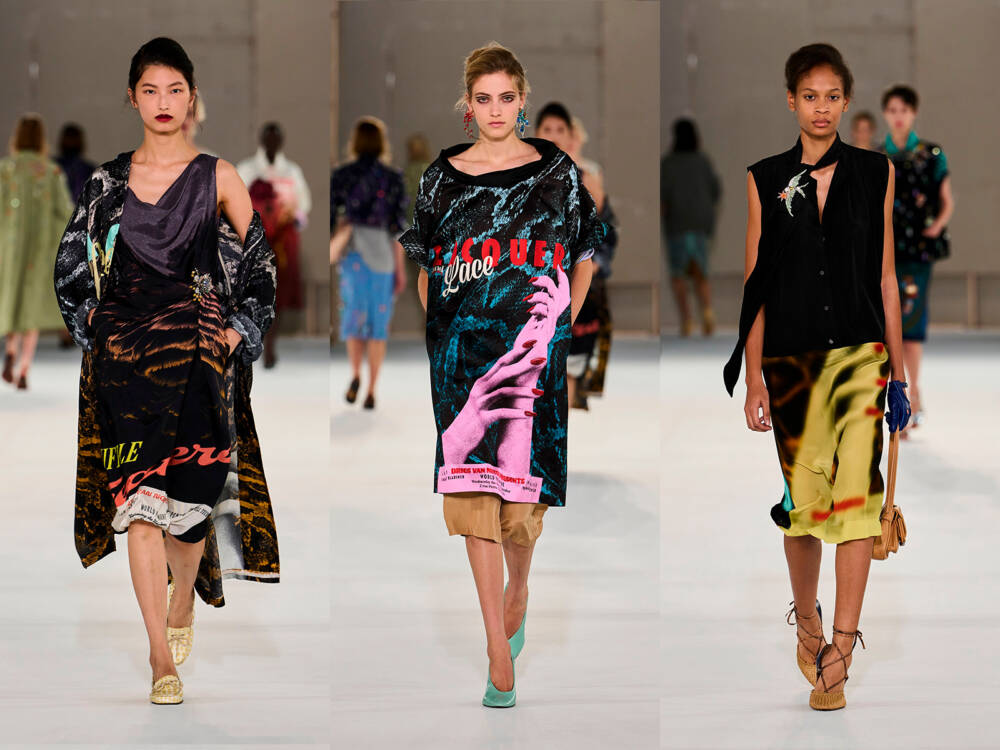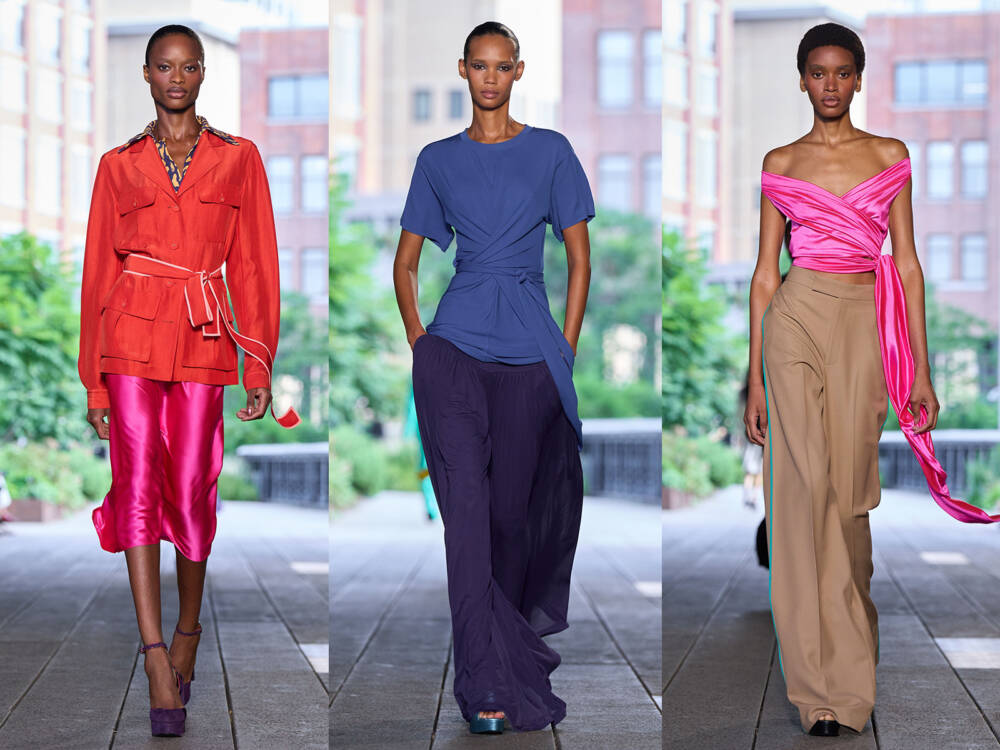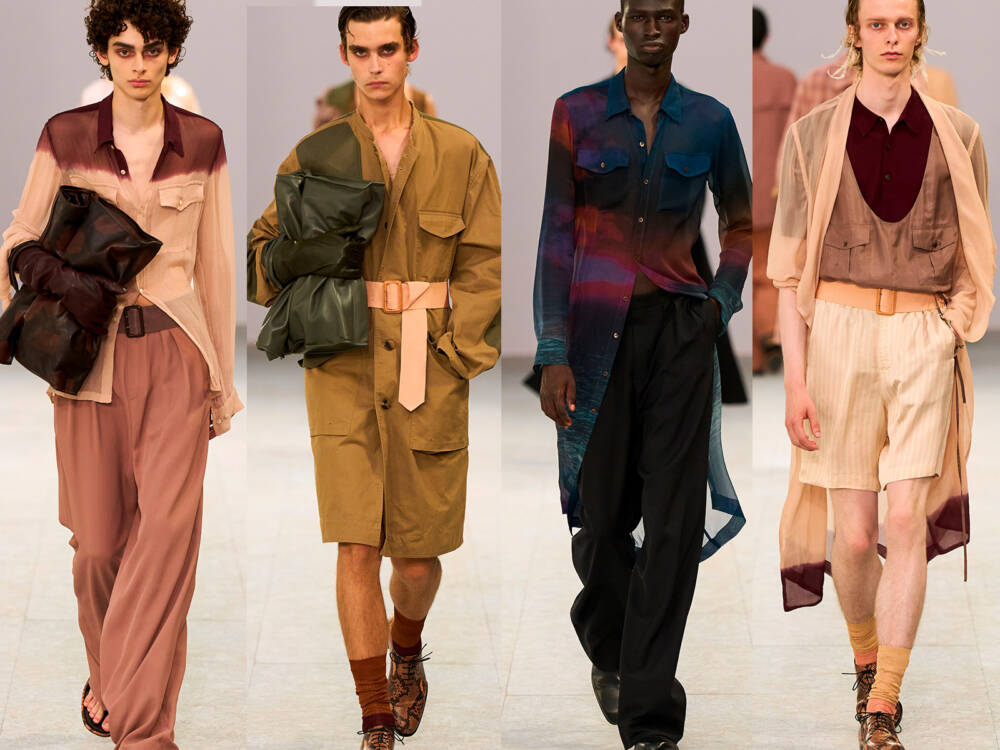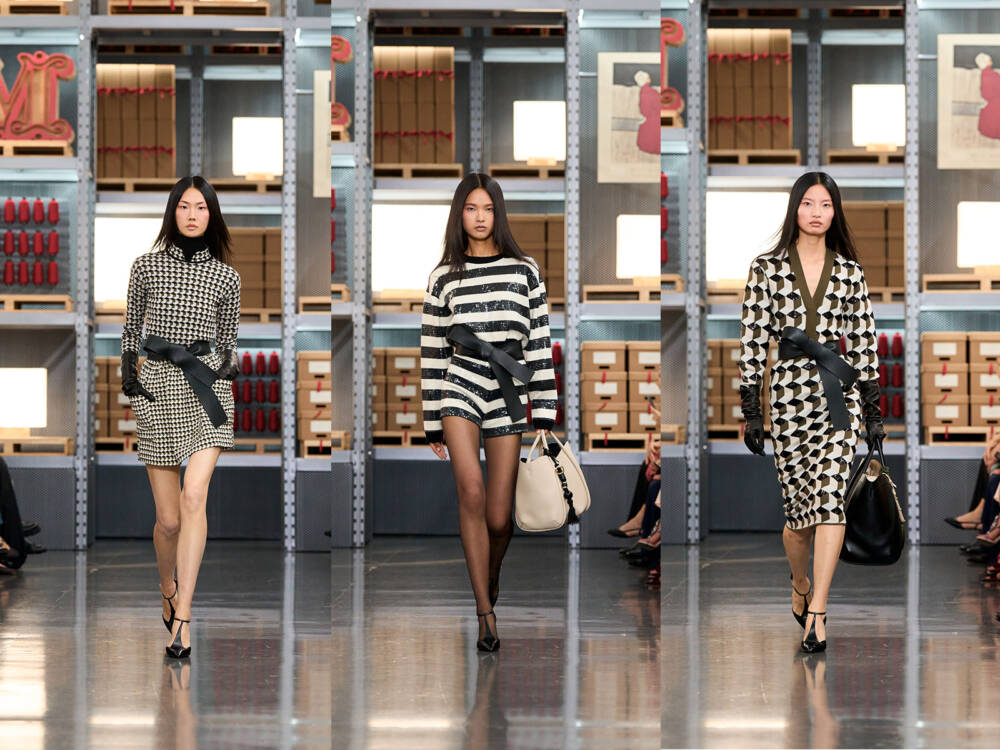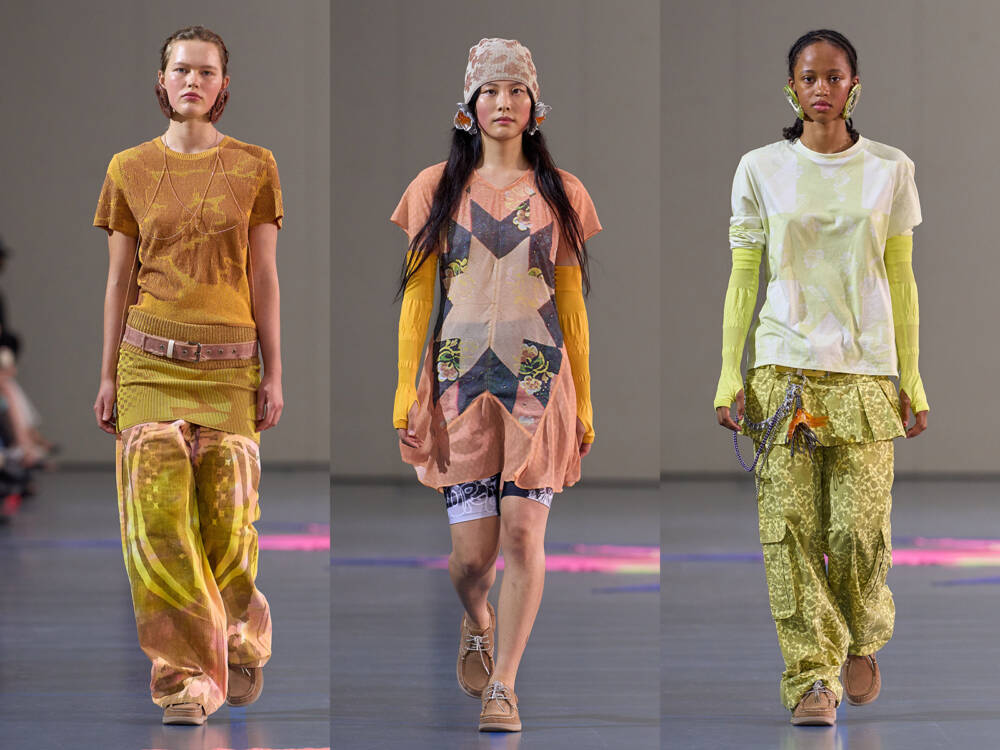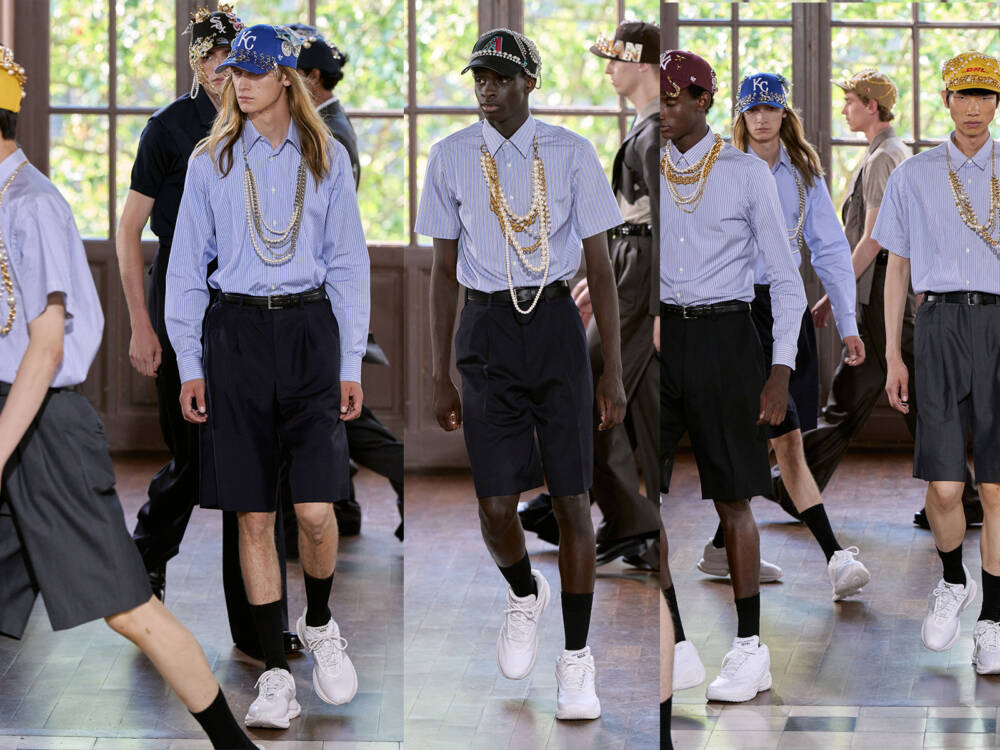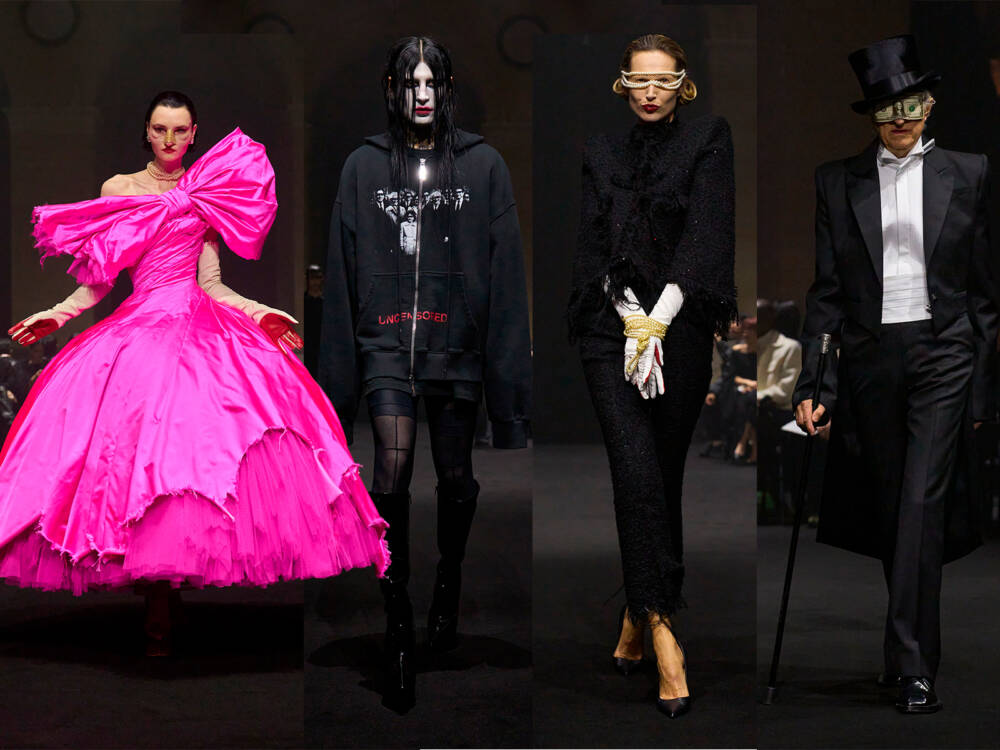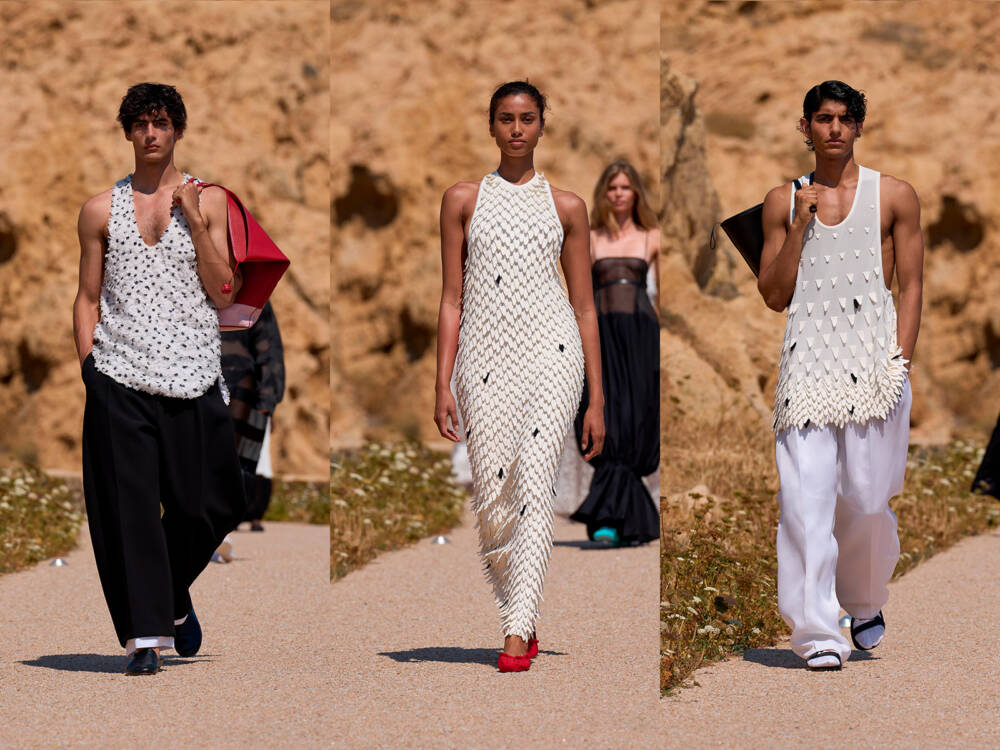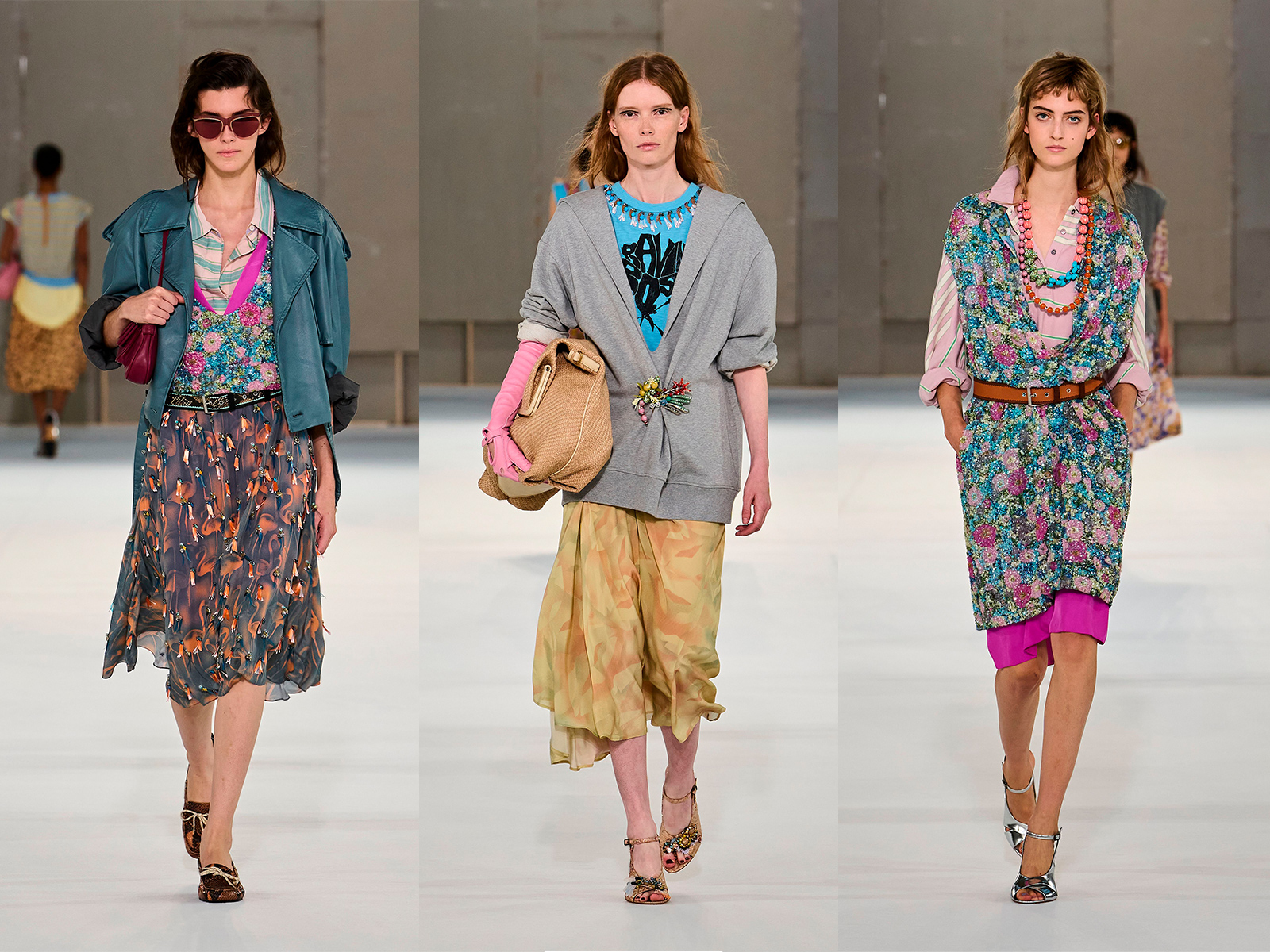

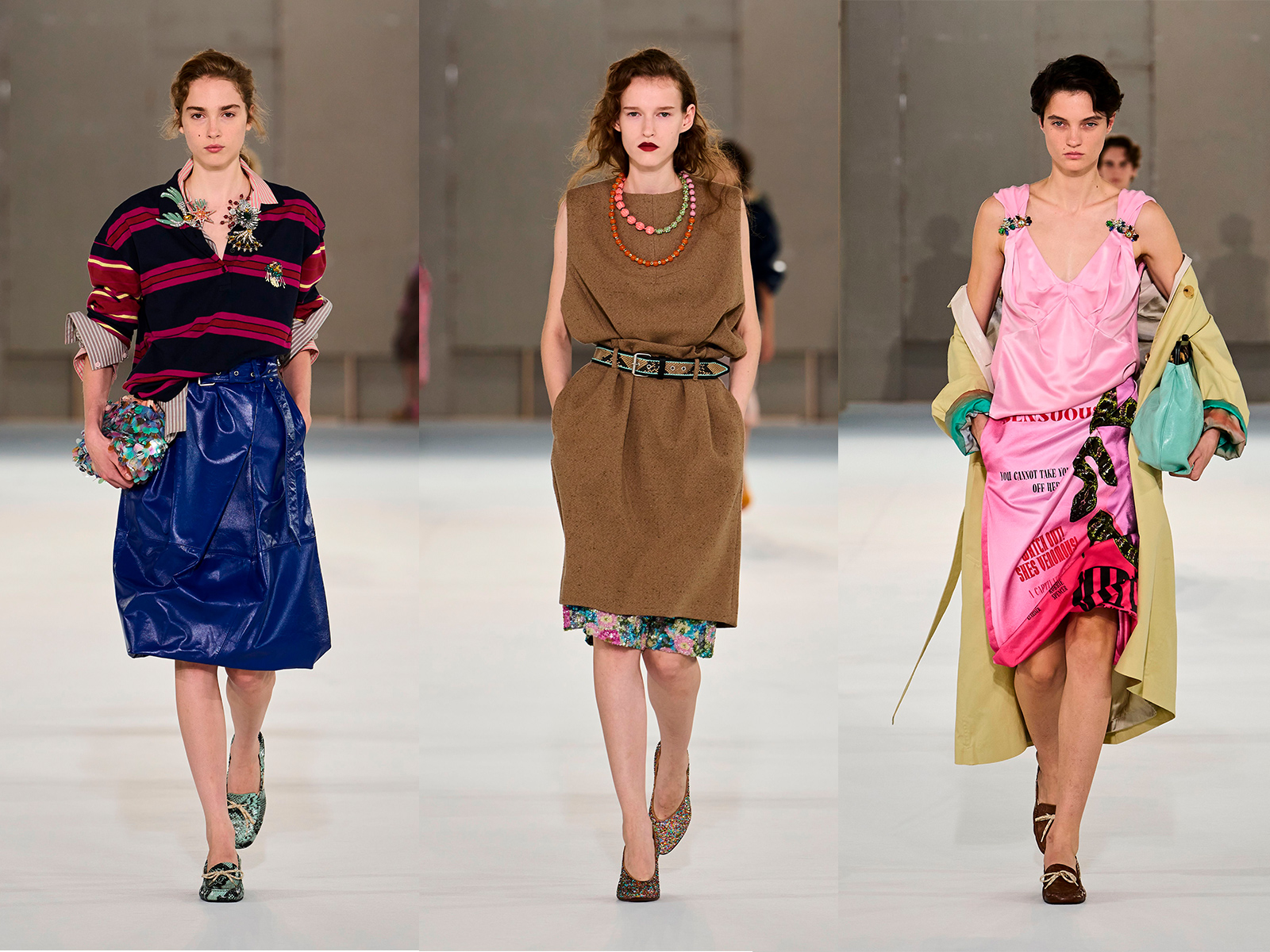
A stenciled star. A flash of color beneath a skirt. Beads, prints, knits and layers that seem to have found one another by instinct. At Dries Van Noten, getting dressed is an exercise in creative freedom, but one conducted with an exceptionally good eye.
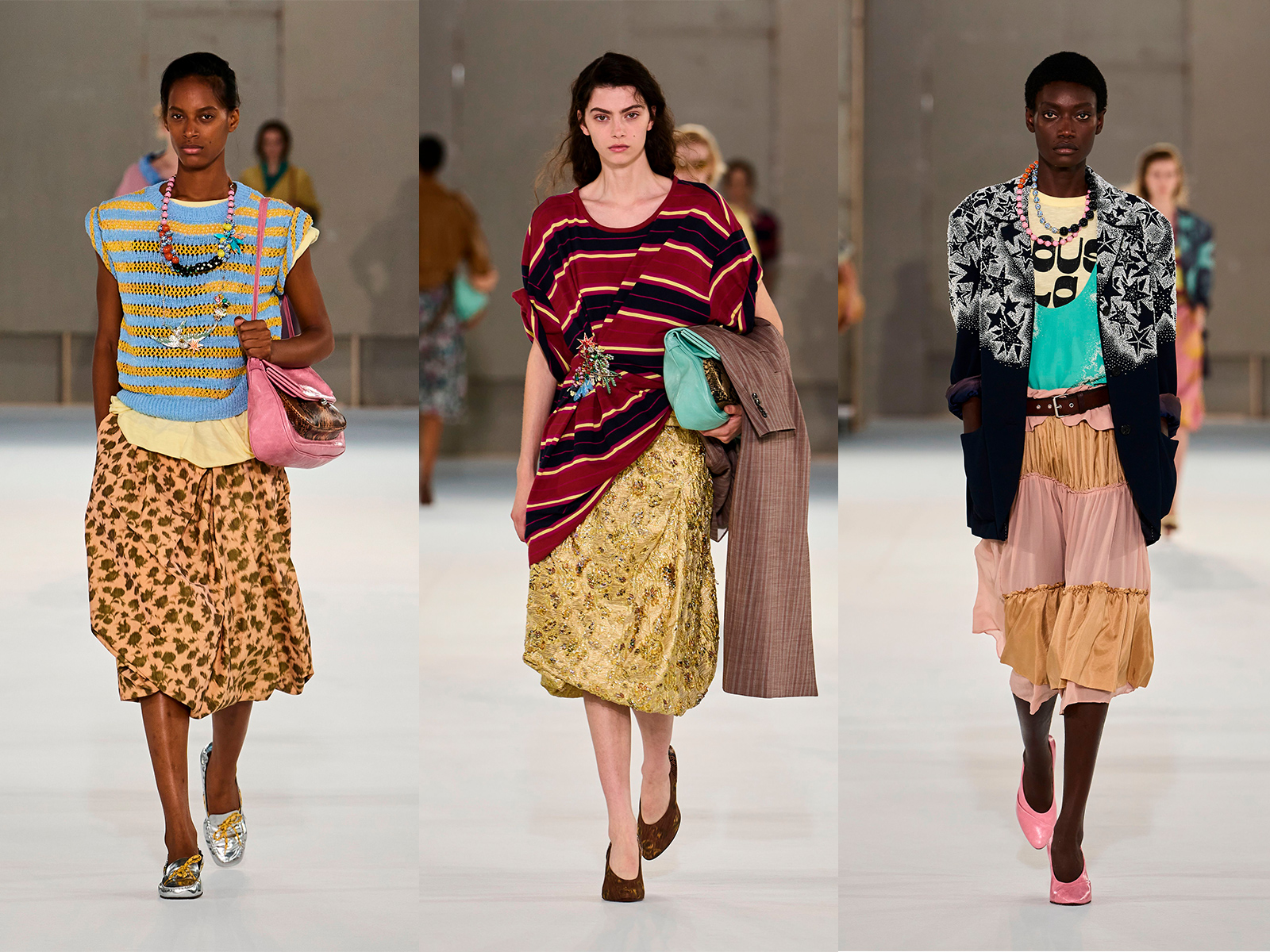
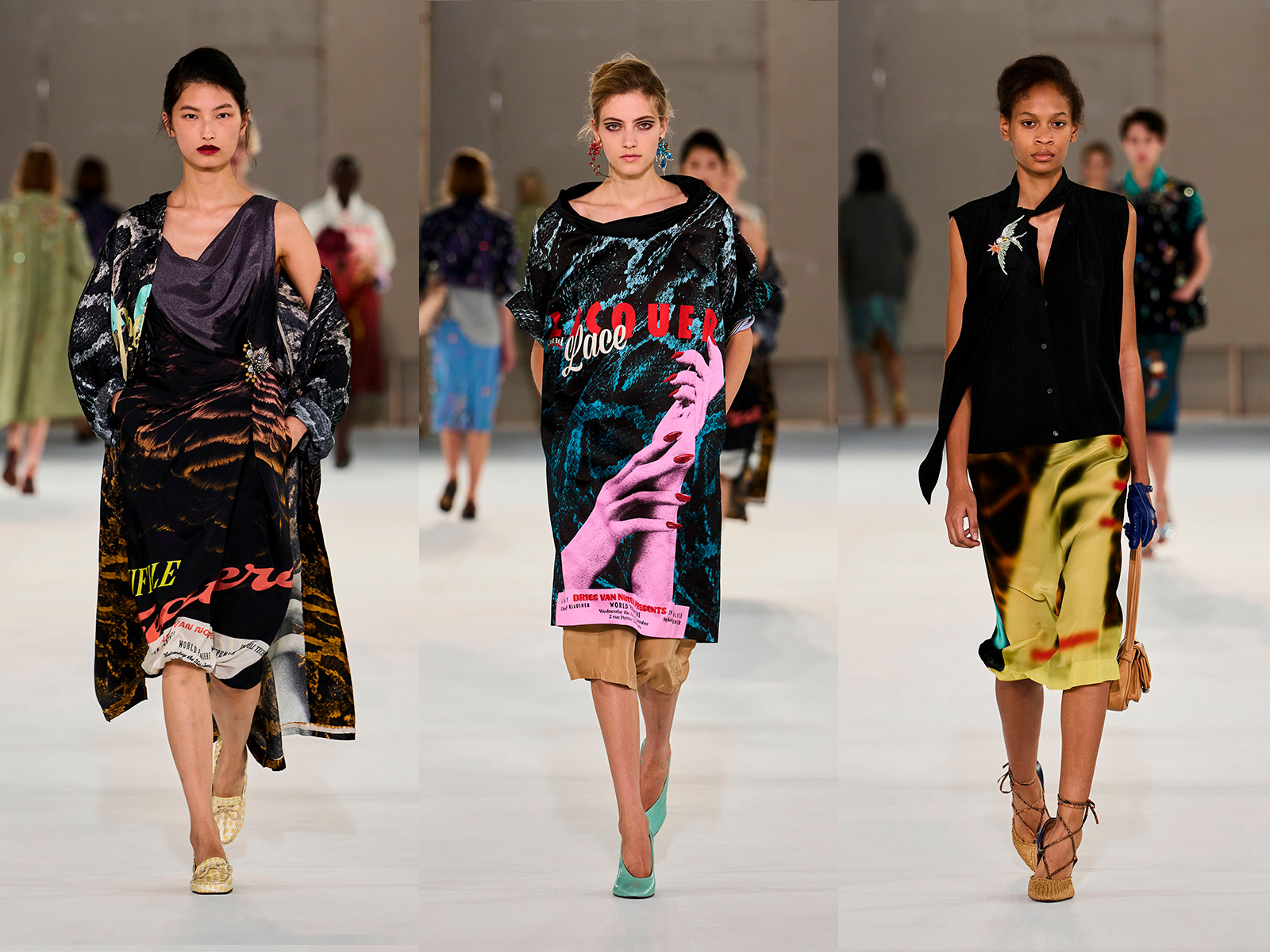
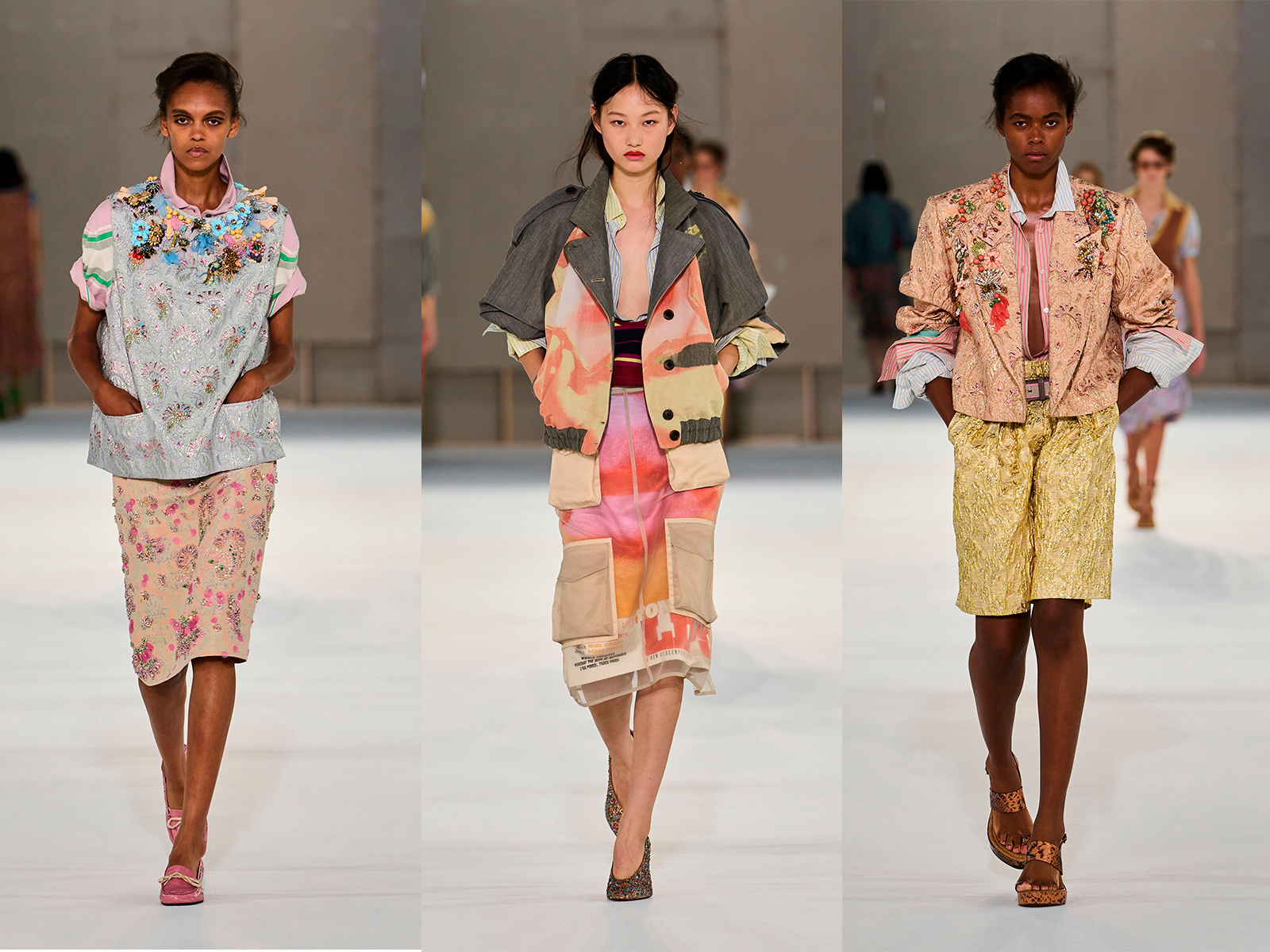
For Spring 2027, Julian Klausler embraces the pleasure of mixing things up. Prints meet other prints; florals encounter graphic motifs, stripes and animal patterns. Knitwear slips into the equation, while dresses and skirts are layered, interrupted and reimagined. Beading and intricate embellishment add another dimension, catching the light against printed and textured surfaces. The effect is expressive, occasionally eccentric and full of character.
There is a DIY spirit running through the collection. The stenciled stars have the directness of a homemade project, while the mix-and-match styling suggests the pleasure of pulling pieces together in front of a mirror, trying combinations that might not work until, suddenly, they do. But this is DIY of the highest order. The apparent spontaneity is underpinned by a sophisticated understanding of color, proportion, fabric and finish. Nothing feels arbitrary. The clothes are orchestrated with the precision of a master class, yet retain the pleasure of discovery.
Fabric is central to the effect. Patterned surfaces sit alongside knits and more fluid materials, creating contrasts in weight, texture and movement. Dresses become foundations for further layers; skirts provide another plane of color or pattern. A familiar silhouette can change entirely through the addition of a contrasting hem, a patterned layer or an unexpected piece of embellishment. The interest lies not in any single element, but in the way the elements interact.
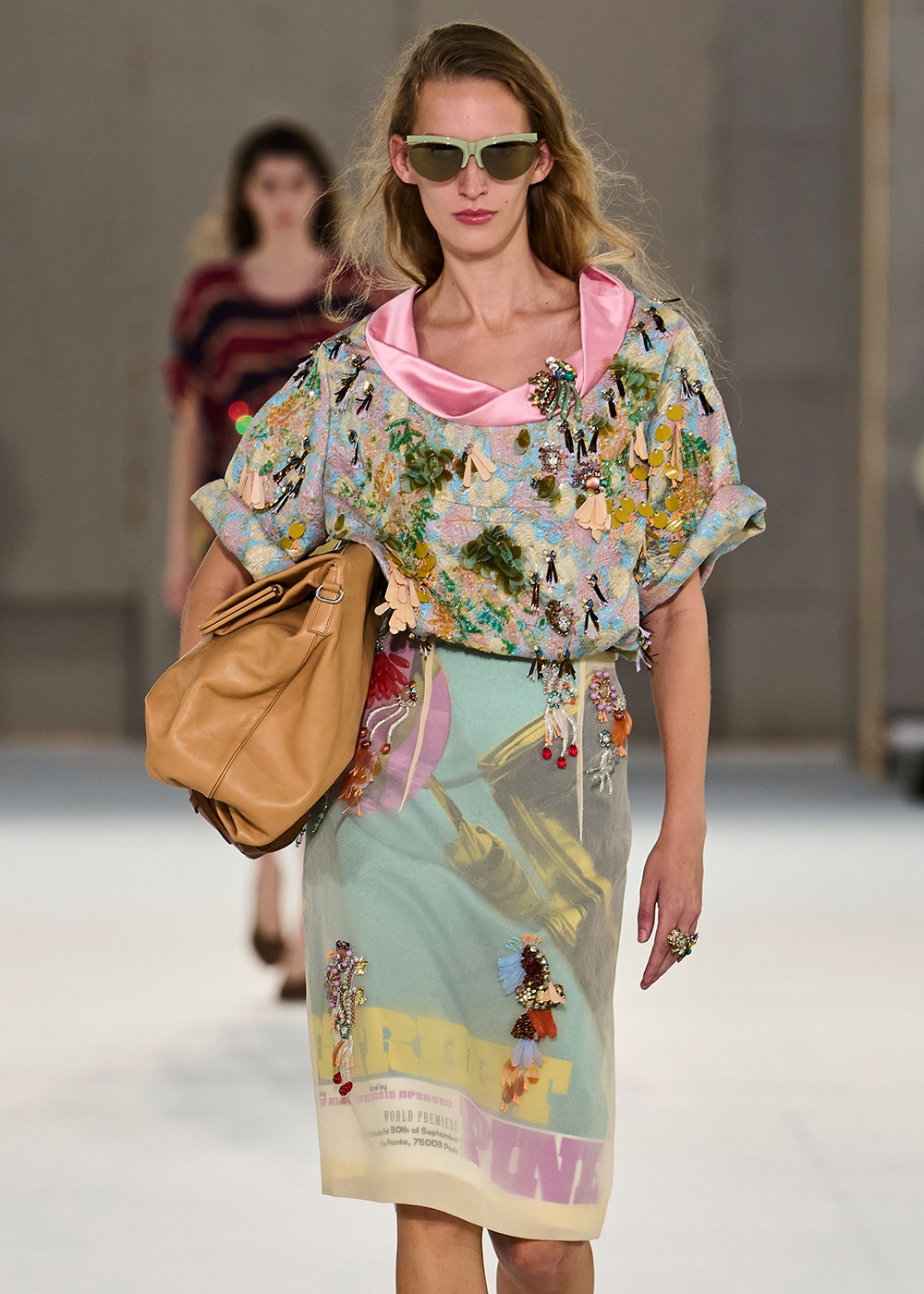
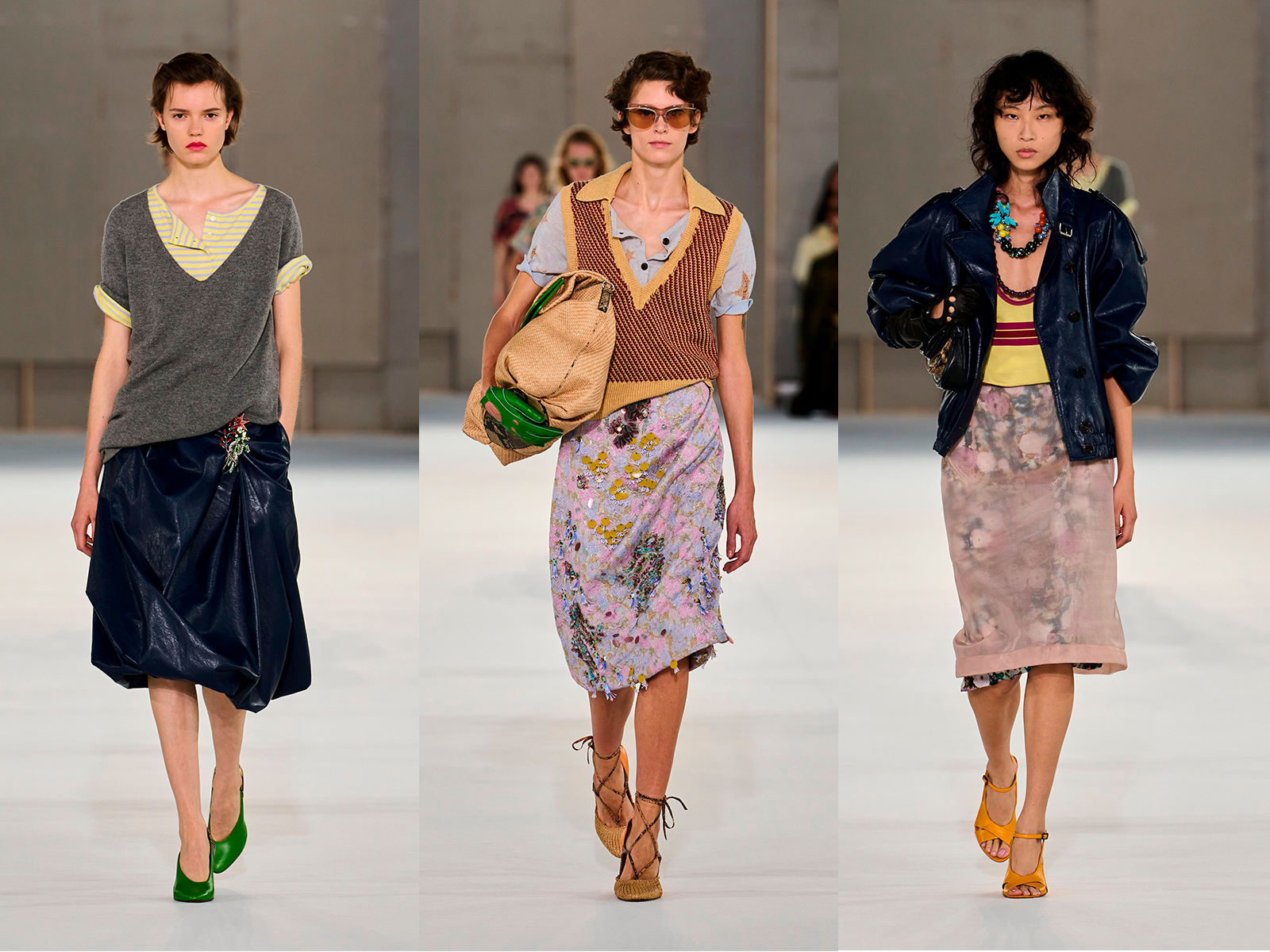
Color is handled with equal confidence. Rather than remaining neatly contained within a look, it appears in slashes and glimpses: a bright note emerging beneath a skirt, a saturated neckline against a darker ground, one unexpected shade changing the character of everything around it. These interruptions give the collection its rhythm. They also reward a closer look, revealing how much thought has gone into the smallest decisions.
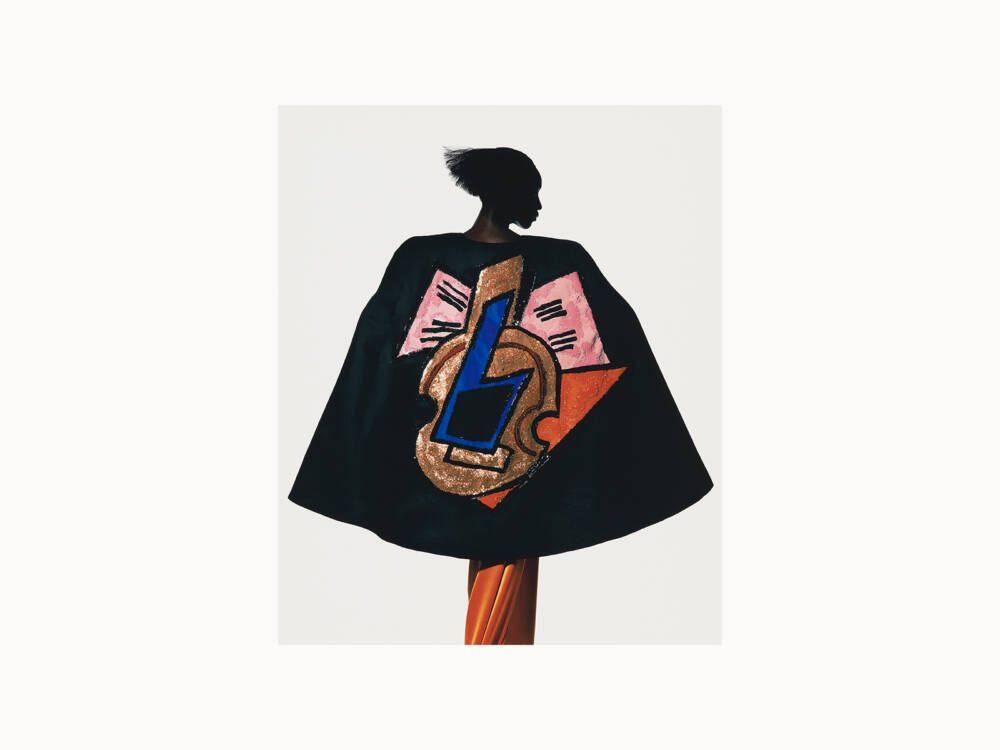
The detailing is exquisite without becoming precious. Beadwork, decorative motifs and stenciled graphics bring different kinds of finish into the same conversation. Some gestures feel deliberately handmade; others have the richness of traditional embellishment. Together, they create a wardrobe that is both carefully constructed and refreshingly unbuttoned. It is maximalism with a sense of humor, and craftsmanship that doesn’t need to announce itself.
Klausler is finding his footing within the house’s unmistakable visual language, but Spring 2027 feels like more than a continuation of familiar signatures. The collection has a particular lightness and a forward-looking ease. Color, pattern and ornament are not simply inherited codes to be repeated; they are materials to be rearranged, challenged and made personal. His understanding of the legacy is evident, as is his willingness to let it move.
The result is fashion that takes dressing seriously without taking itself too seriously. There is a hint of the screen siren in the glamour, but also the freedom of someone getting dressed for her own pleasure, with no particular occasion required. The clothes suggest character rather than prescribe it. They invite experimentation rather than dictate a finished image.
At Dries Van Noten, the art is in the mix. Julian Klausler makes it look instinctive. That is the trick.