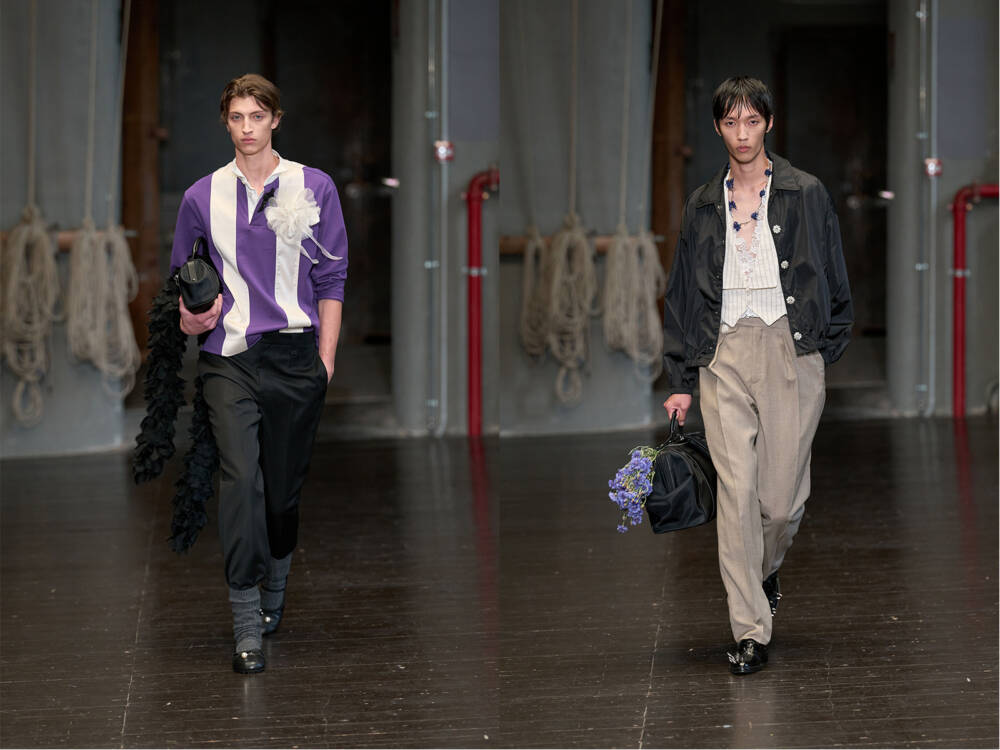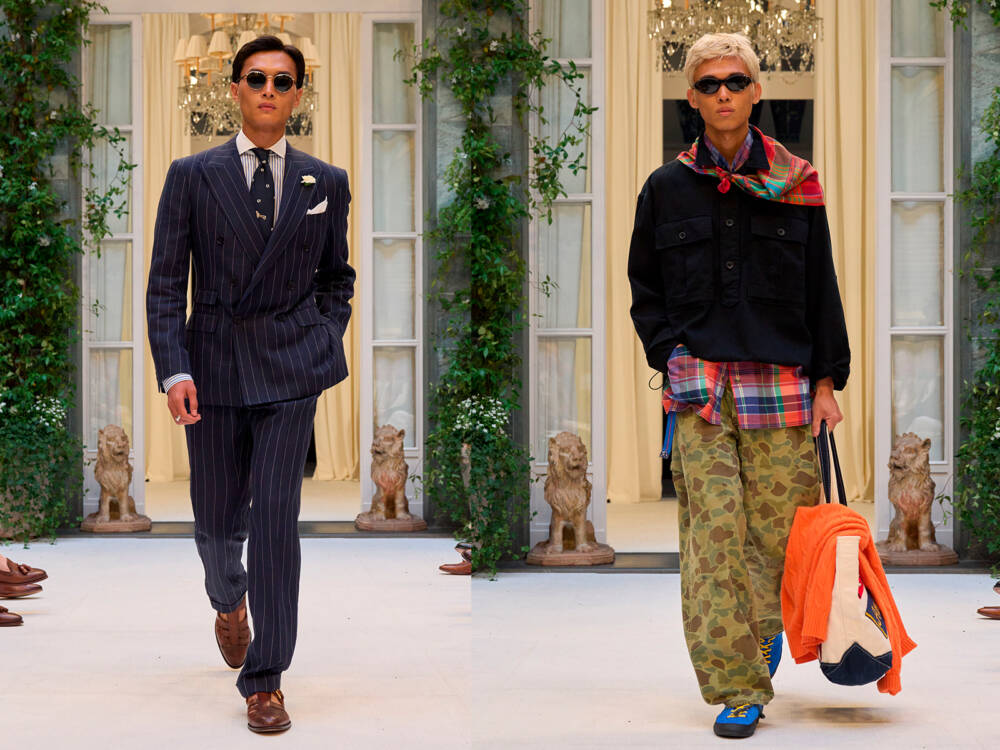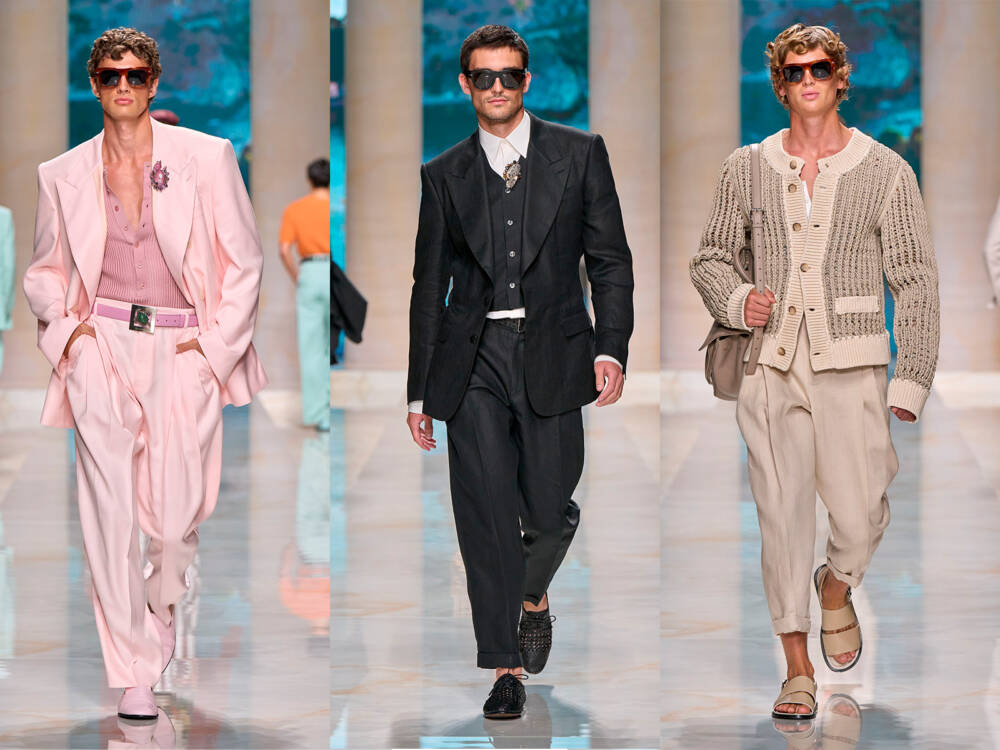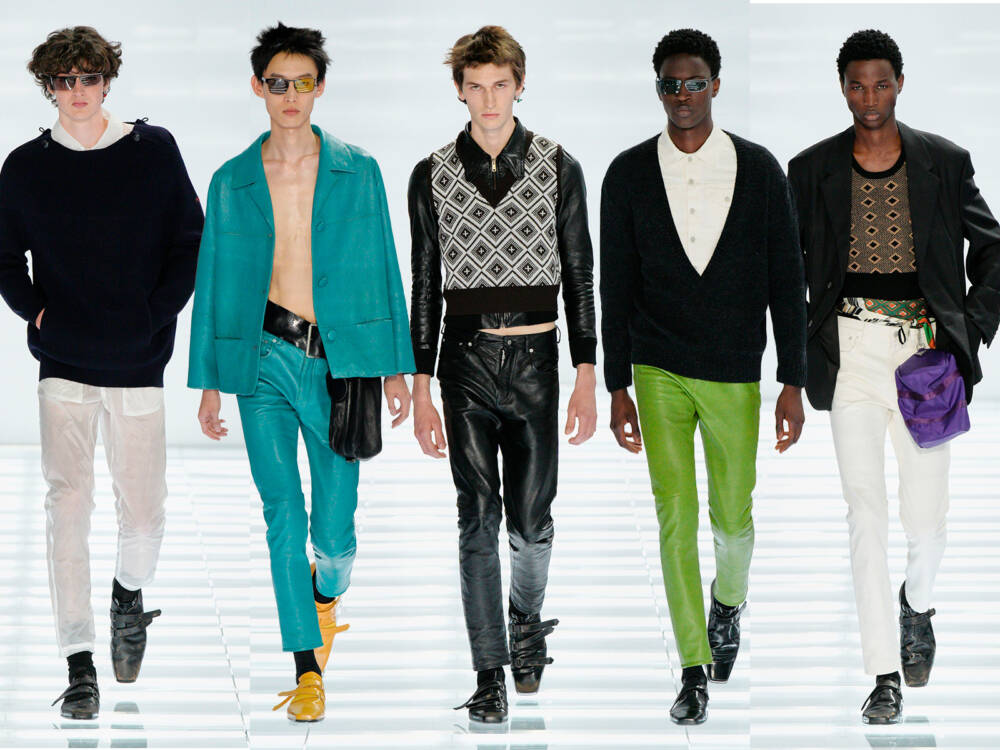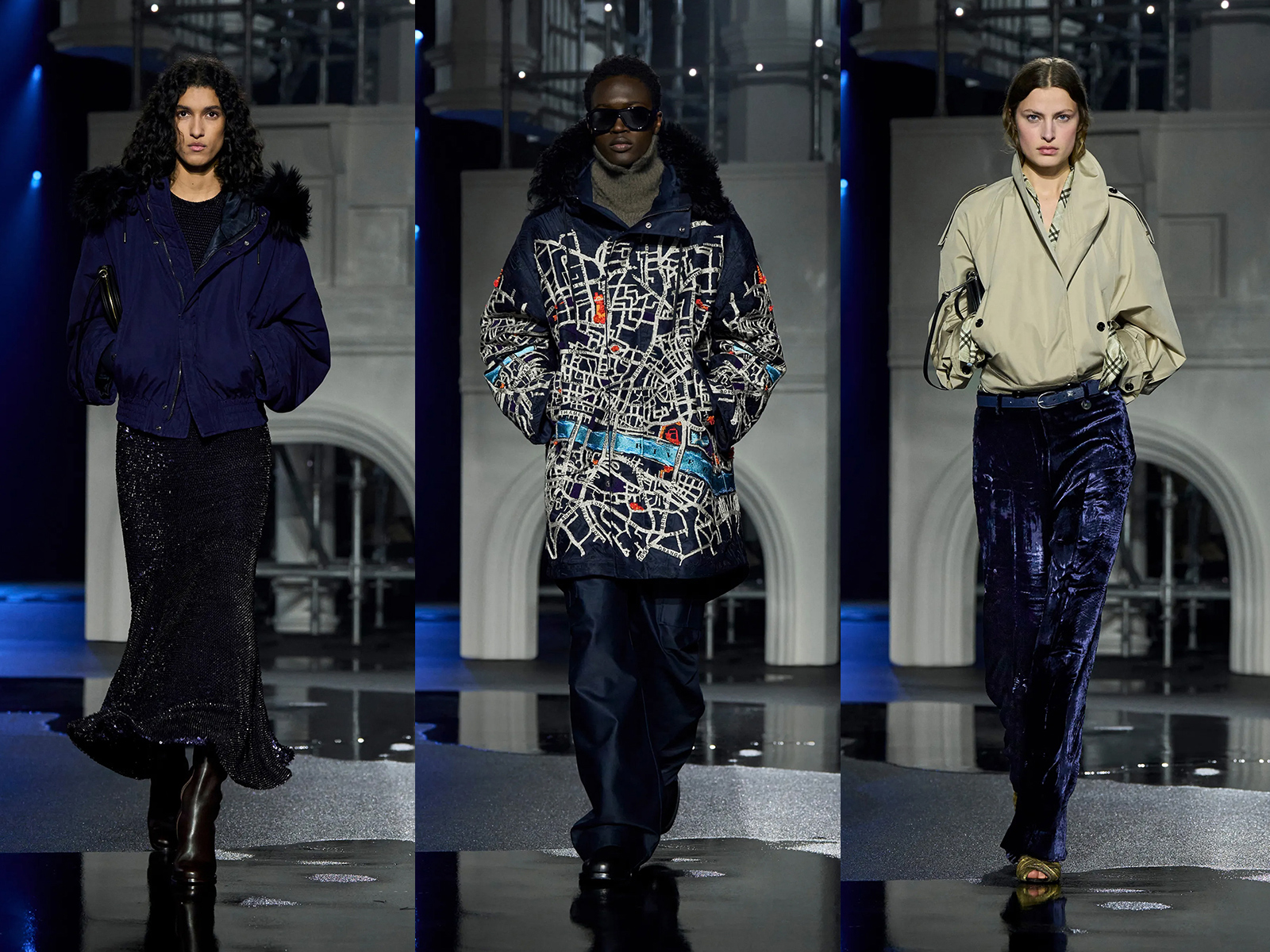

At Burberry Fall/Winter 2026, the conversation begins and ends with outerwear. Not as a category, but as a philosophy.
The show, staged in London at Old Billingsgate Market, unfolded within a constructed vision of the city itself—rain-slicked, reflective, and in motion. Set against a fragmented rendering of Tower Bridge, the environment felt less like spectacle and more like atmosphere: a London not preserved, but actively becoming.
The materials tell the story first.
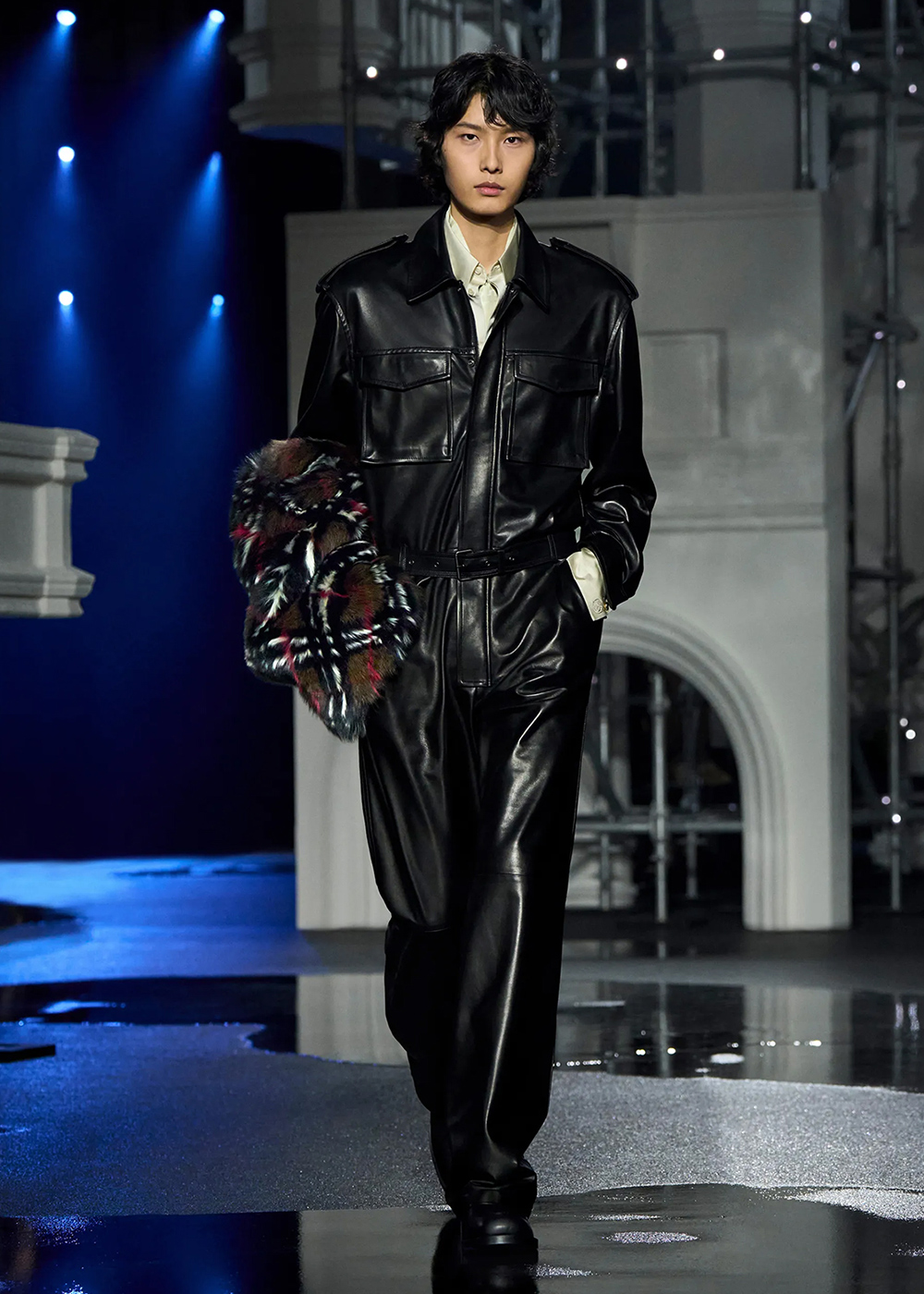
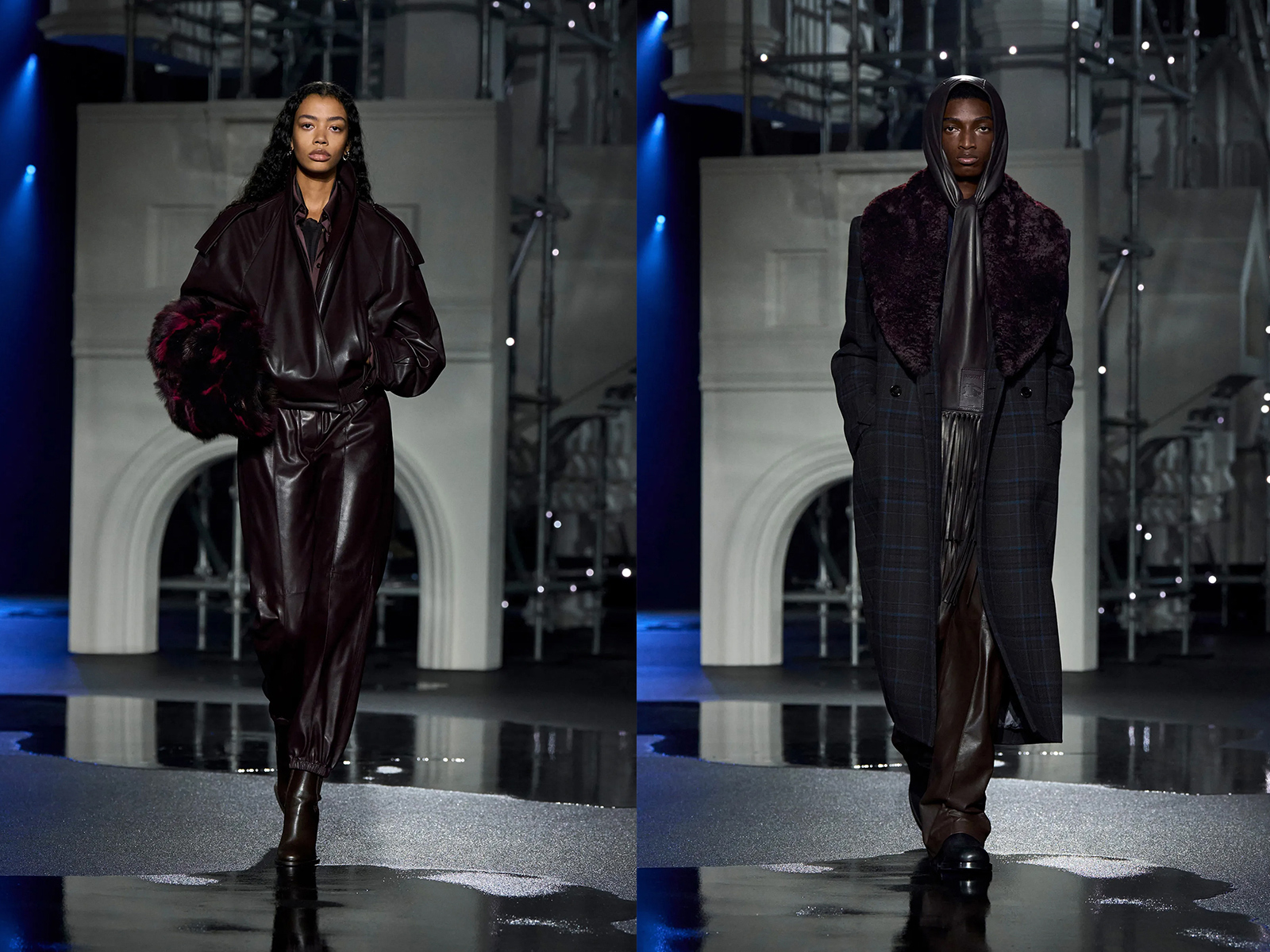
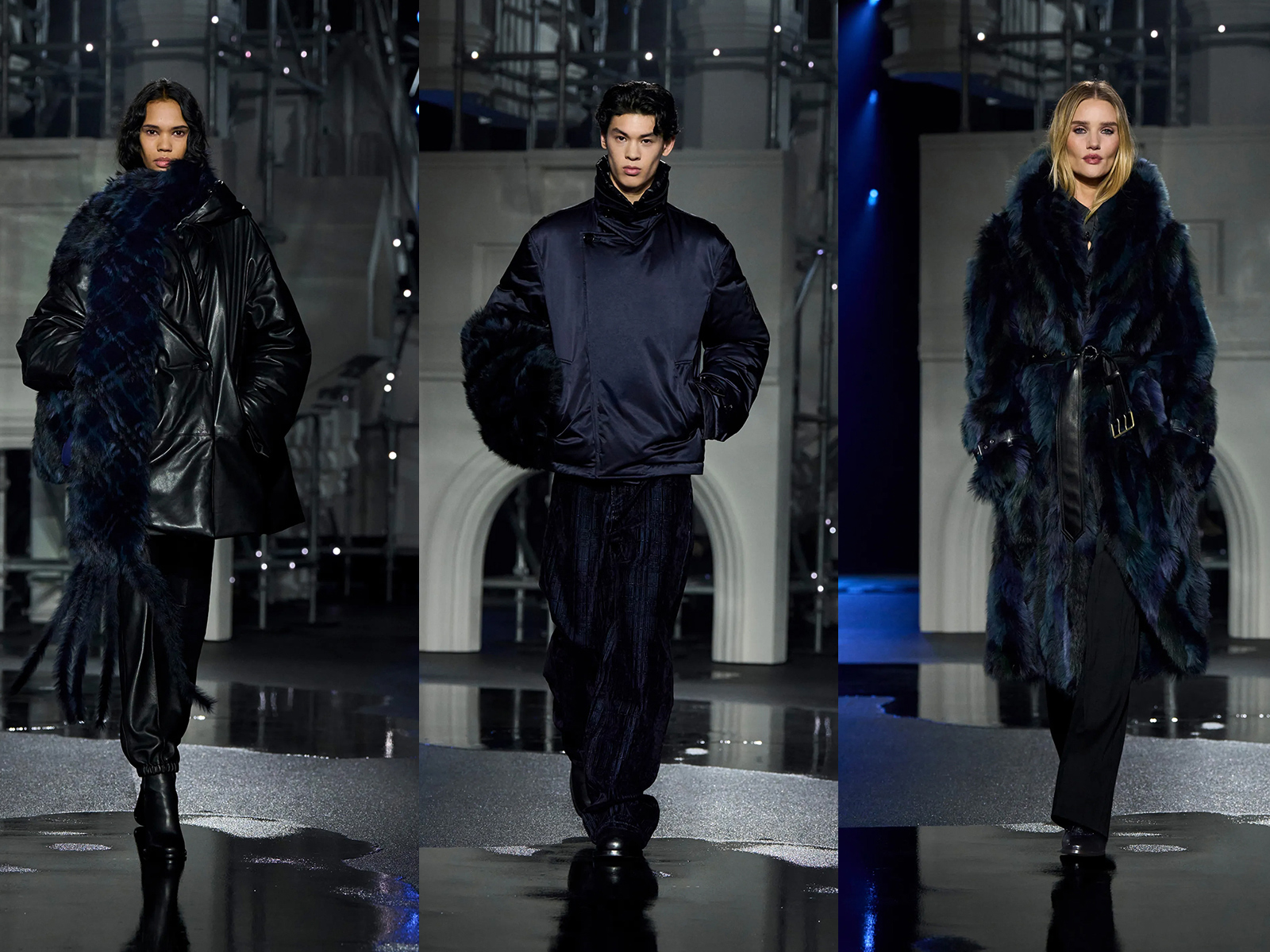
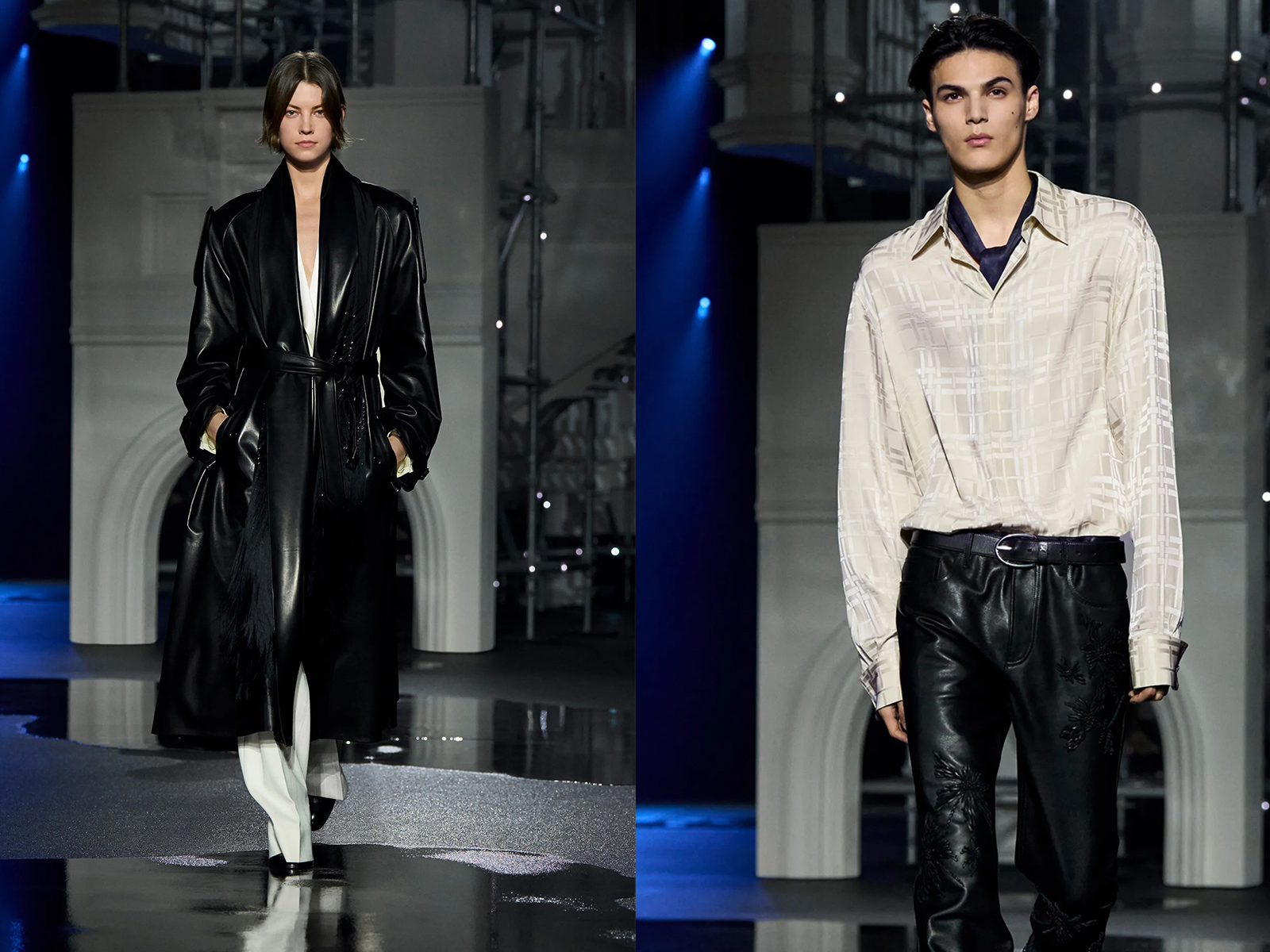
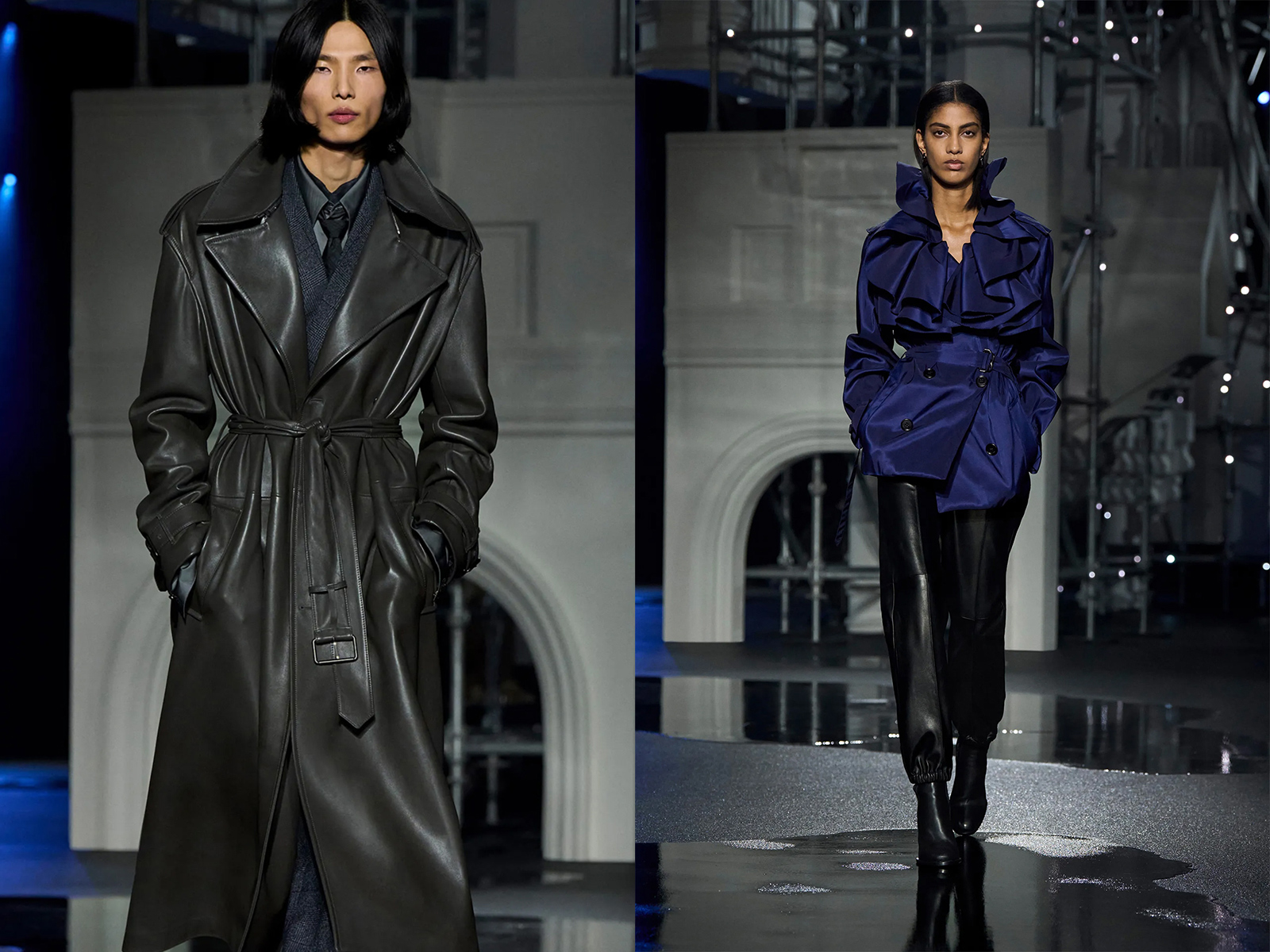
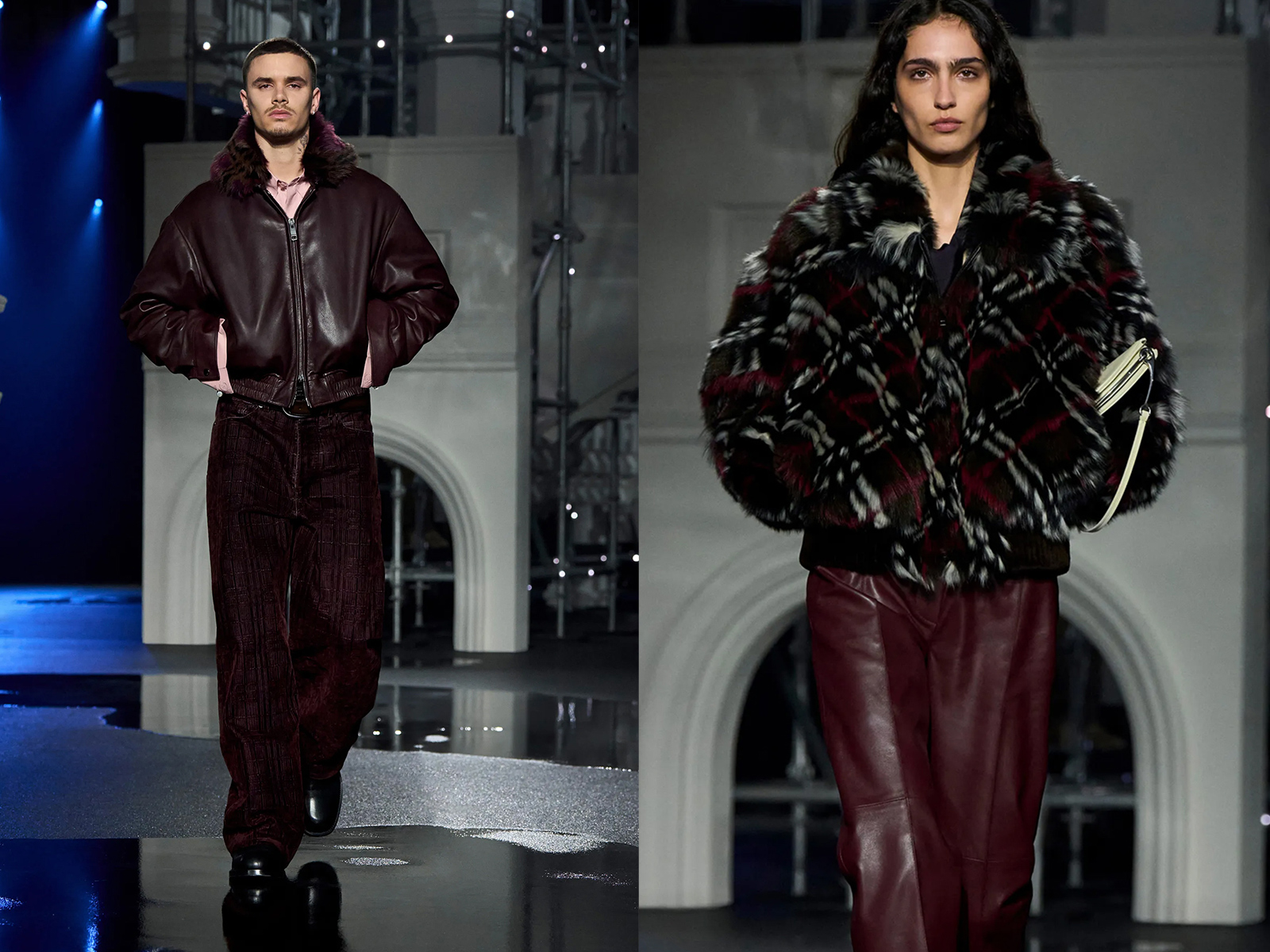
Leather appears in multiple states: polished, worn, embossed, and quietly structured into form. Some surfaces reflect a muted sheen; others absorb light entirely, suggesting weight and permanence. Embossing reads less as decoration than imprint—something pressed into the surface, held there. These are leathers that do not yield easily. They shape the body into something more resolved.
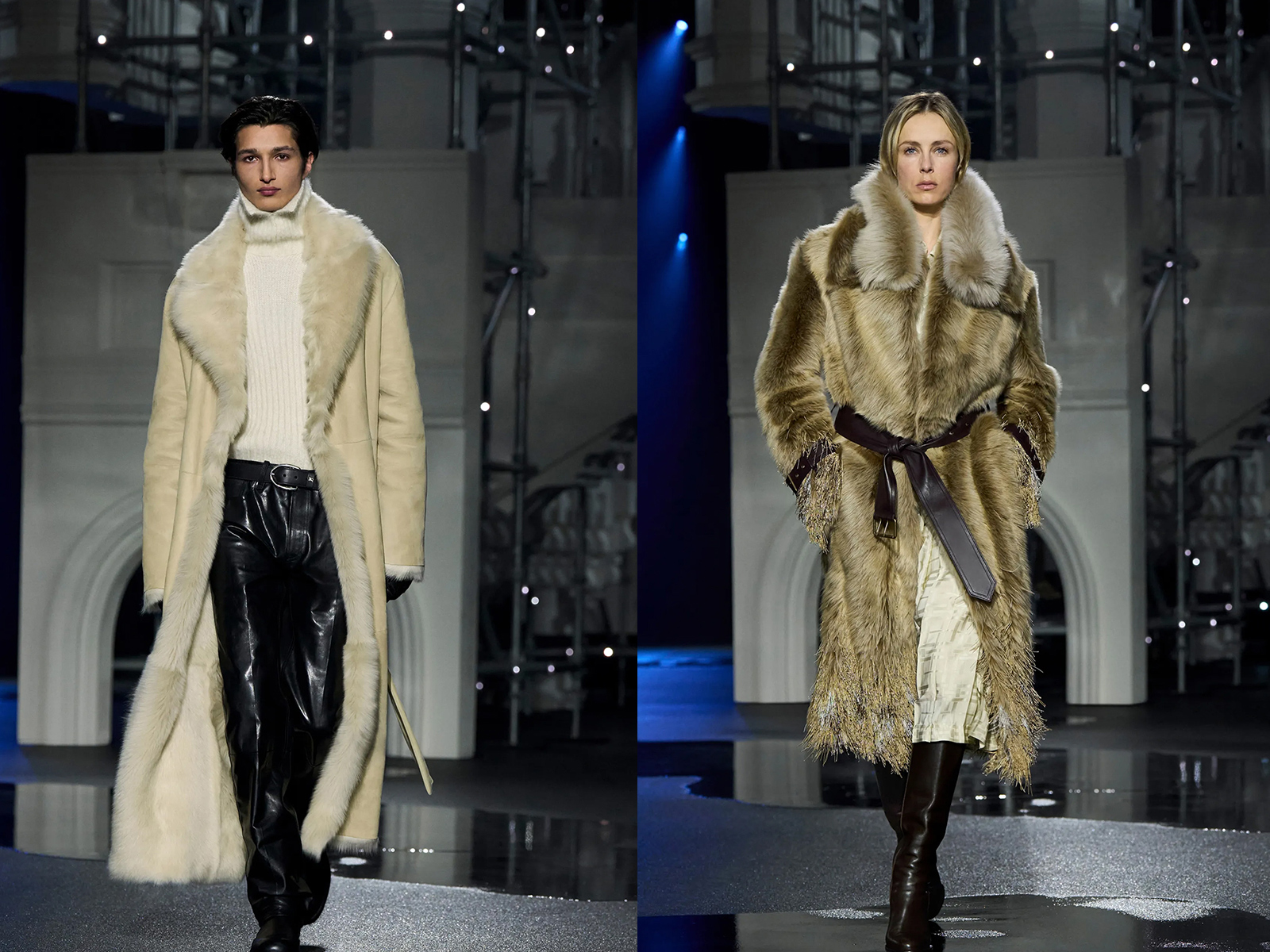
Fur and shearling introduce a measured counterpoint. They soften the severity without dissolving it, suggesting insulation rather than indulgence. Used with restraint—at collars, linings, interior structures—they feel elemental, almost necessary.
Burberry does not reinvent it so much as recalibrate it. Across both menswear and womenswear, the trench shifts in proportion and material: elongated, stripped back, or rendered in leather, where it takes on a more assertive presence. In traditional gabardine, it remains closer to its origin, though even here, the line is slightly altered—just enough to register.
And then, the trench.
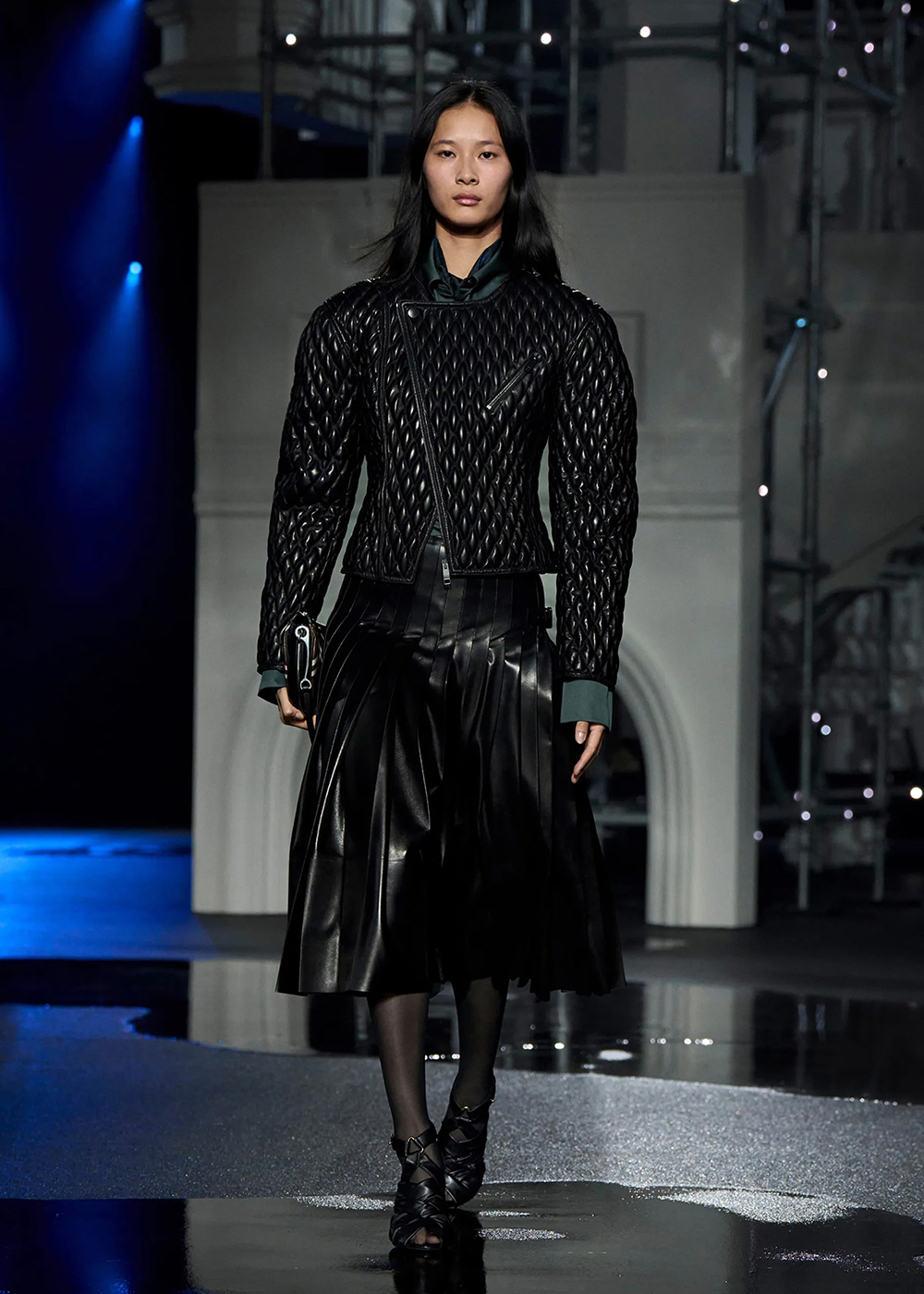
Key pieces emerge without insistence.
For women, a full-length embossed leather coat—precise through the torso, easing outward at the hem—holds both strength and composure. A shearling-lined trench offers a quiet interior weight, contrasting with a clean, controlled exterior.
For men, a dark leather overcoat—nearly monolithic in its simplicity—anchors the silhouette. Tailoring exists beneath, but it does not compete. Elsewhere, a lengthened trench with minimal hardware feels less like revision and more like continuation.
The audience carried that same quiet alignment. Barry Keoghan, Alexa Chung, and Kate Moss were present, alongside a broader cast of actors, musicians, and cultural figures. Their presence did not shift the tone, but reinforced it—Burberry’s particular ability to exist at the intersection of fashion and British cultural identity without forcing either into performance.
If there is inspiration here, it is not overtly narrative. It feels environmental. A response to season, to weather, to the quiet insistence of garments that are meant to endure.
At a moment when fashion often leans toward the ephemeral, Burberry offers something more enduring—pieces that suggest duration.
Outerwear, here, becomes more than protection. It defines a boundary. The materials—leather, shearling, skin—carry a psychological weight, reinforcing the body as much as shielding it.
There is no singular gesture, no overt disruption.
Only control.
And within that control, a distinctly British sensibility persists—measured, composed, and uninterested in excess visibility. Even as the room fills, the focus remains where it has always been: on the coat, the line, the surface, and the quiet authority they hold.