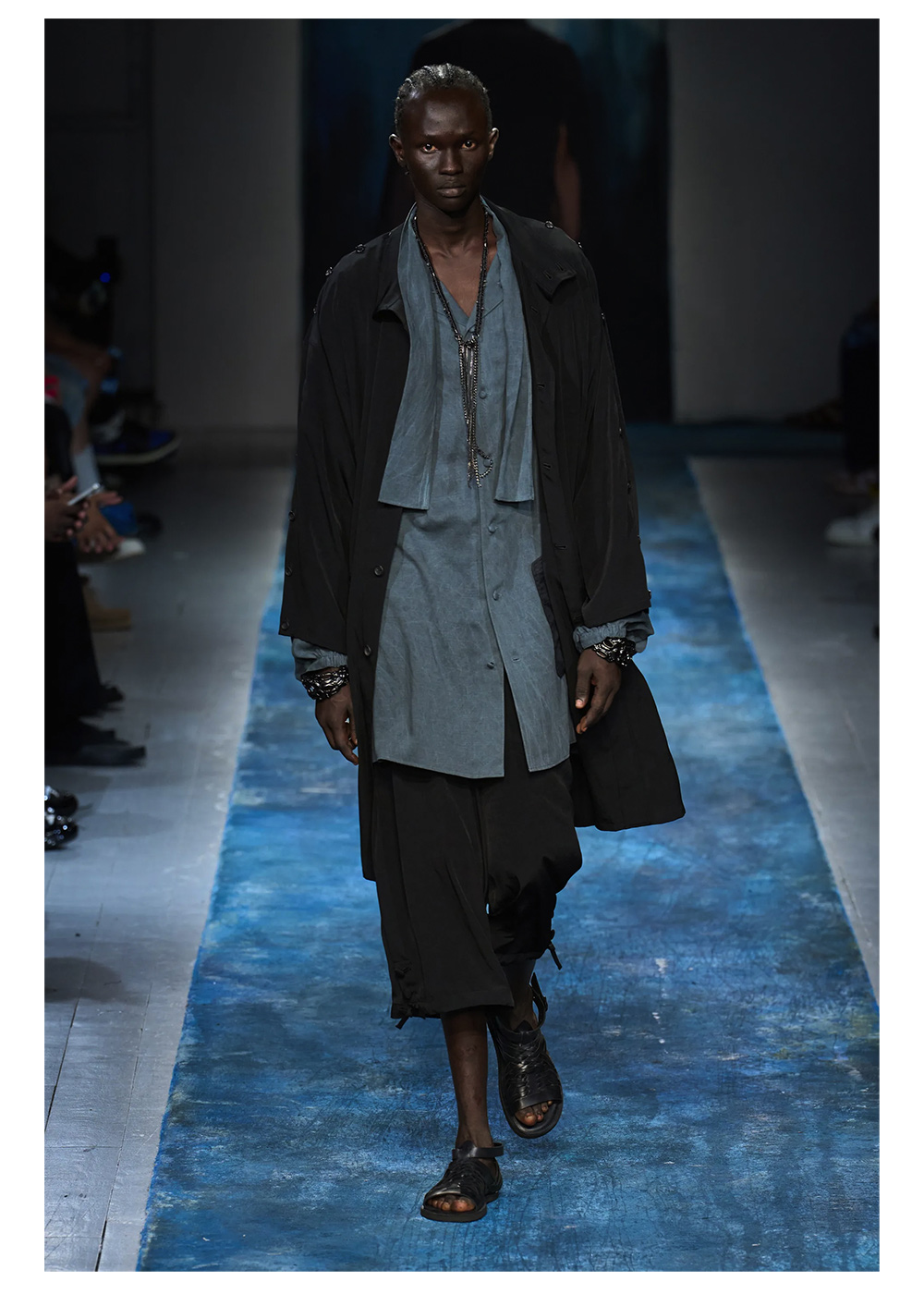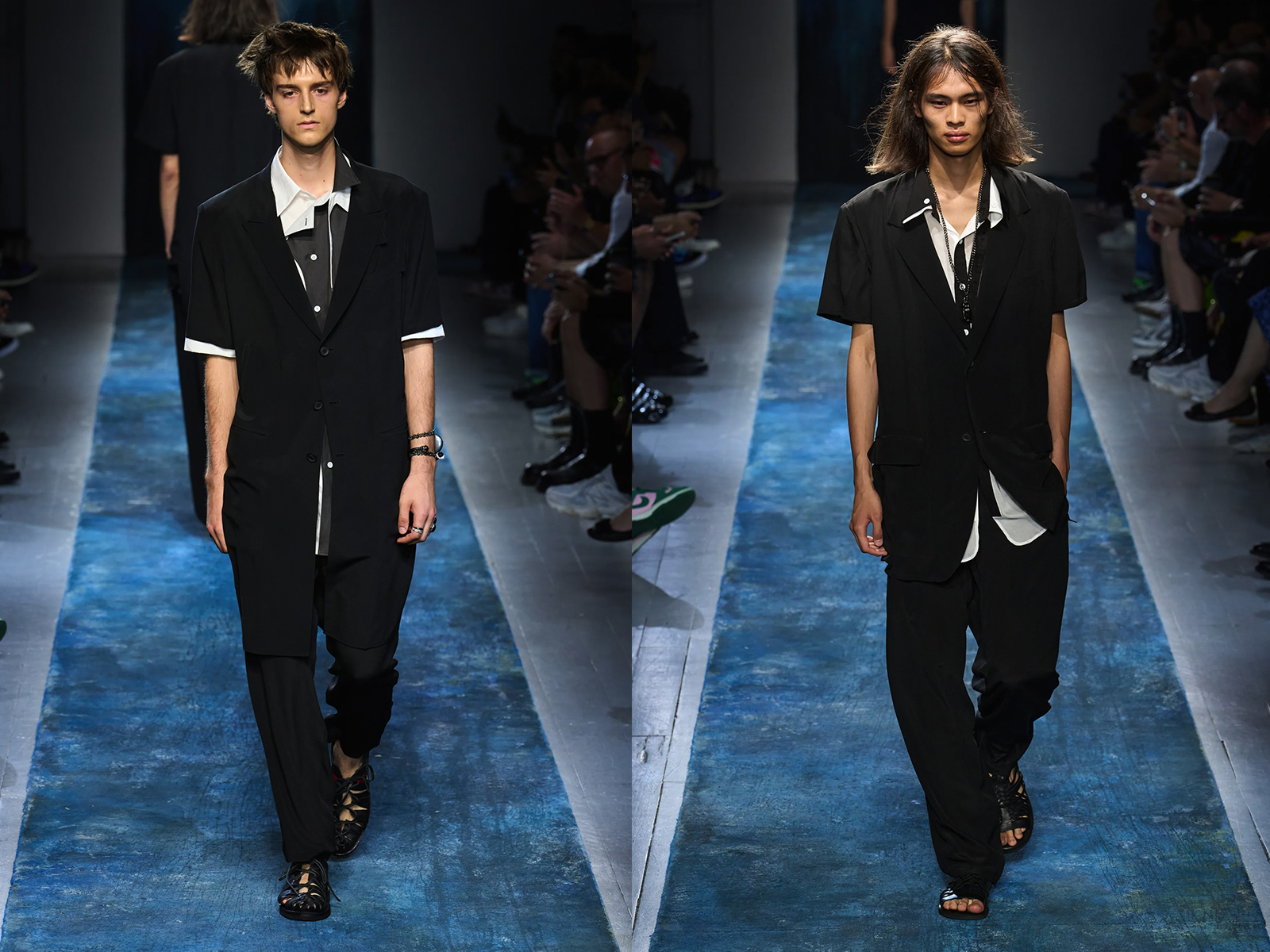

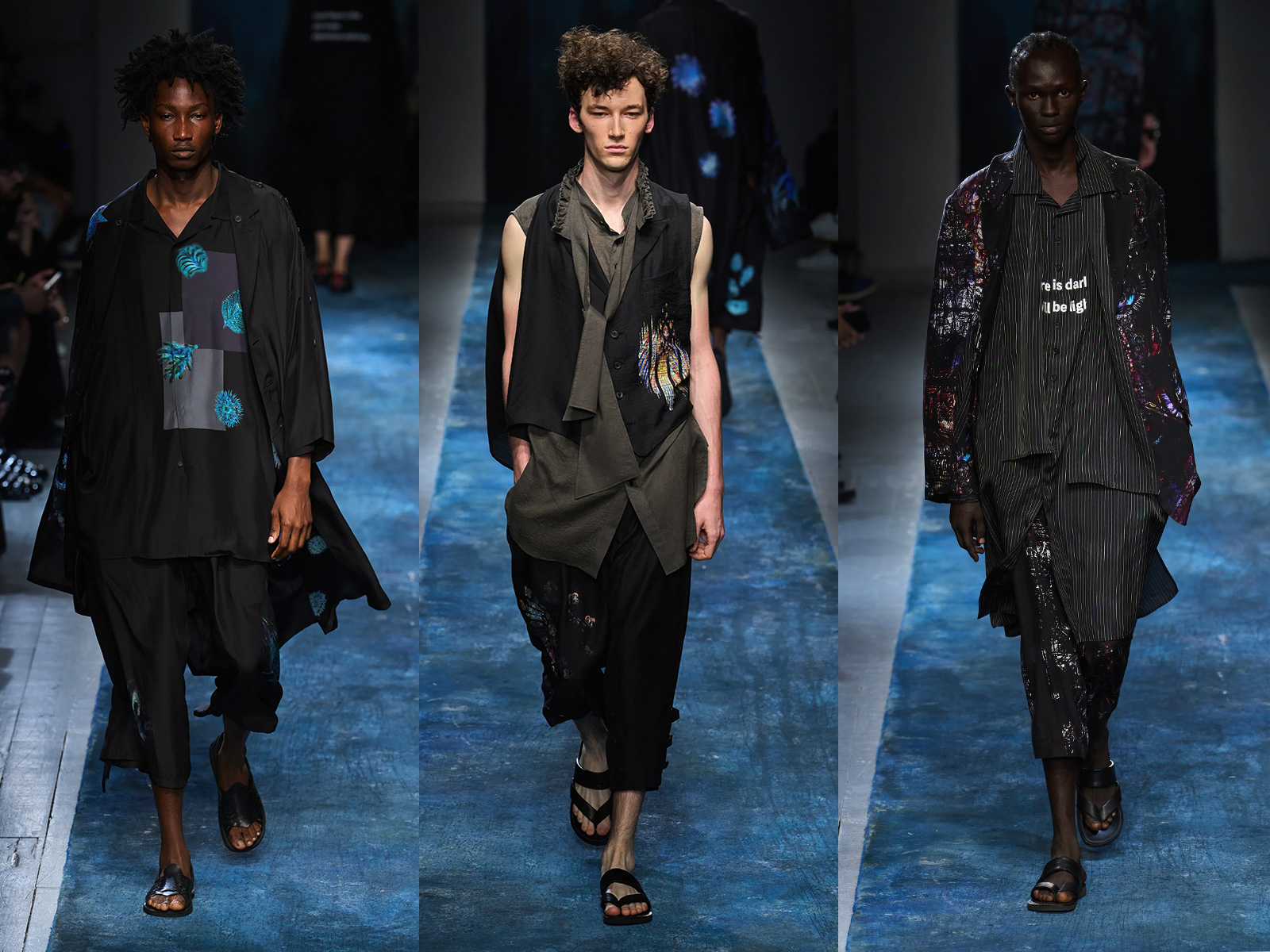
Yohji Yamamoto’s Spring 2026 menswear collection does not announce itself as a revolution. It drifts in quietly, almost stubbornly, as if insisting that the future will arrive whether we dress for it or not. Rather than chasing novelty, Yamamoto exaggerates his own language—unconstruction pushed further apart, layers loosened to the point of suggestion, garments that appear temporarily assembled, as if ready to be taken off and rearranged somewhere else.
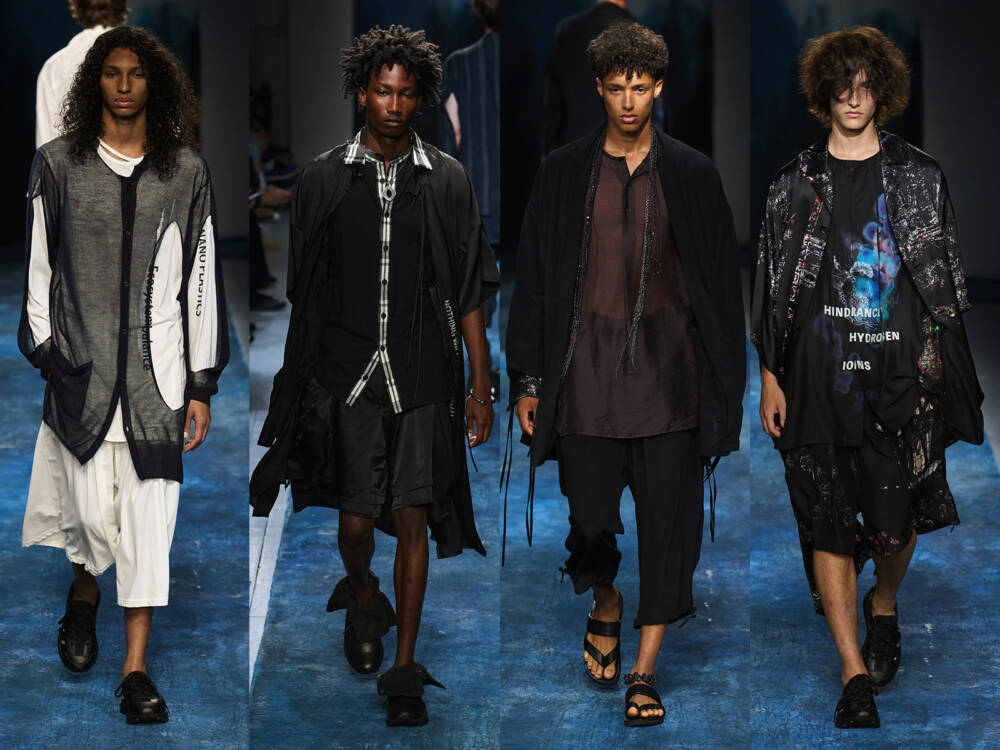
There is a nomadic spirit running through the collection, but not the romanticized hippy trope fashion often reaches for. This is nomadism born of necessity rather than freedom. Shirts hang long and off-center, trousers billow and taper unpredictably, coats look borrowed, shared, or inherited. The silhouettes feel lived-in before they ever touch a body. Clothing here is not about destination, but endurance.
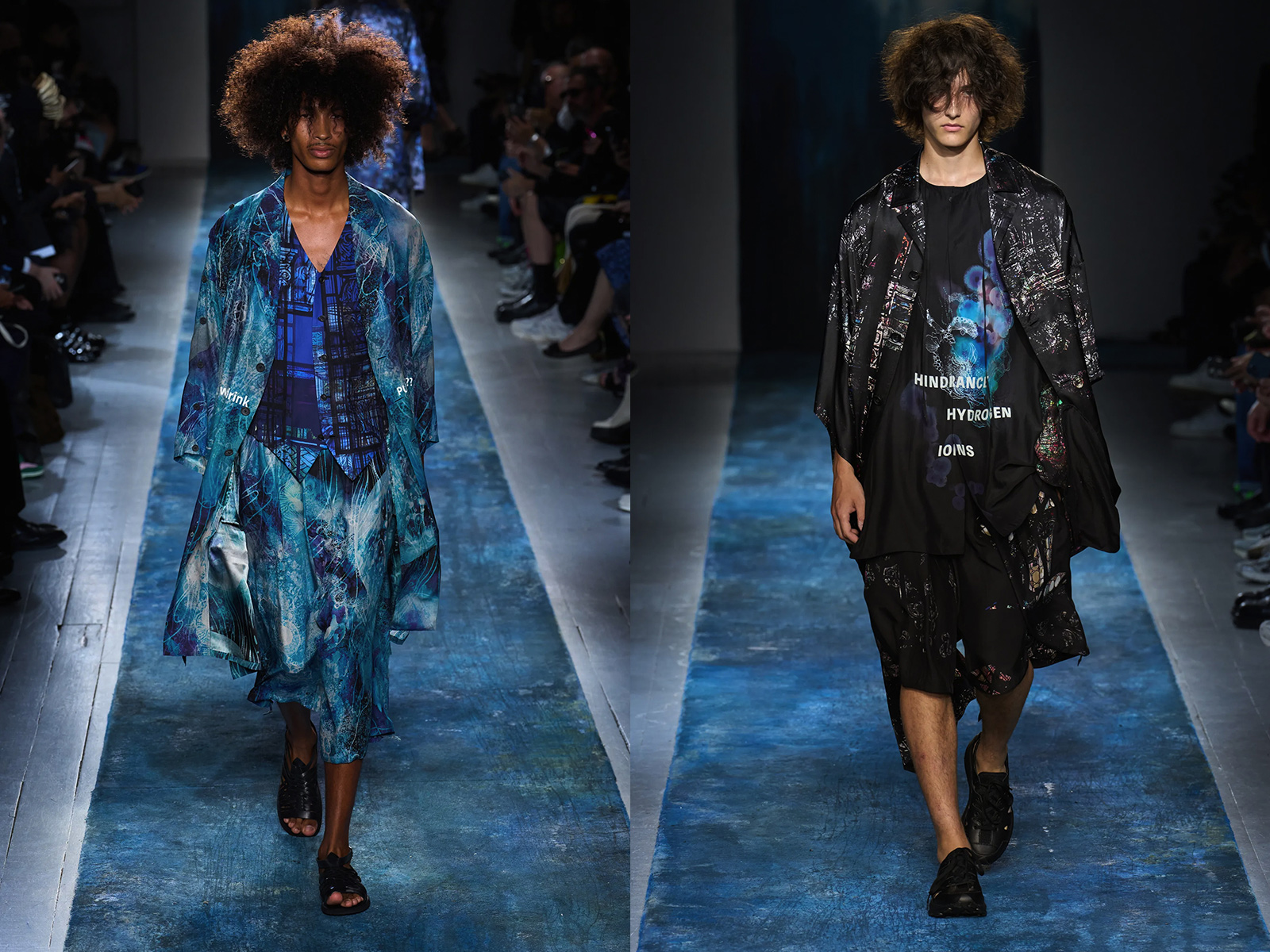
The writing printed across shirts and surfaces reads less like decoration and more like residue—phrases half-seen, messages not quite hidden but not performative either. They resist clarity, suggesting thought rather than slogan. In a season where fashion often spells everything out, Yamamoto allows ambiguity to linger. The words feel like notes left behind, warnings or observations that may only make sense later.
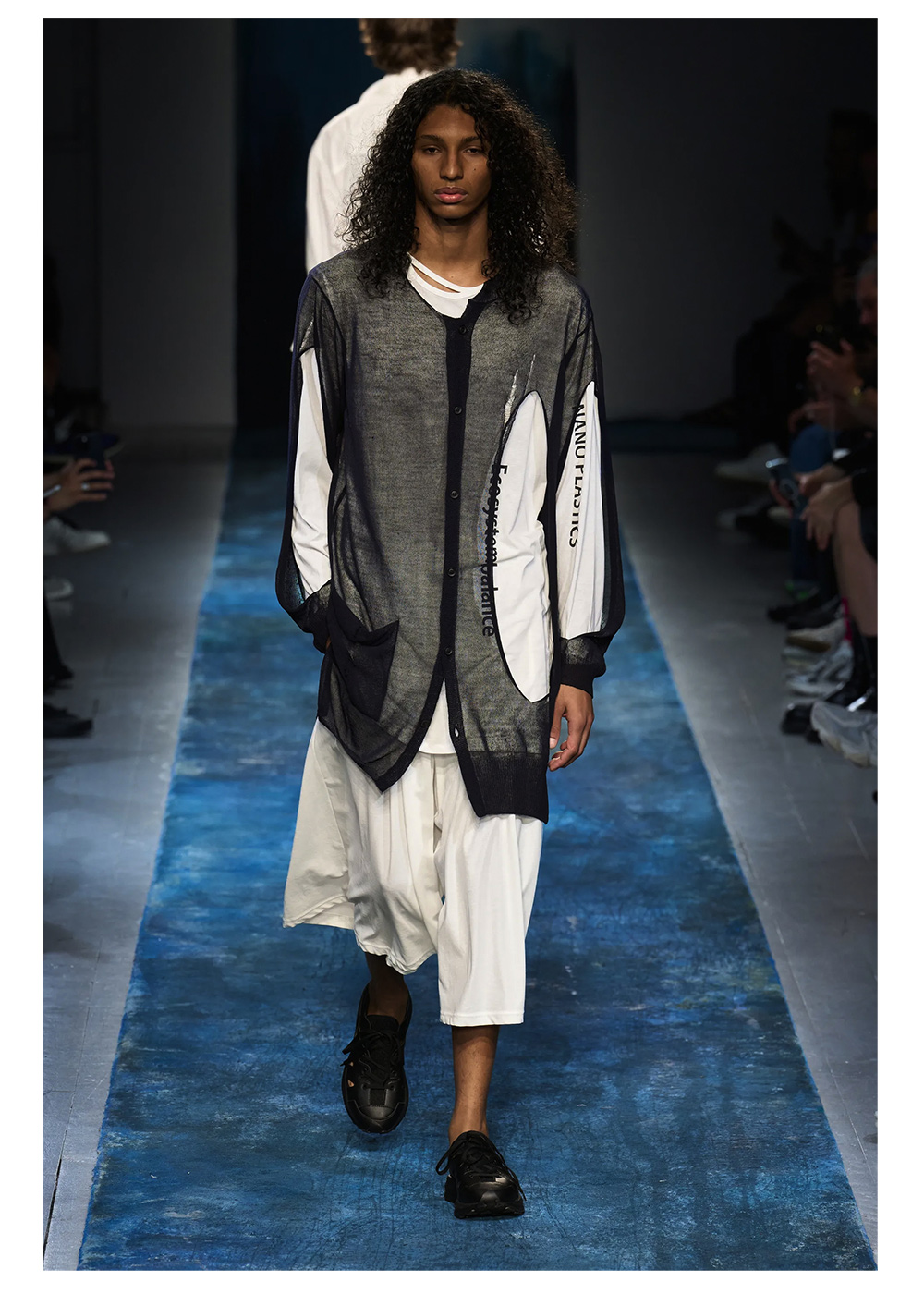
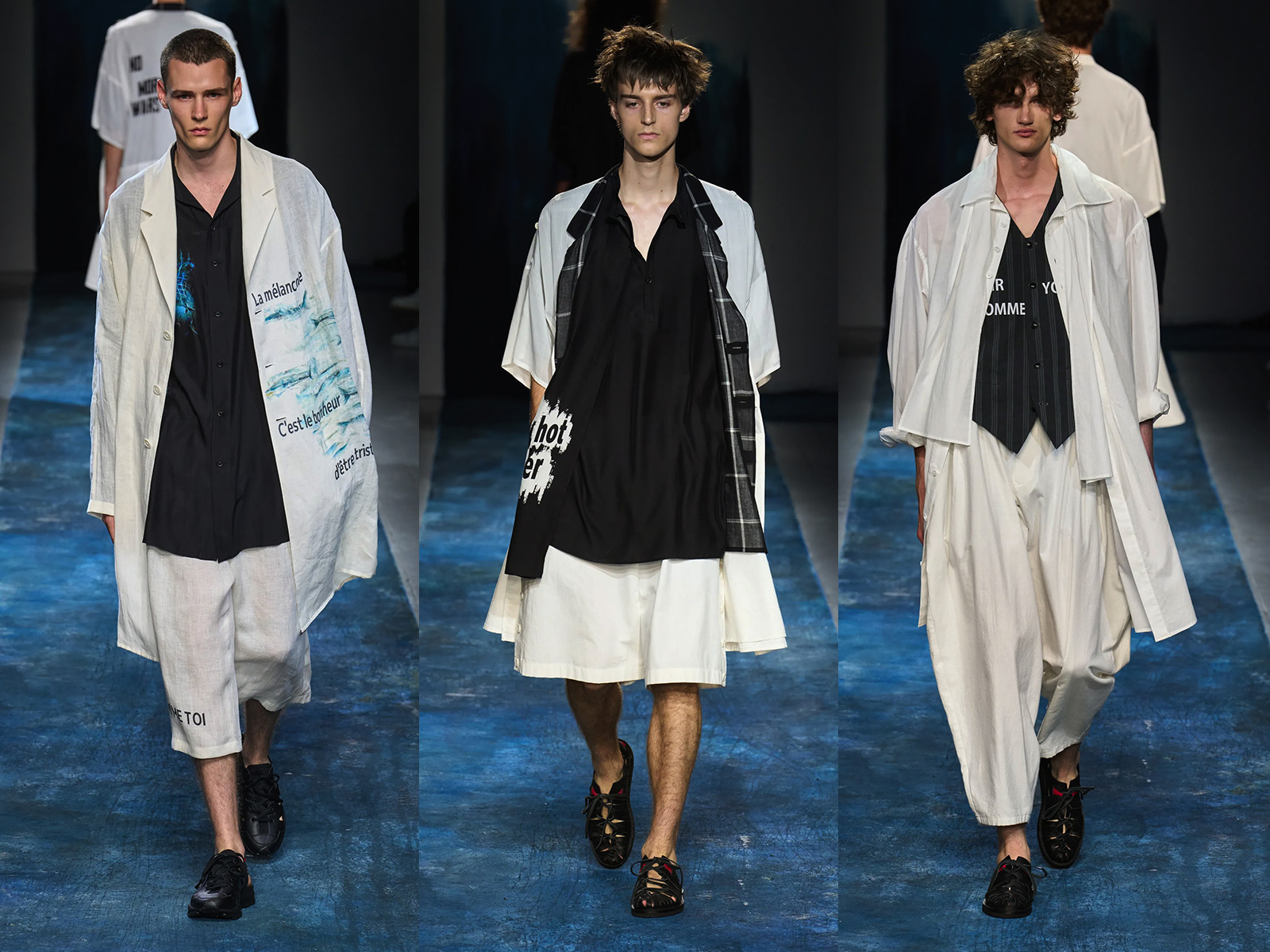
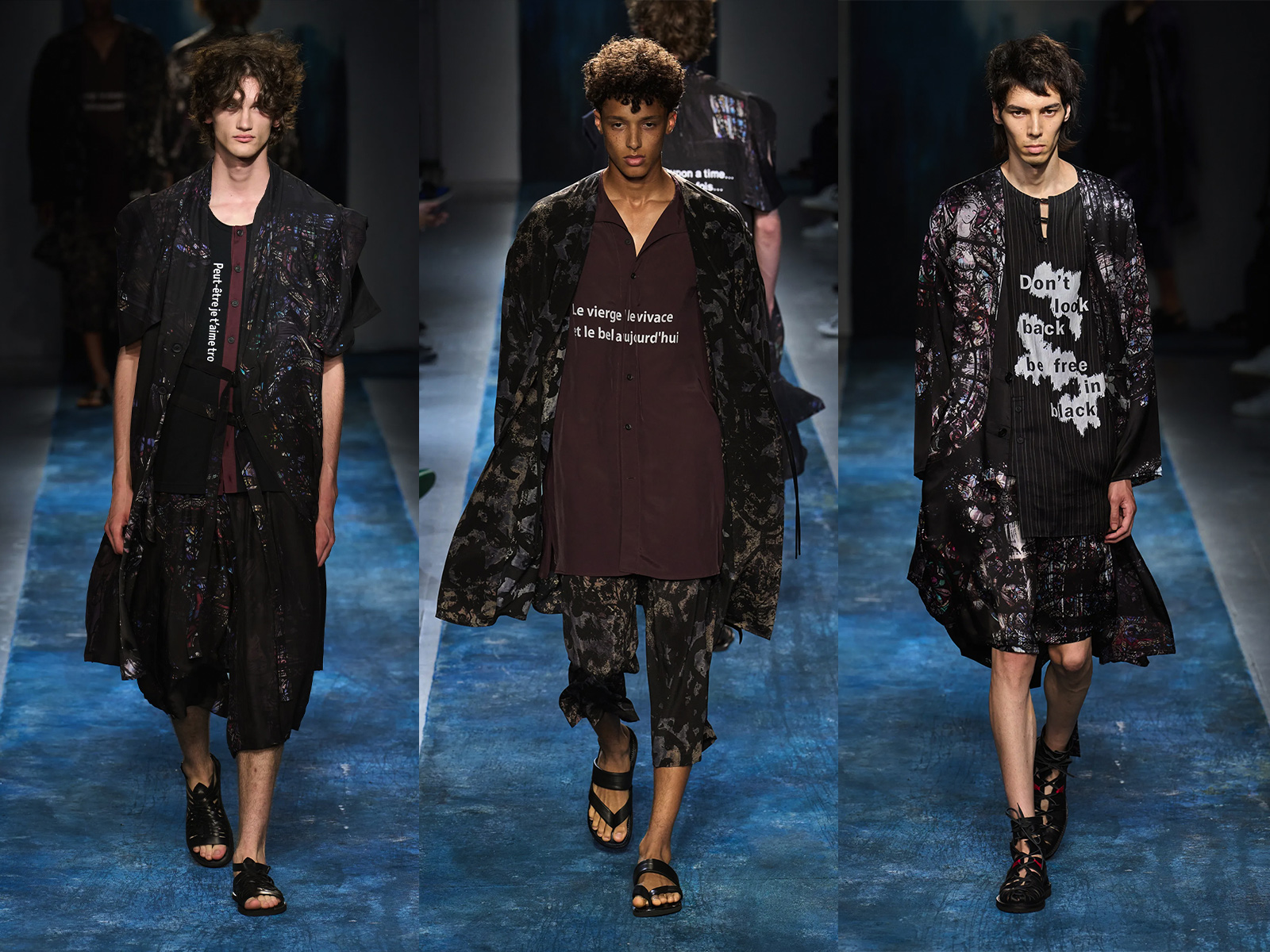
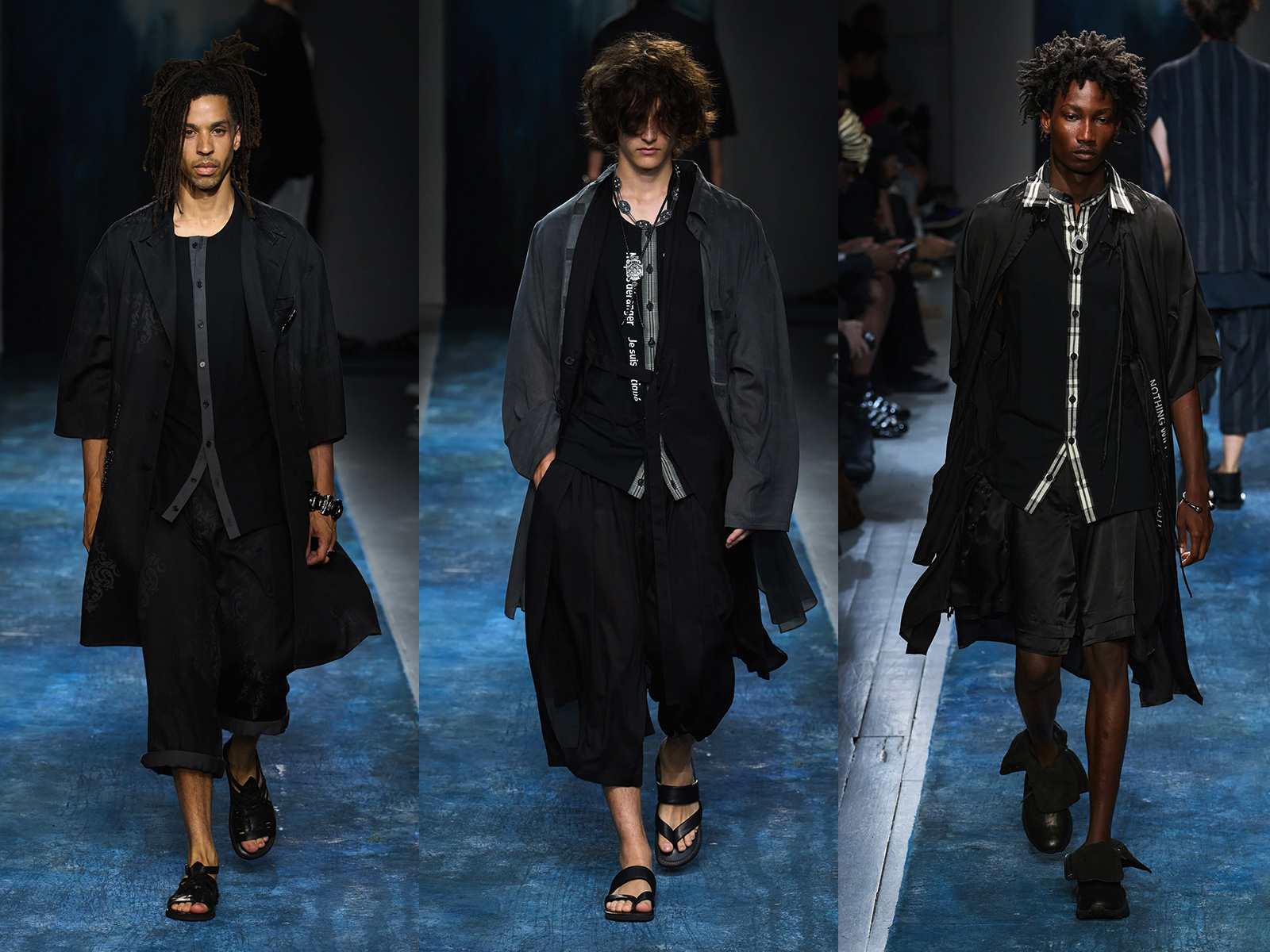
It’s tempting—perhaps too tempting—to read the collection as a meditation on climate anxiety rather than clothing trends. The layers feel protective, adaptive. Fabrics appear chosen for movement and survival, not spectacle. Is that too bold a statement for a fashion collection? With Yamamoto, it rarely is. His work has long existed outside the seasonal churn, and here the clothes seem designed for instability, for weather both literal and cultural.
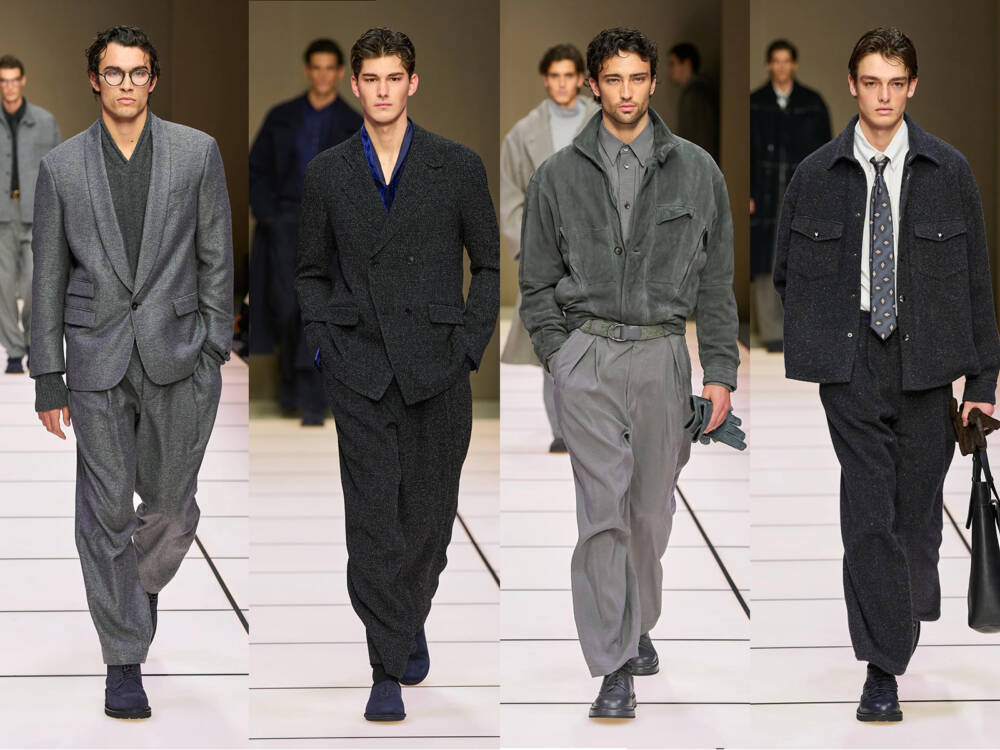
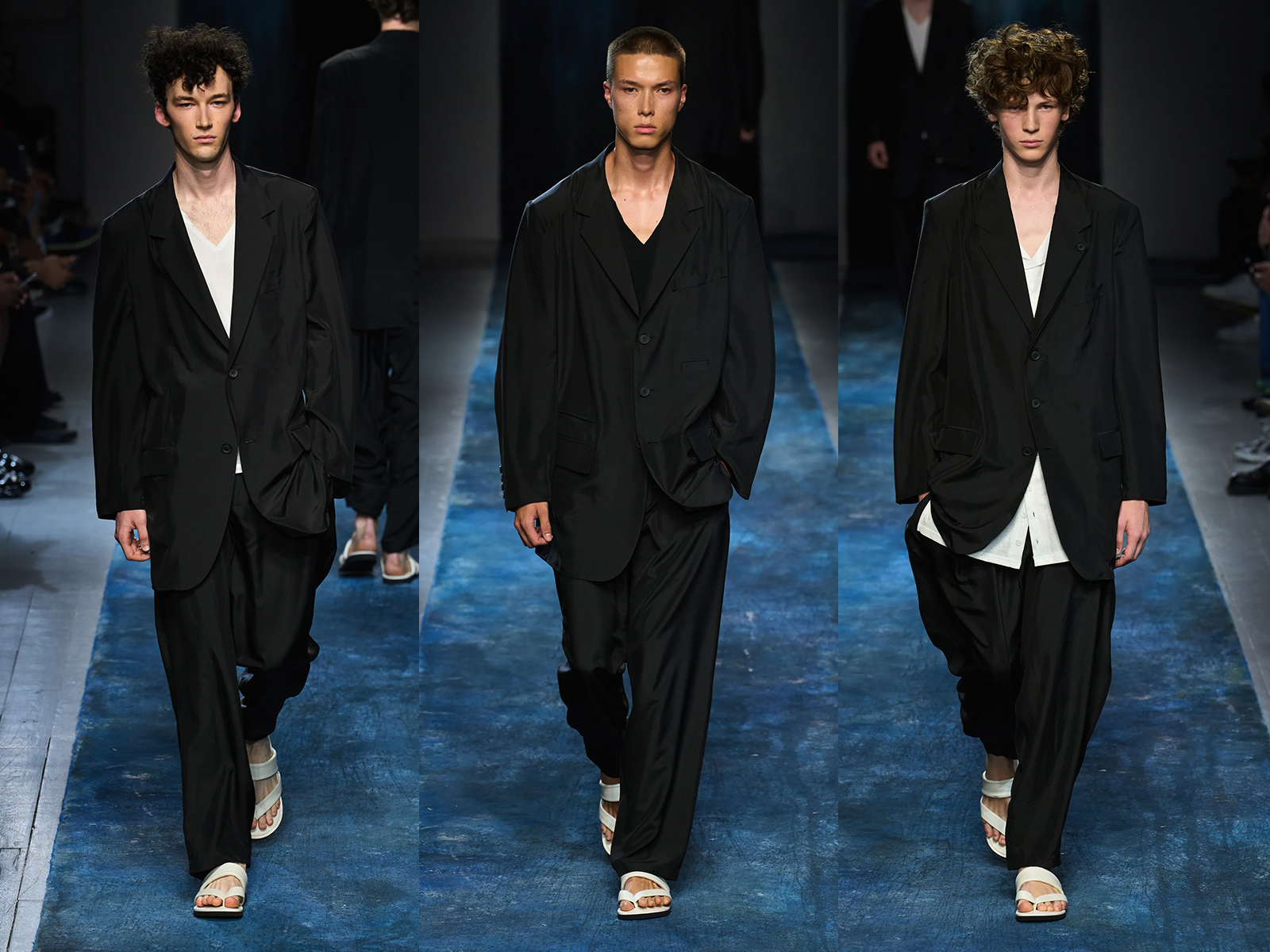
What’s most striking is how these varied silos—the nomadic shapes, the distressed layering, the poetic disorder—make the more conventional pieces feel radical. The soft suits, gently structured and worn without stiffness, emerge as the most modern statements of all. In contrast to the surrounding chaos, they suggest a new kind of formality: relaxed, humane, adaptable.
Spring 2026 does not feel like a reinvention for Yohji Yamamoto. It feels like a deepening. By exaggerating his own codes, he makes them newly legible, newly urgent. These are clothes that do not predict the future—they assume it will be complicated, and dress accordingly. Johji Yammamoto.