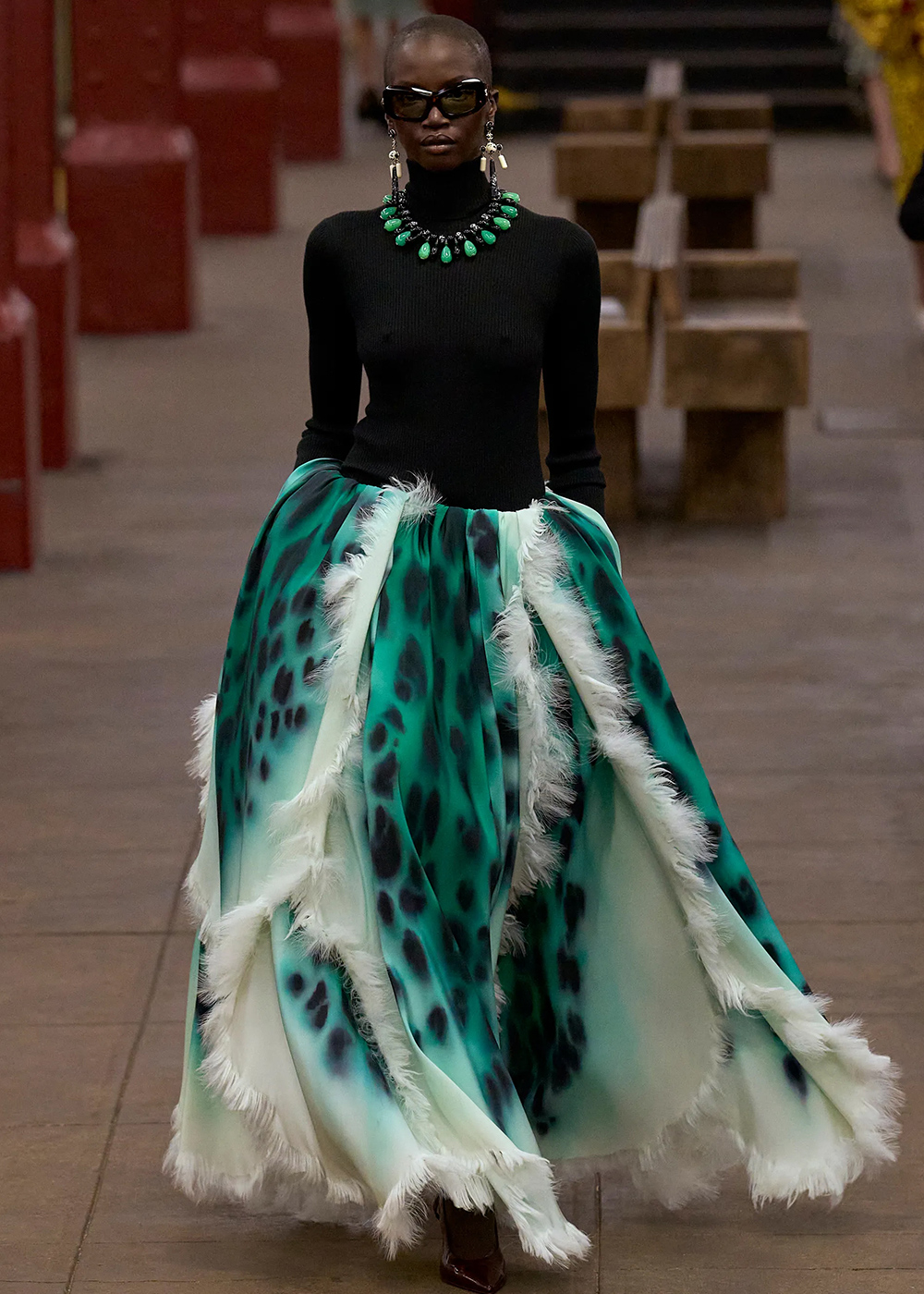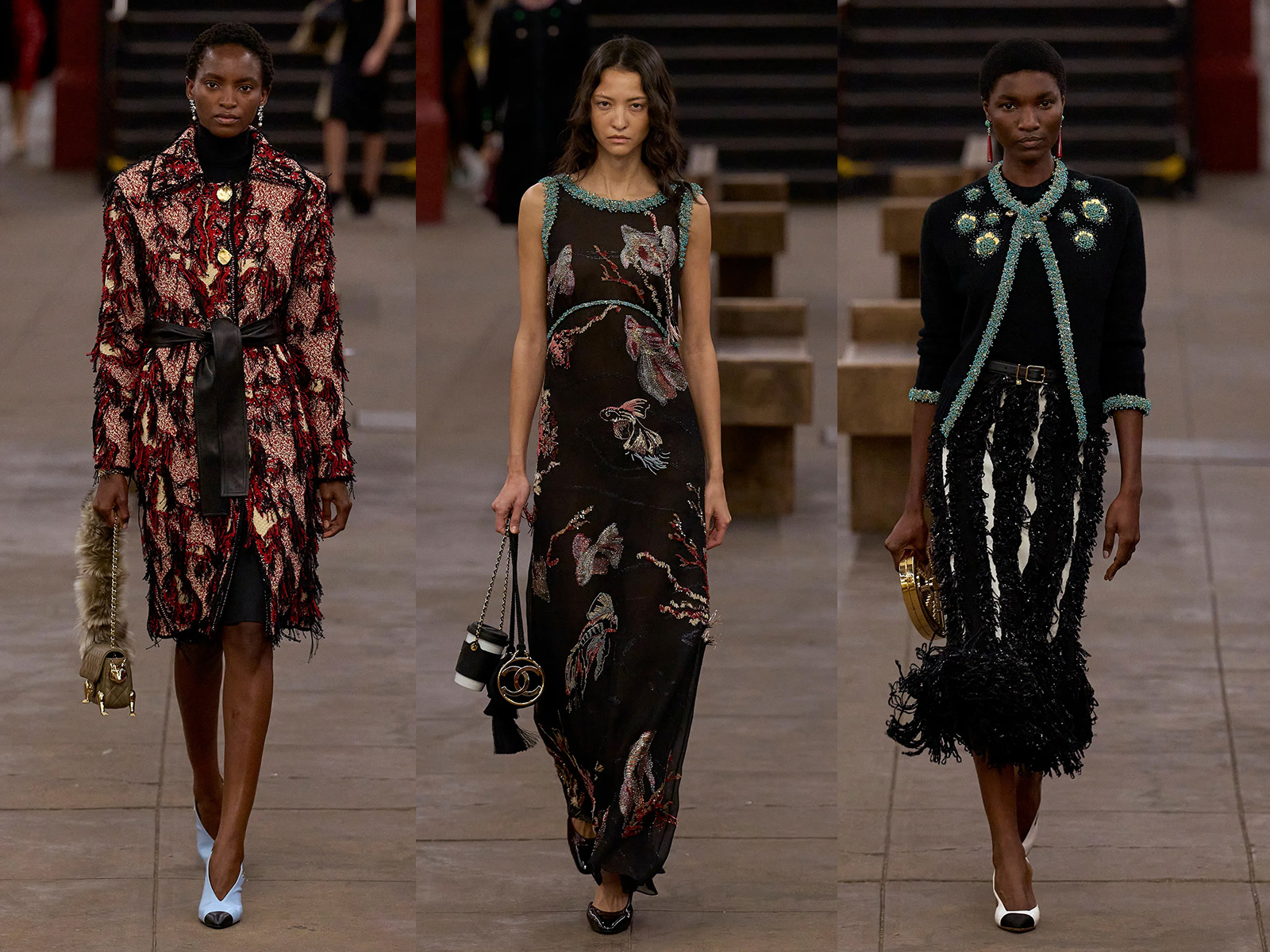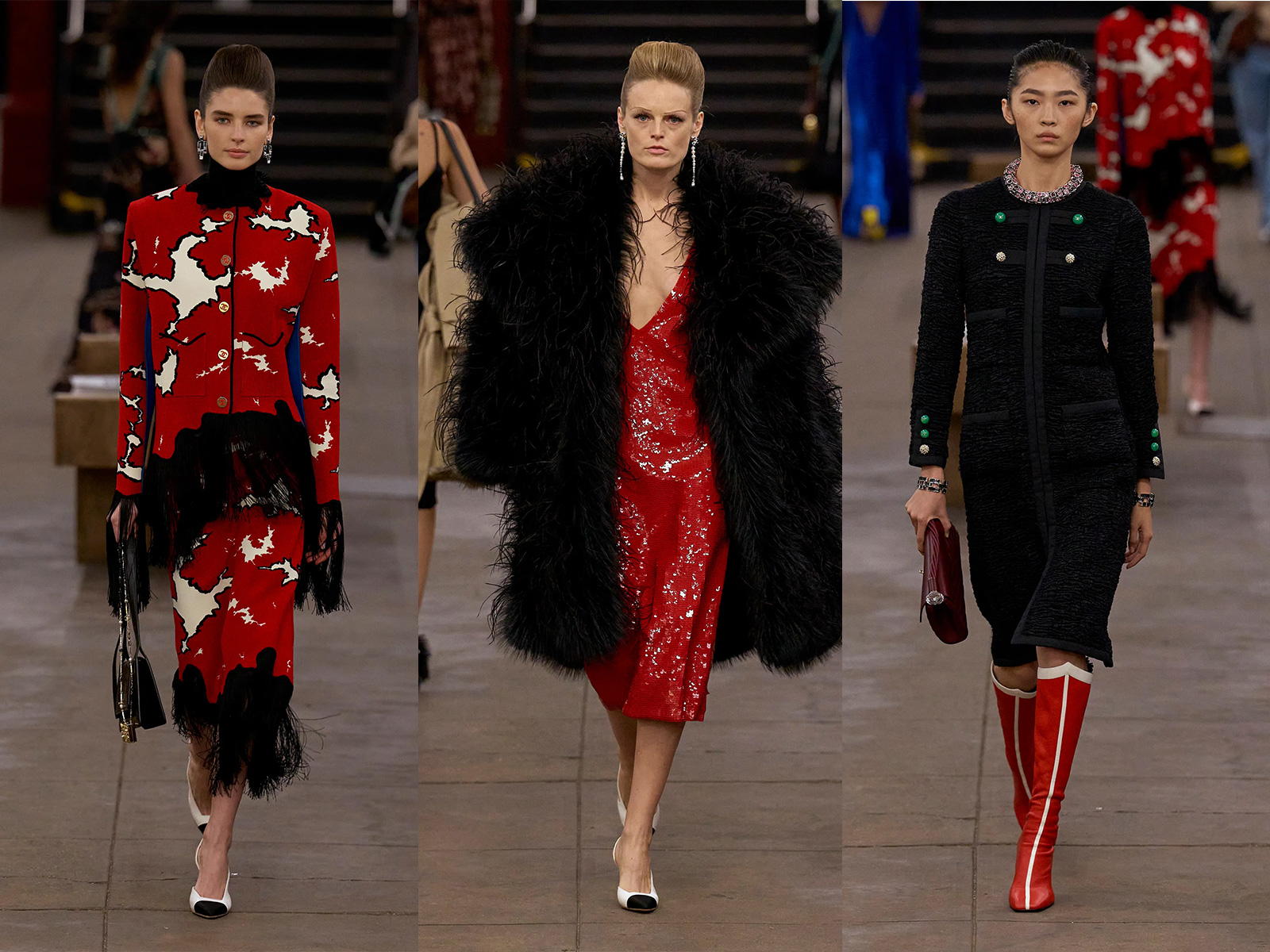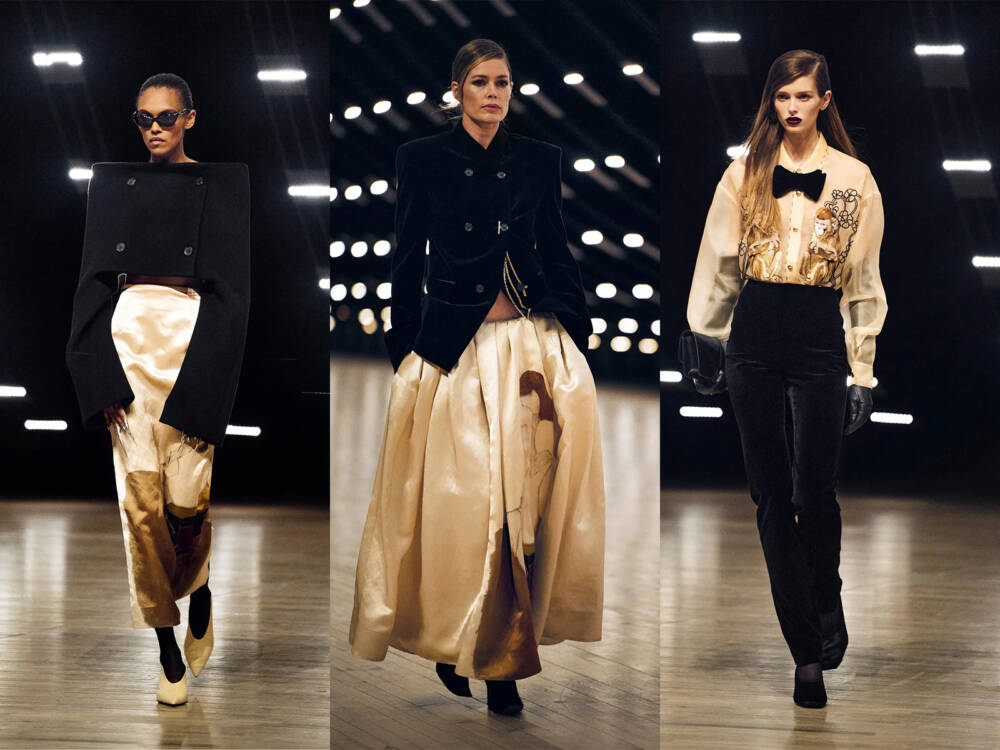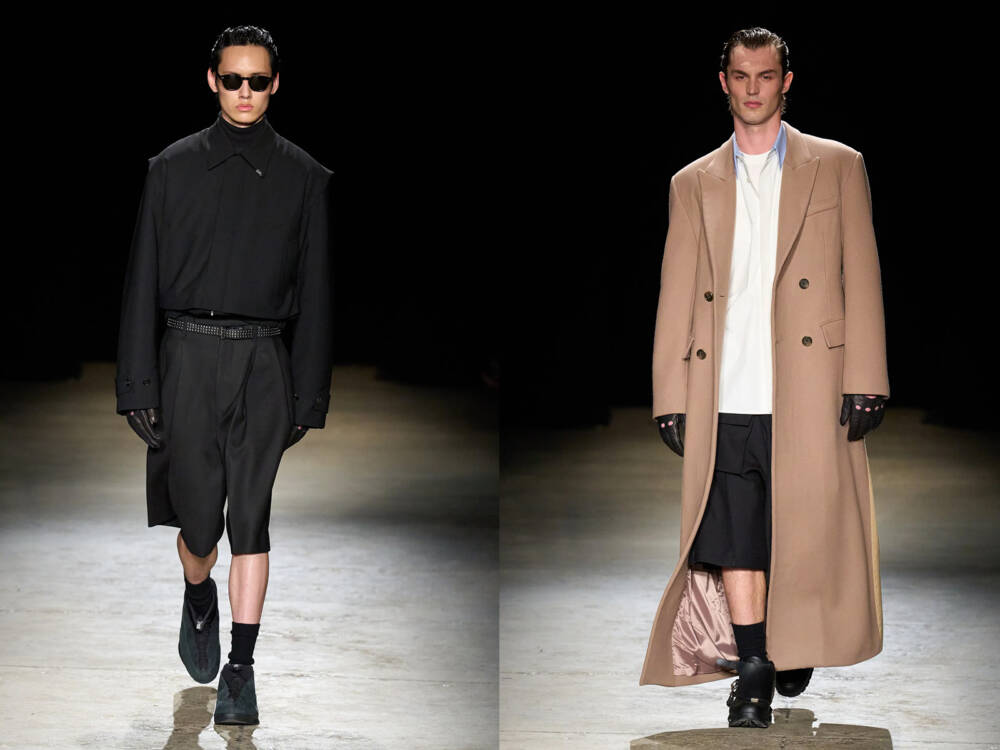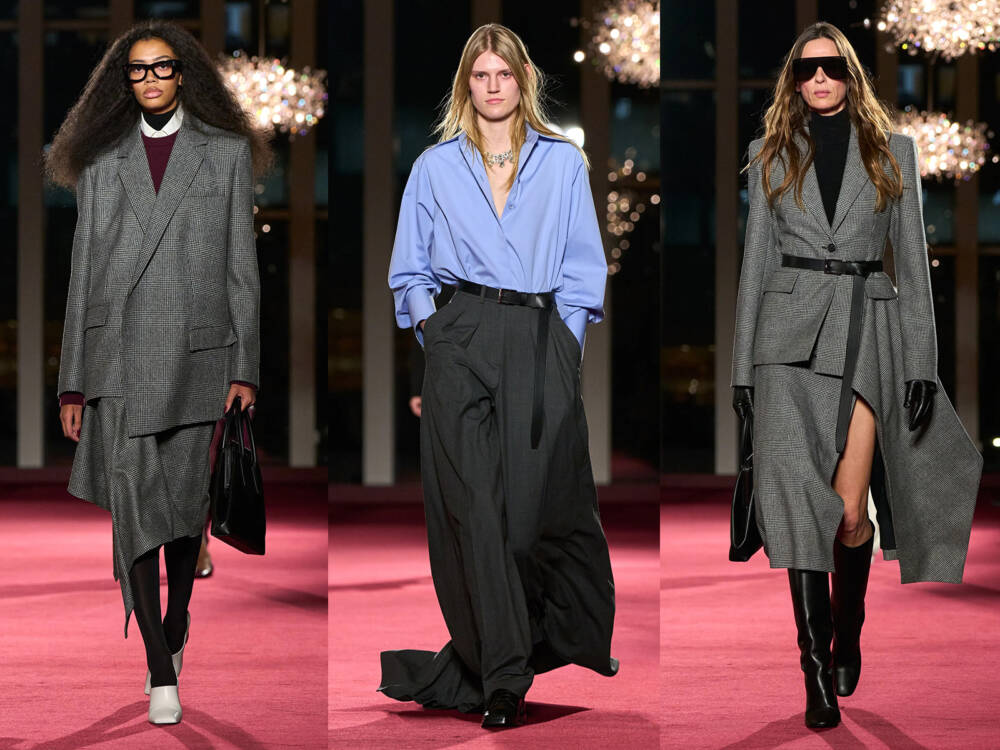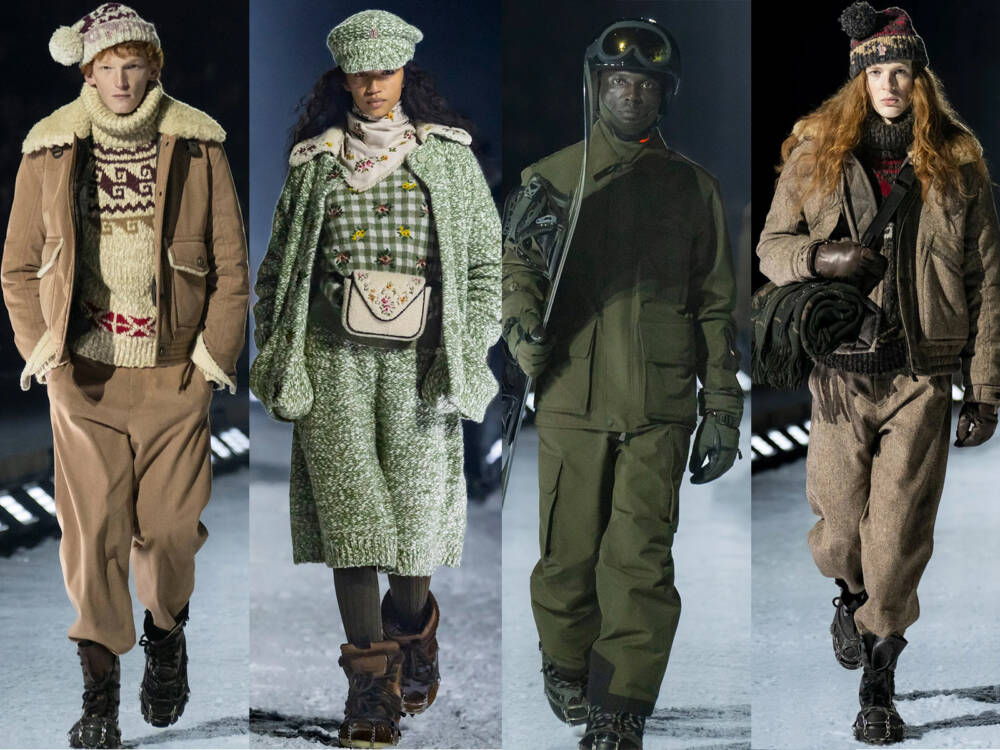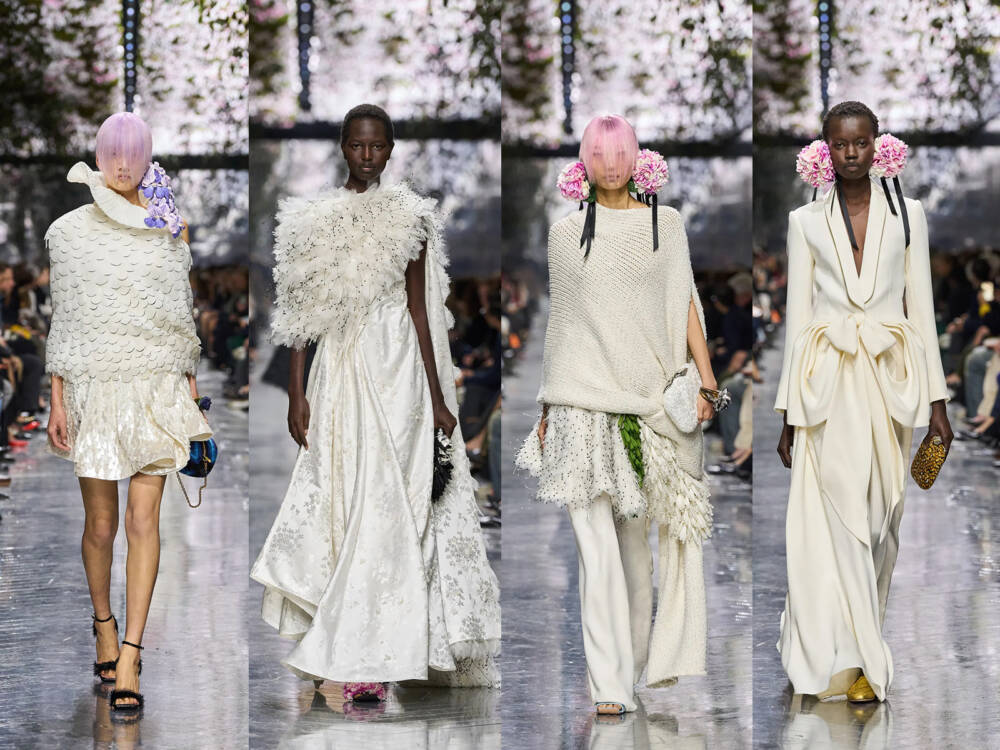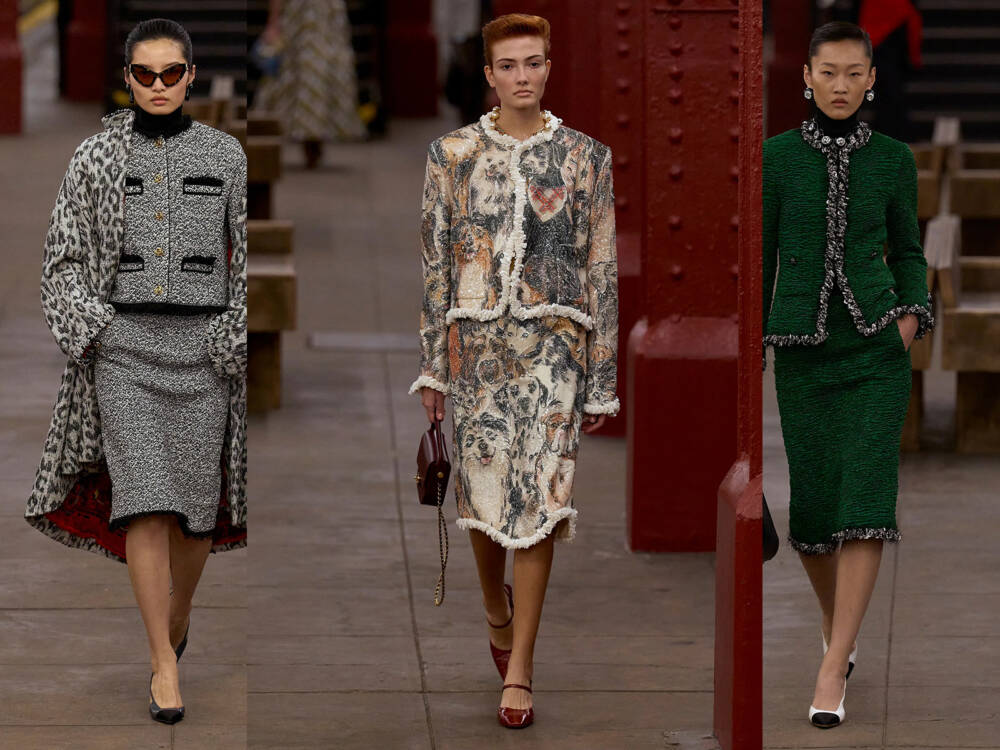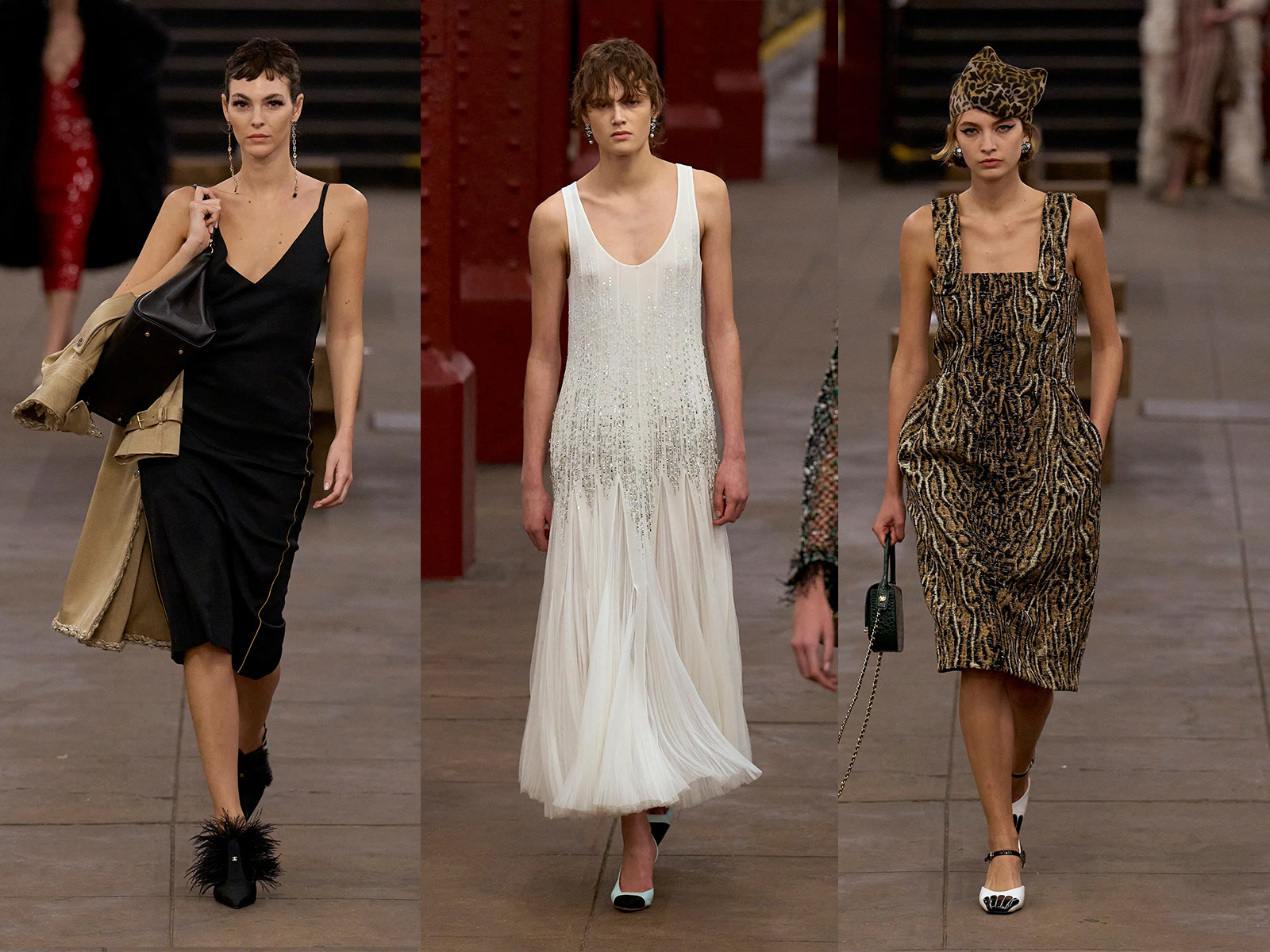
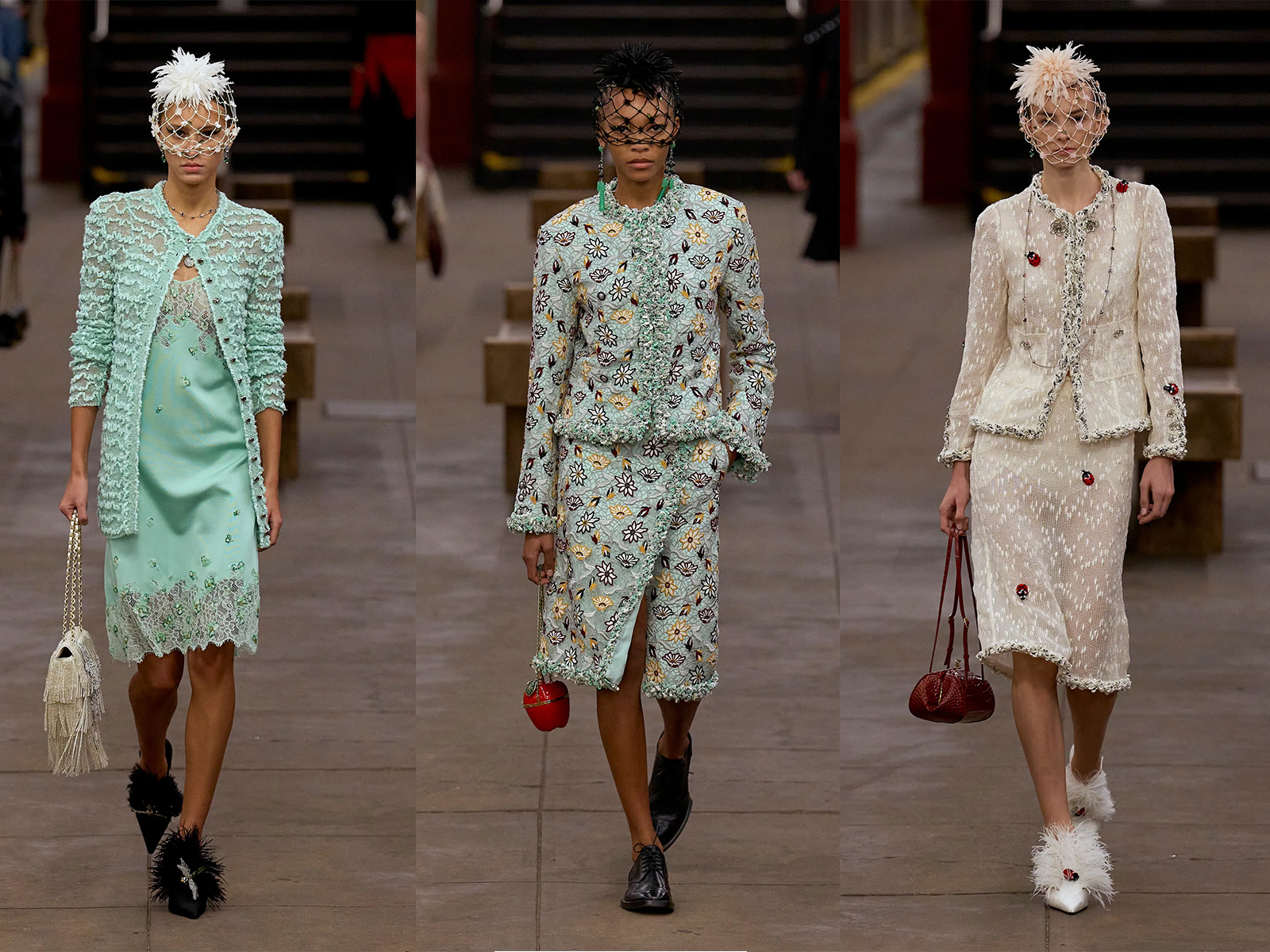
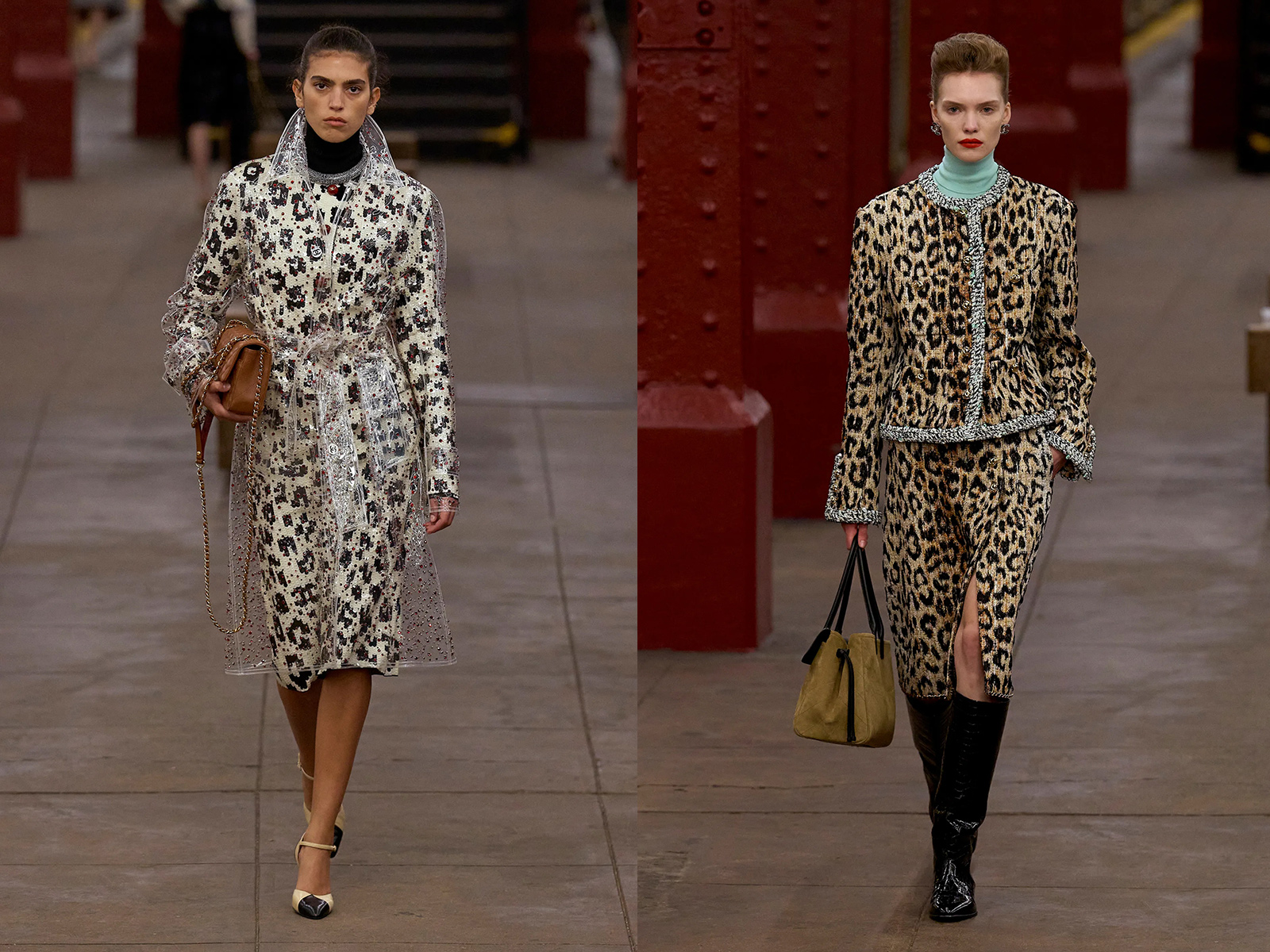
In a New York City subway station—where strangers become brief companions and style becomes an uncurated exhibition—Chanel presented its Pre-Fall 2026 collection, the second full showing under its current creative director. The location alone delivered a quiver of expectation. The subway is, after all, one of the last democratic spaces left in the city: a daily parade of silhouettes, cultures, improvisations. A mirror of the metropolis in motion. If Chanel sought metaphor, it was ready-made beneath the flickering fluorescents.
The show unfolded like a neutral musing on multiplicity, as if the house were studying the varied ways people inhabit a city rather than presenting a sharply defined point of view. That multiplicity, however, came with a question: is diversity of reference the inspiration—or the distraction?
With a second collection now behind them, the creative director appears to be sketching rather than declaring, pulling threads from the brand’s vocabulary without settling on a thesis. There were nods to the pillars of the house—bouclé suiting, camellia embellishment, pearls draped with textbook restraint—but these signatures floated amid garments that felt more like observations of city life than extensions of the Chanel canon.
The result was a collection that read as both restless and searching, more side-glance than full gaze. If the subway was intended as metaphor, perhaps it was not diversity itself the brand meant to invoke, but the in-betweenness of a creative transition: stopping, starting, changing tracks, circling ideas before committing to a destination.
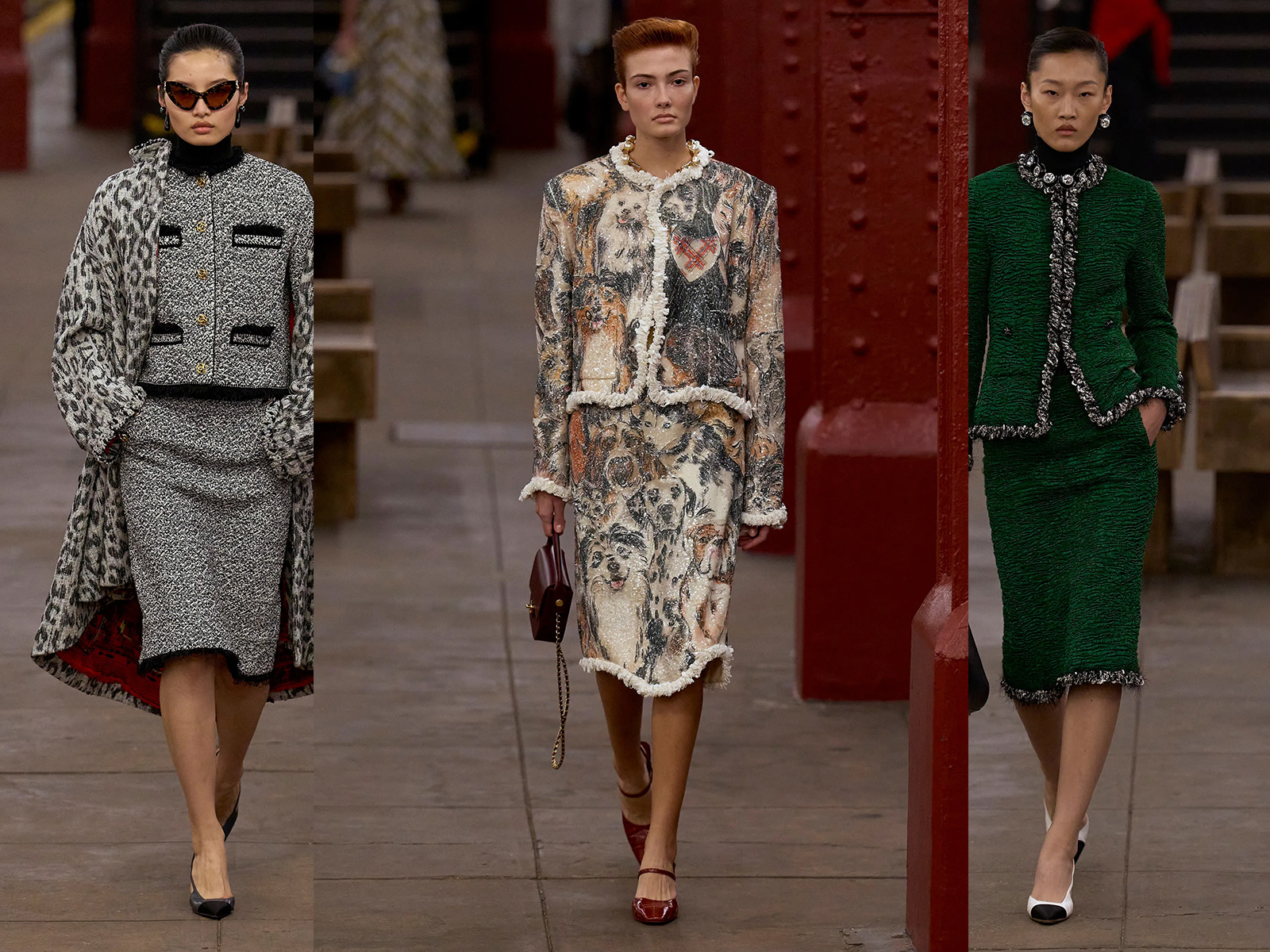
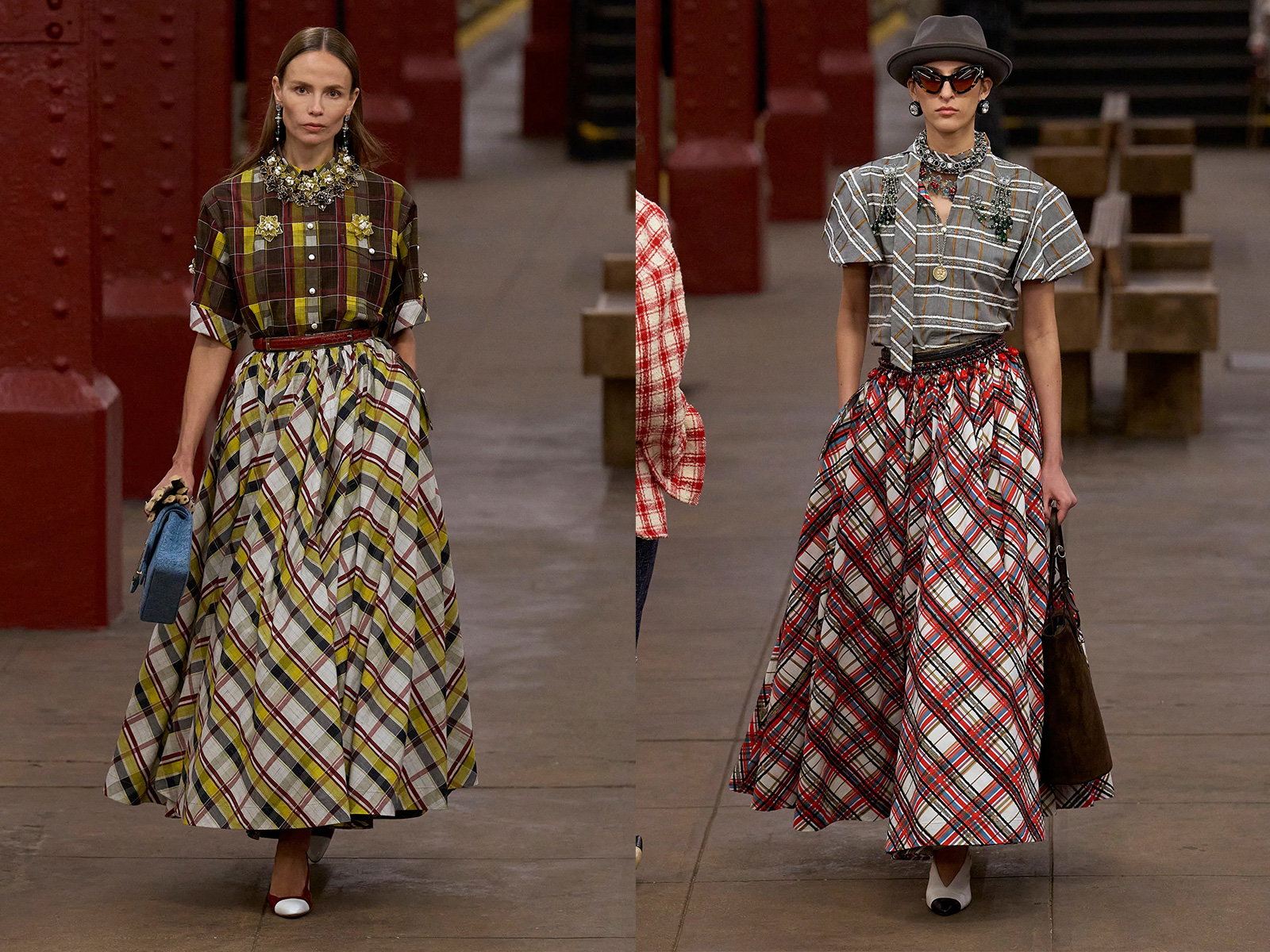
Among the meandering impulses, there were moments when the house’s gravitas and the city’s character locked into place with a satisfying click. The most striking was the collision of shock street with classic Chanel tailoring. An “I Love NY” T-shirt tucked beneath a pristine Chanel suit became one of the show’s most convincing images—a blunt emblem of the city’s irreverence rubbing against the house’s controlled polish. Suddenly, the lack of focus felt intentional, the clash revelatory.
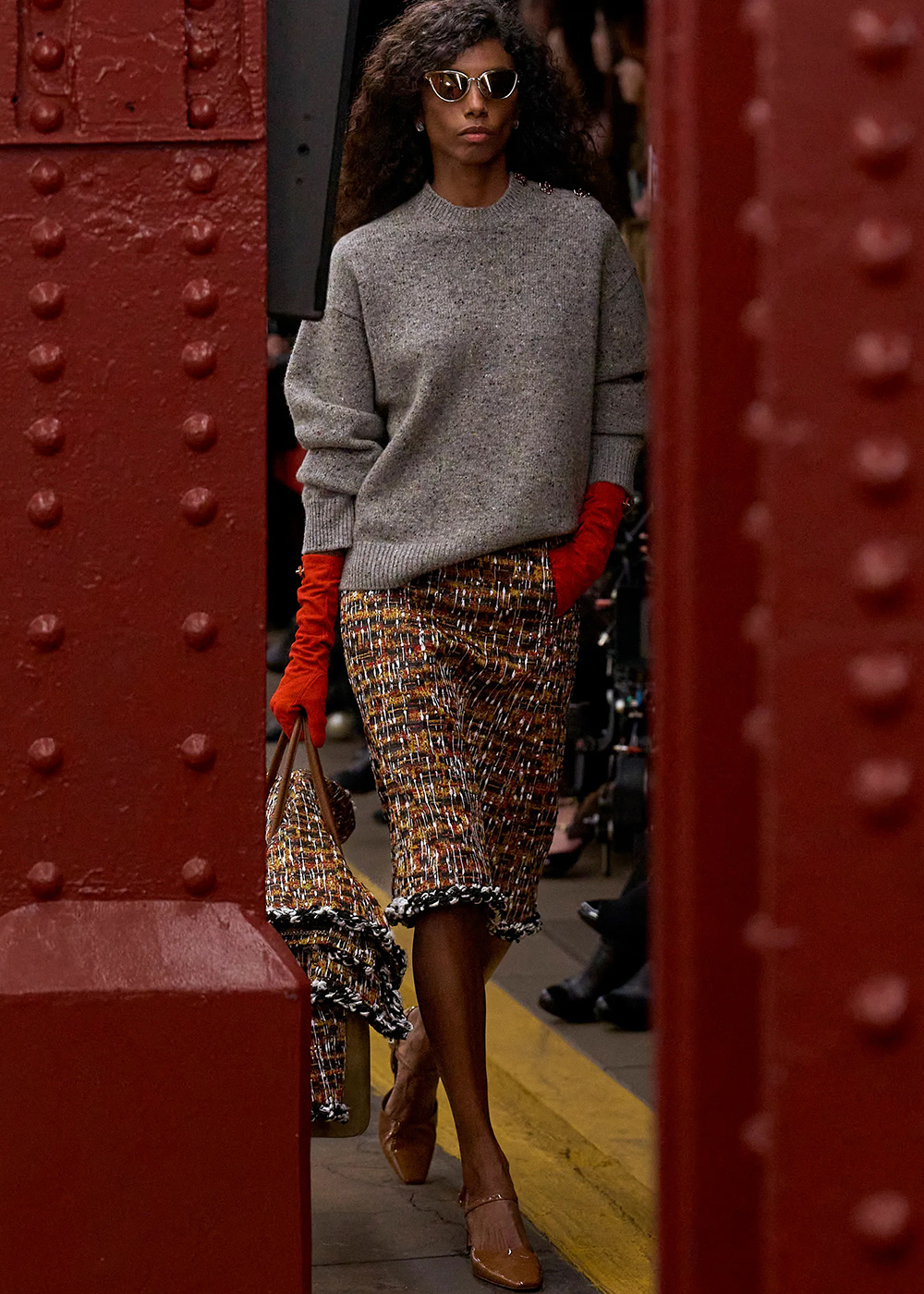
Another compelling thread ran through the layered businesswoman archetype: an eclectic, creative professional draped in knitwear, sharp jackets, metallic textures, and unexpected stacks of accessories. She was the New Yorker who assembles herself on the move—train delays, coffee spills, urgent meetings, shifting weather—yet emerges with a look that is instinctive rather than overthought. In these moments, the collection found a pulse.
The subway thrives on contrast, and the collection mimicked that rhythm. But unlike the patchwork unity a subway car ultimately creates—where all its riders, momentarily, share a destination—Chanel’s Pre-Fall 2026 offerings never quite merged into a single narrative. The pieces spoke, but not to one another. Instead, they orbited the idea of diversity without anchoring it in a synthesized point of view.
Still, there is a tenderness in watching a designer negotiate the enormity of a house like Chanel, especially one in the midst of transition. A subway, after all, is a place where everyone is going somewhere—even if no one is entirely sure what the next stop holds. Chanel.