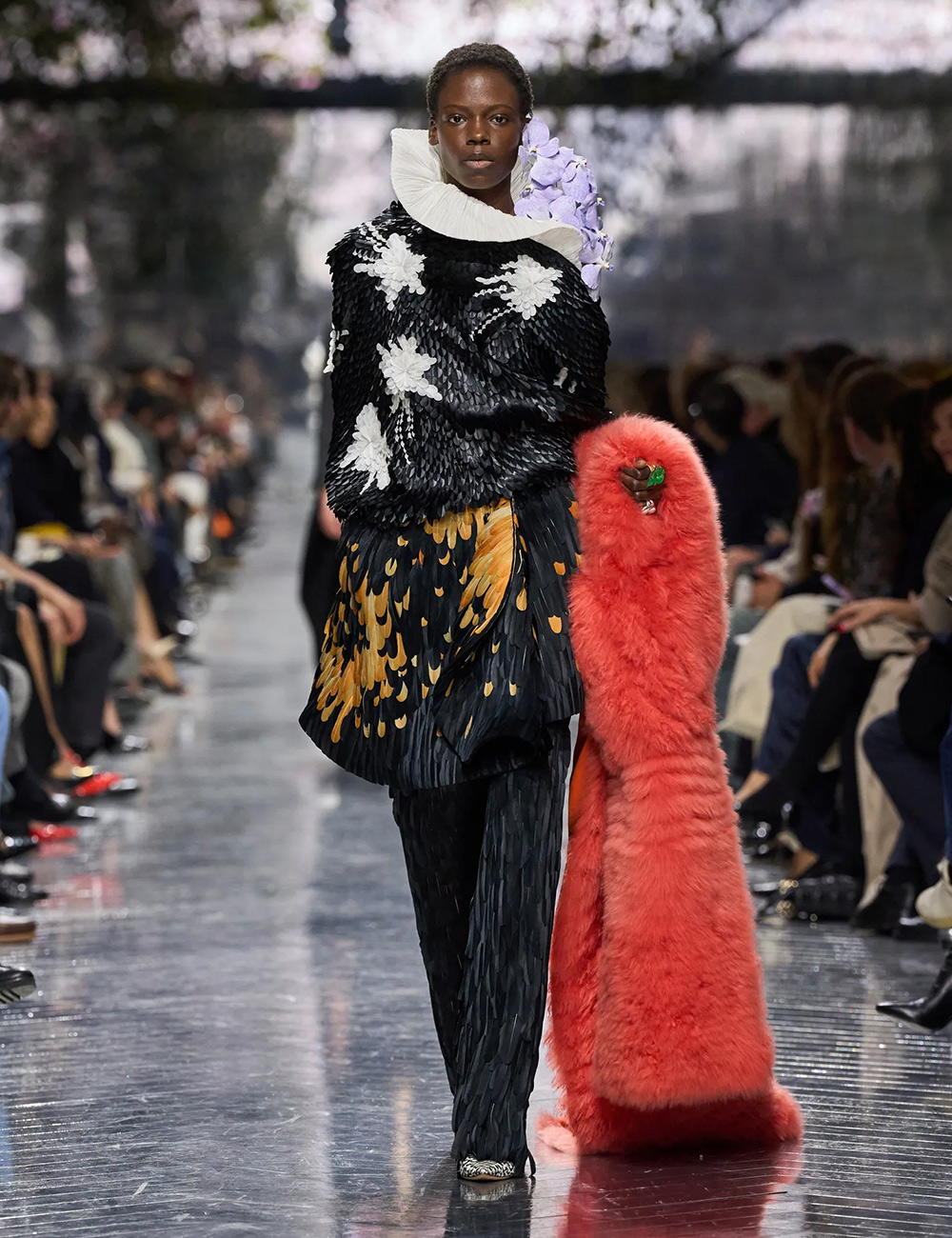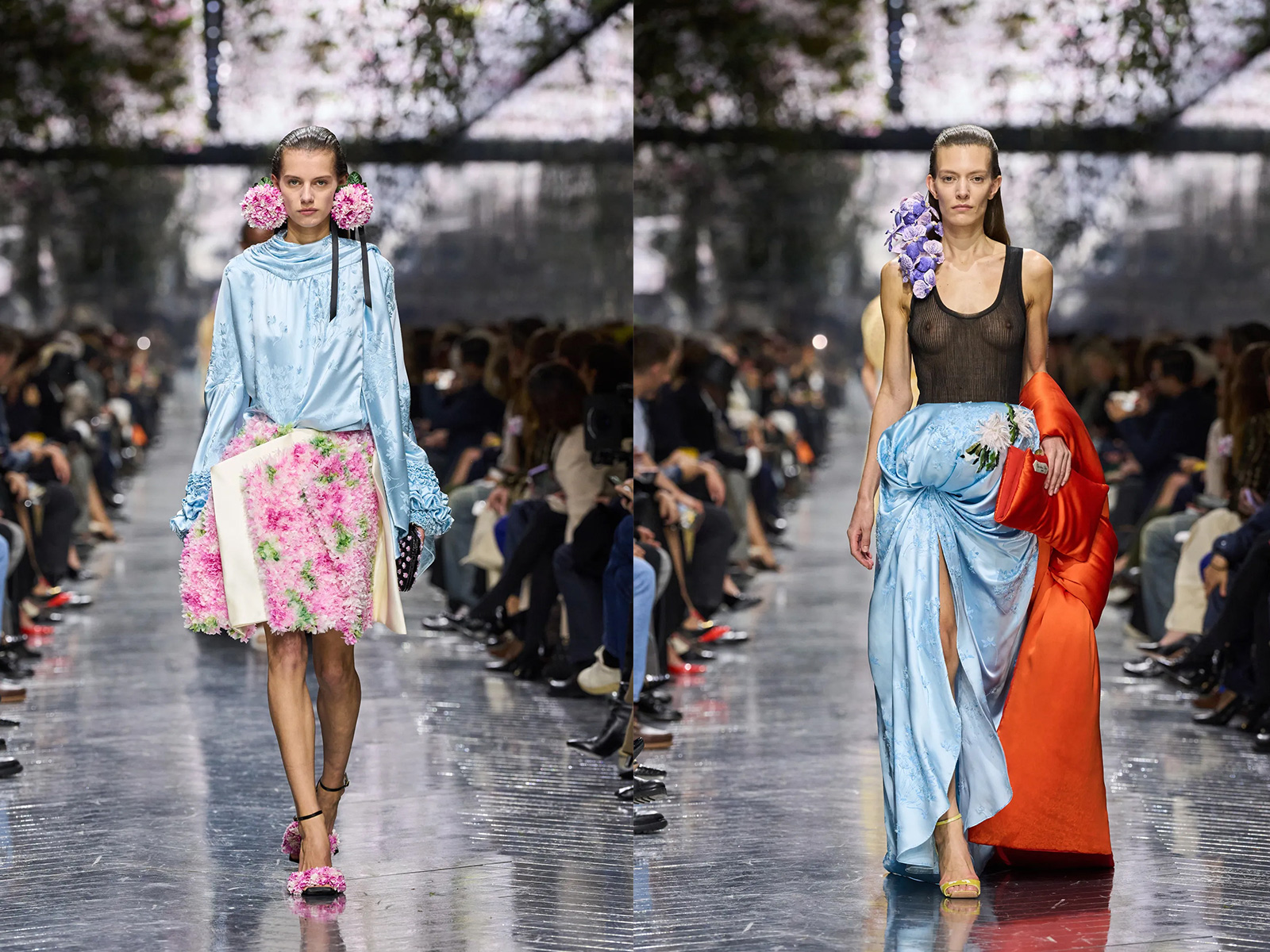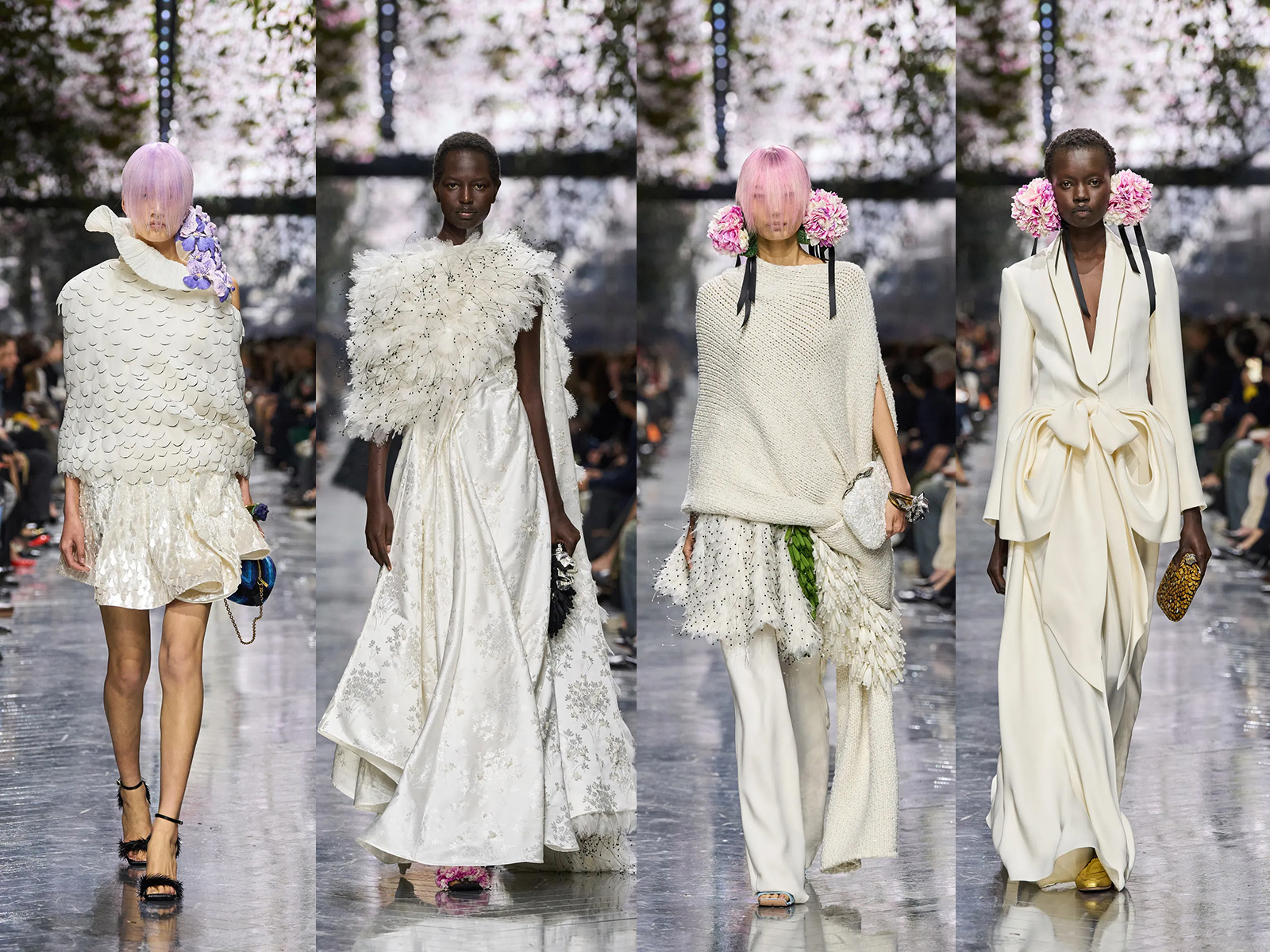
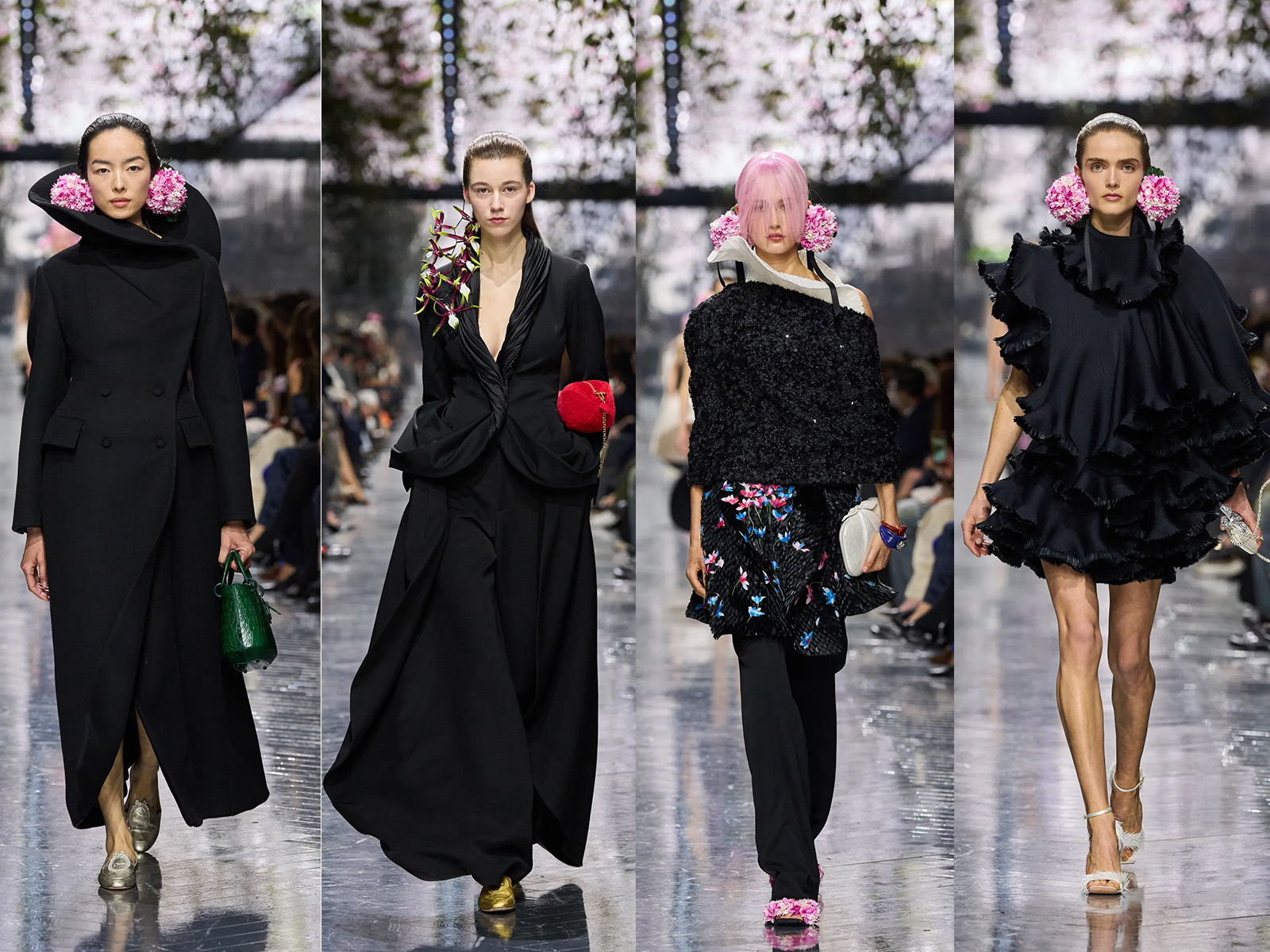
Jonathan Anderson’s first haute couture collection for Dior did not arrive as a declaration. It arrived as a movement. At 41, the Northern Irish designer—who assumed the role of creative director last year—chose not to reenact the house’s mythology, but to gently unsettle it, introducing tension where reverence often lives.
The starting point was unavoidable: Christian Dior’s 1947 New Look, the hourglass silhouette that rebuilt Paris and reshaped postwar femininity. Anderson acknowledged it, then released it from its historical fixity. In one of the collection’s key gestures, the familiar cinched waist reappeared as a silk georgette cocktail dress whose pleats spiraled around the body, as if shaped by centrifugal force. The form referenced the vessels of Kenyan-born British ceramicist Dame Magdalene Odundo—objects defined by touch, rotation, and pressure rather than rigid structure. Translated into couture, the silhouette felt alive, its curves animated rather than preserved.
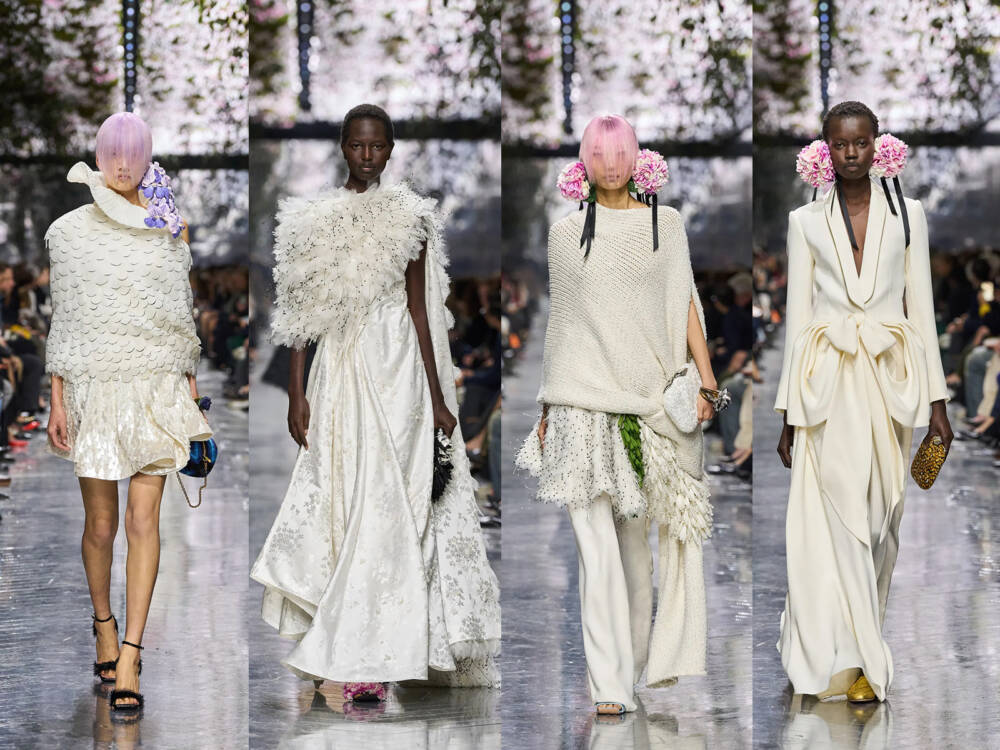
That sense of motion ran throughout the collection. Skirts ballooned and receded. Volumes hovered away from the body, then reattached themselves through precise tailoring. Tank tops—plain, almost defiant in their simplicity—were paired with monumental skirts, collapsing the hierarchy between the everyday and the exalted. It was a reminder that couture need not be precious to be exacting.
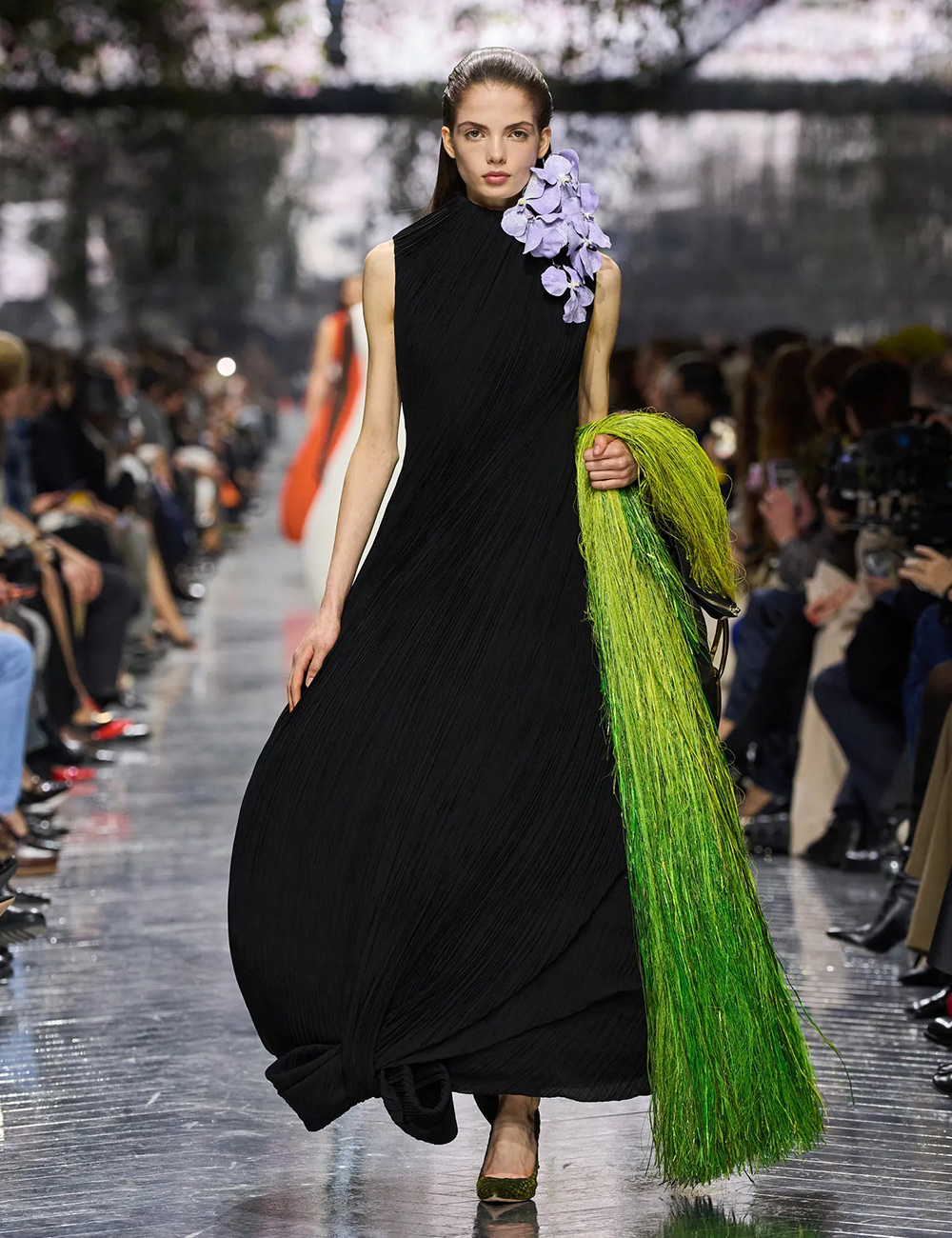
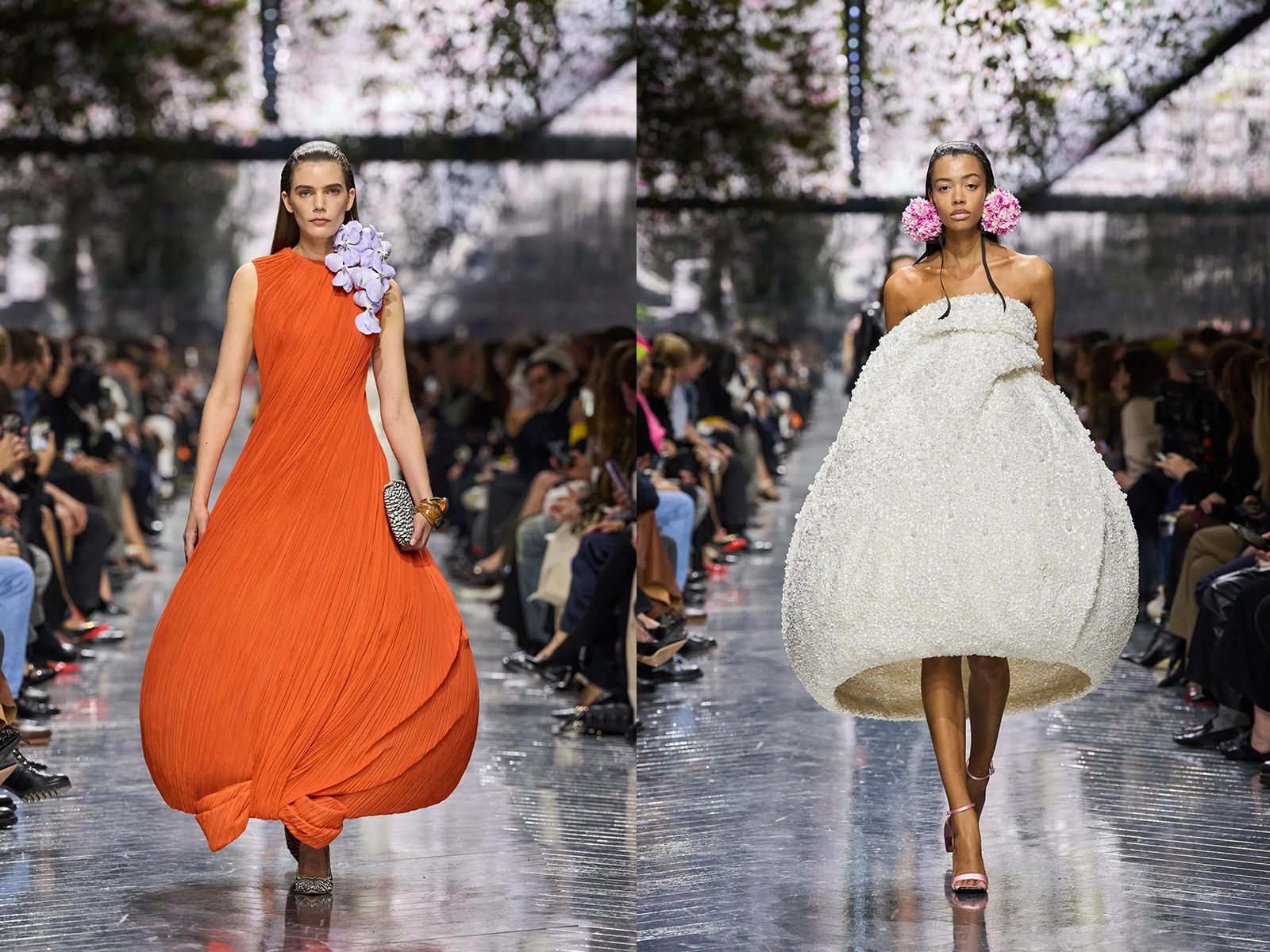
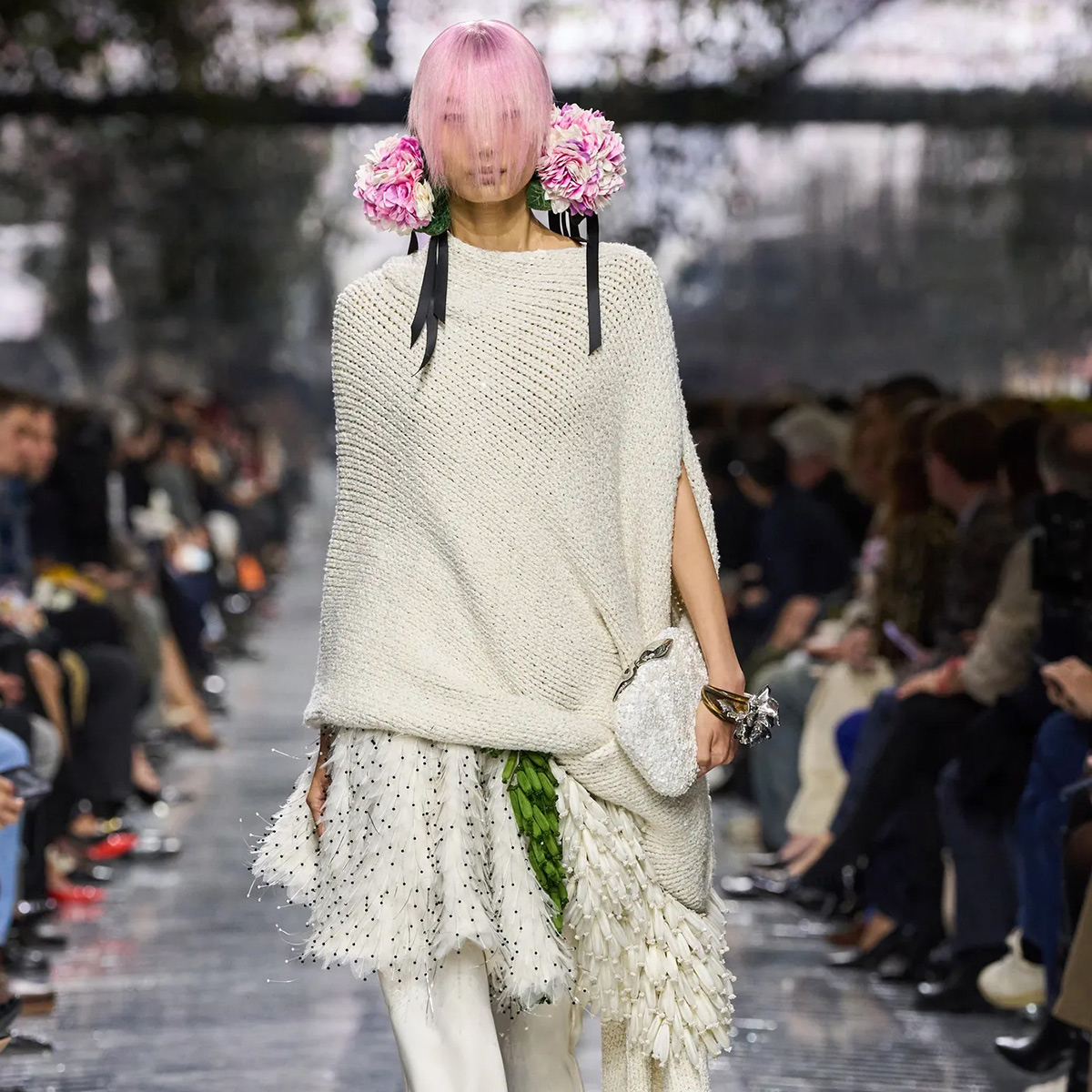
Flowers, long central to the Dior mythos, appeared not as surface decoration but as sculptural punctuation. Monsieur Dior’s devotion to gardening has often been rendered through embroidery or print; Anderson instead made florals tactile and strange. Snowball-sized earmuffs of cyclamen framed the face, inspired by a bouquet John Galliano once brought to the atelier—a quiet nod to lineage without nostalgia. Elsewhere, petals appeared abstracted, enlarged, or implied through texture rather than illustration. The effect was less romantic than curious, asking the viewer to reconsider what floral femininity might mean now.
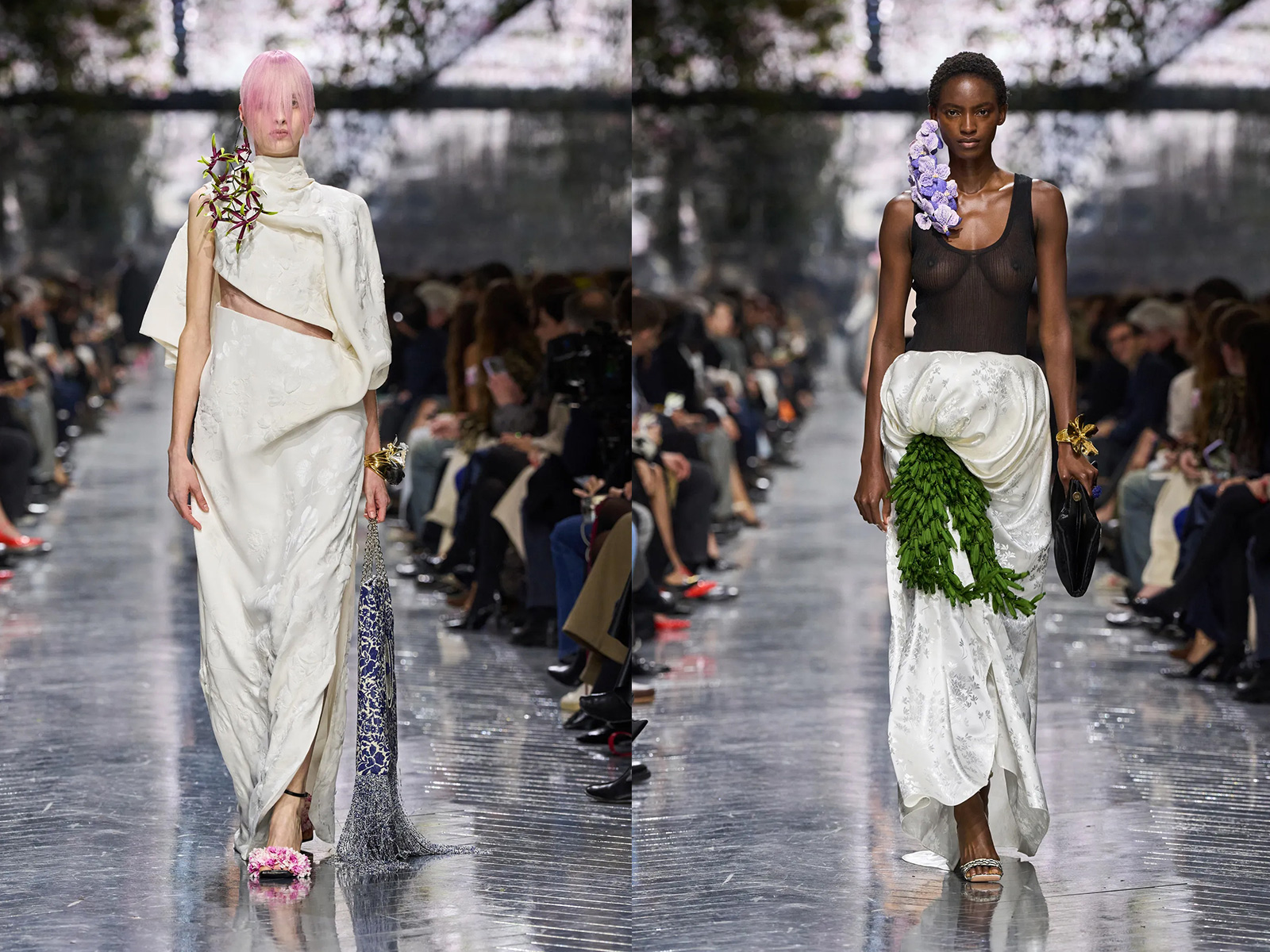
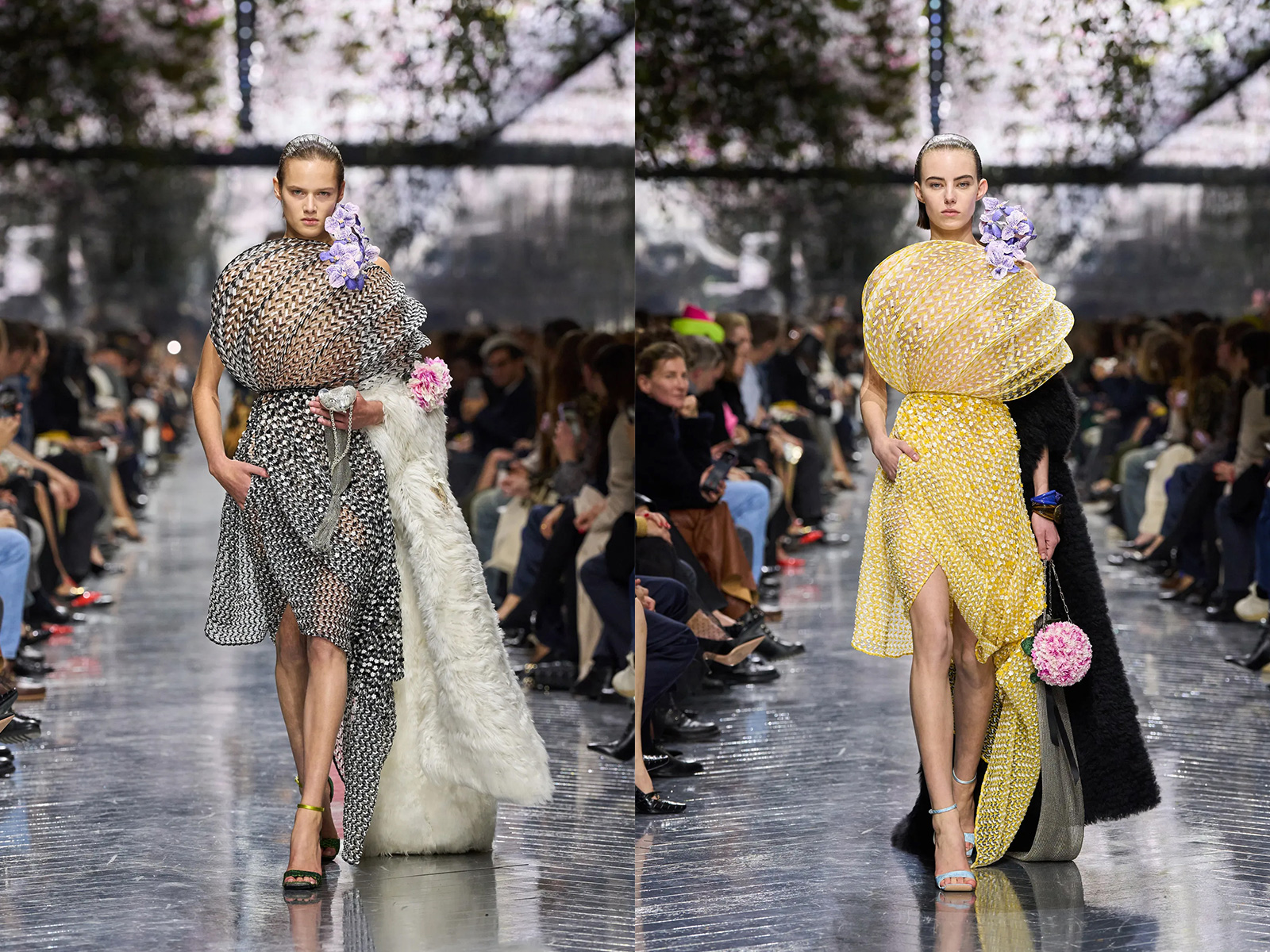
Fabric was where the collection spoke most clearly. Silk, georgette, organza, wool crepe, and densely worked textiles were manipulated to feel worked by hand rather than engineered by formula. Surfaces twisted, gathered, and stretched, echoing the physical processes that inspired them. Couture here was not about excess, but about labor made visible.
The question, inevitably, is whether this was an important collection for Dior. In spectacle, perhaps not. In strategy, very much so. Anderson did not attempt to outdo the house’s past or overwhelm it with concept. Instead, he repositioned Dior as a place of inquiry—where silhouette can move, symbols can shift, and heritage can be treated as material rather than mandate. It signaled a Dior less interested in perfection and more engaged with process.
The show drew a front row that reflected that recalibration: Dior ambassadors alongside editors, artists, and cultural figures whose influence lies as much in shaping dialogue as in commanding visibility. Rihanna attended alongside Anna Wintour, signaling institutional attention as well as pop-cultural gravity. Also present were Naomi Campbell, Charlize Theron, Robert Pattinson, Rosalía, and Jodie Comer, joined by fashion insiders including Maria Grazia Chiuri, Sarah Burton, Edward Enninful, and Pierpaolo Piccioli. The mood was attentive rather than celebratory, the applause measured—less about arrival, more about consideration.
Spring 2026 haute couture may not be remembered for shock or spectacle. But it may be remembered as the moment Dior quietly changed direction—choosing motion over monument, and curiosity over certainty.