Before Khaite became shorthand for modern American precision, it was a quietly radical proposition. Founded by Catherine Holstein, the New York–based label built its reputation not on spectacle but on calibration: proportion sharpened to a whisper, fabric chosen for memory as much as touch, silhouettes that suggest authority rather than announce it. Holstein’s work has long been admired within the industry for its intellectual restraint and its refusal to chase trend cycles, earning her a reputation as a designer’s designer—one whose clothes are studied as much as worn.
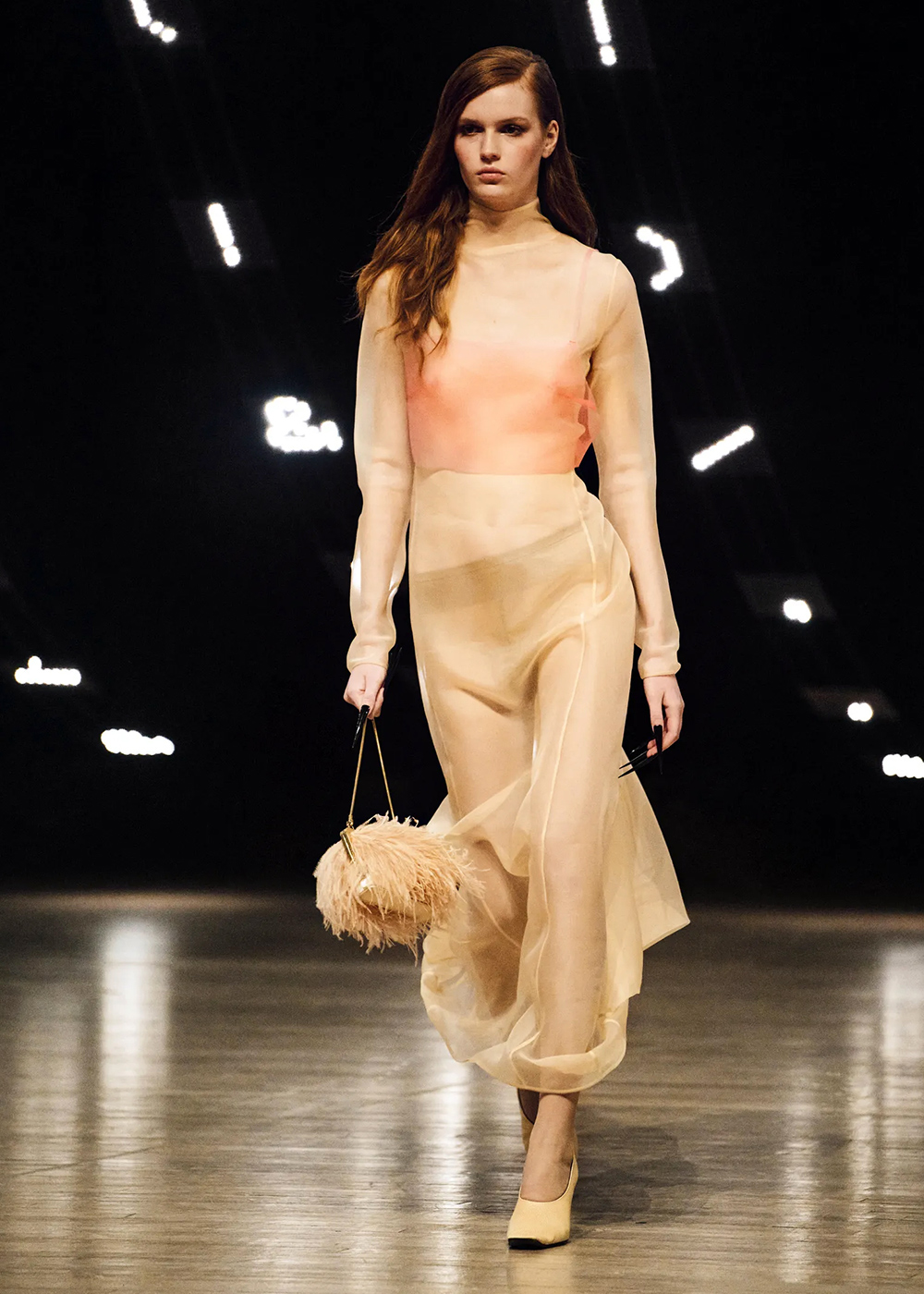
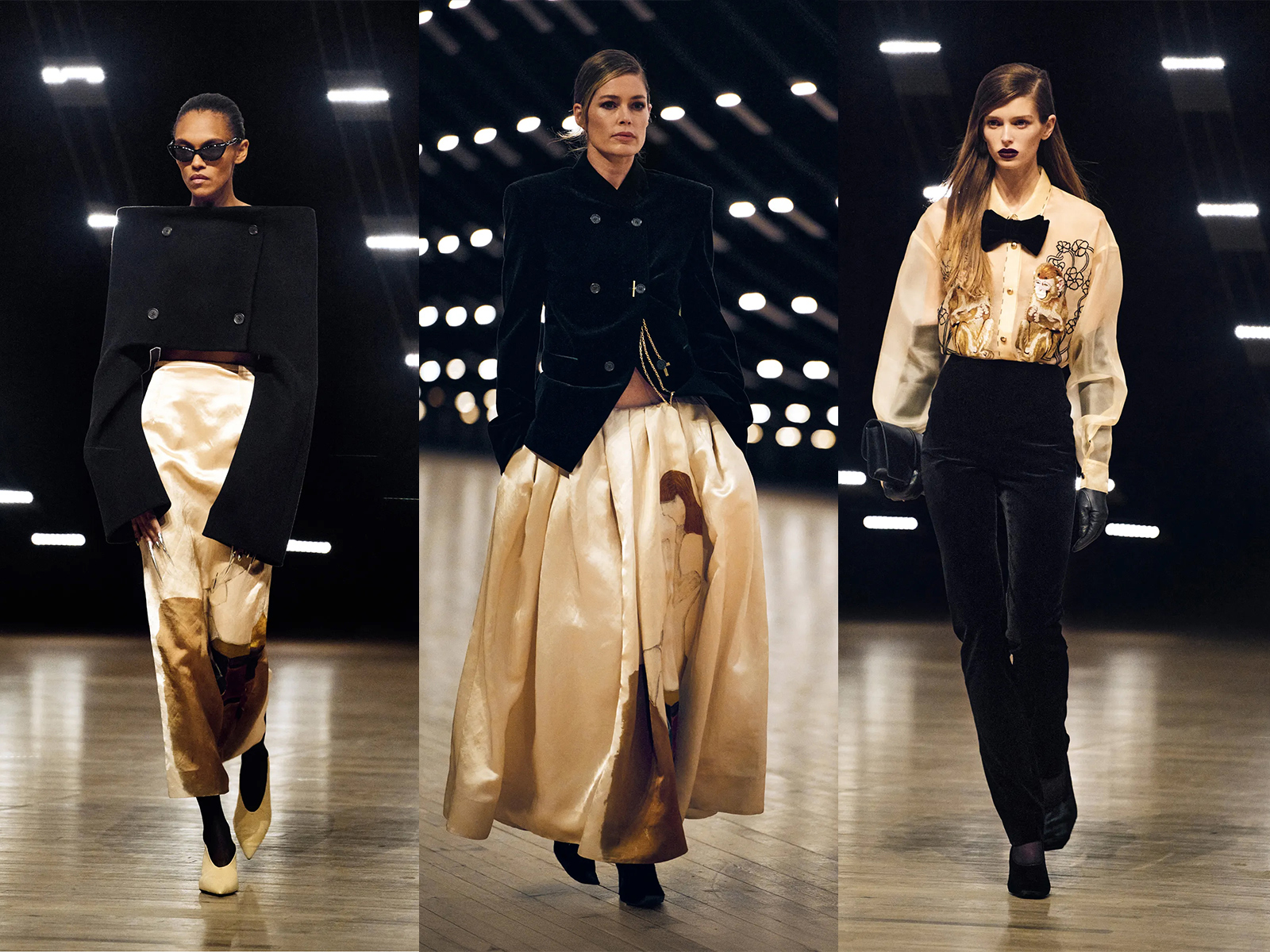
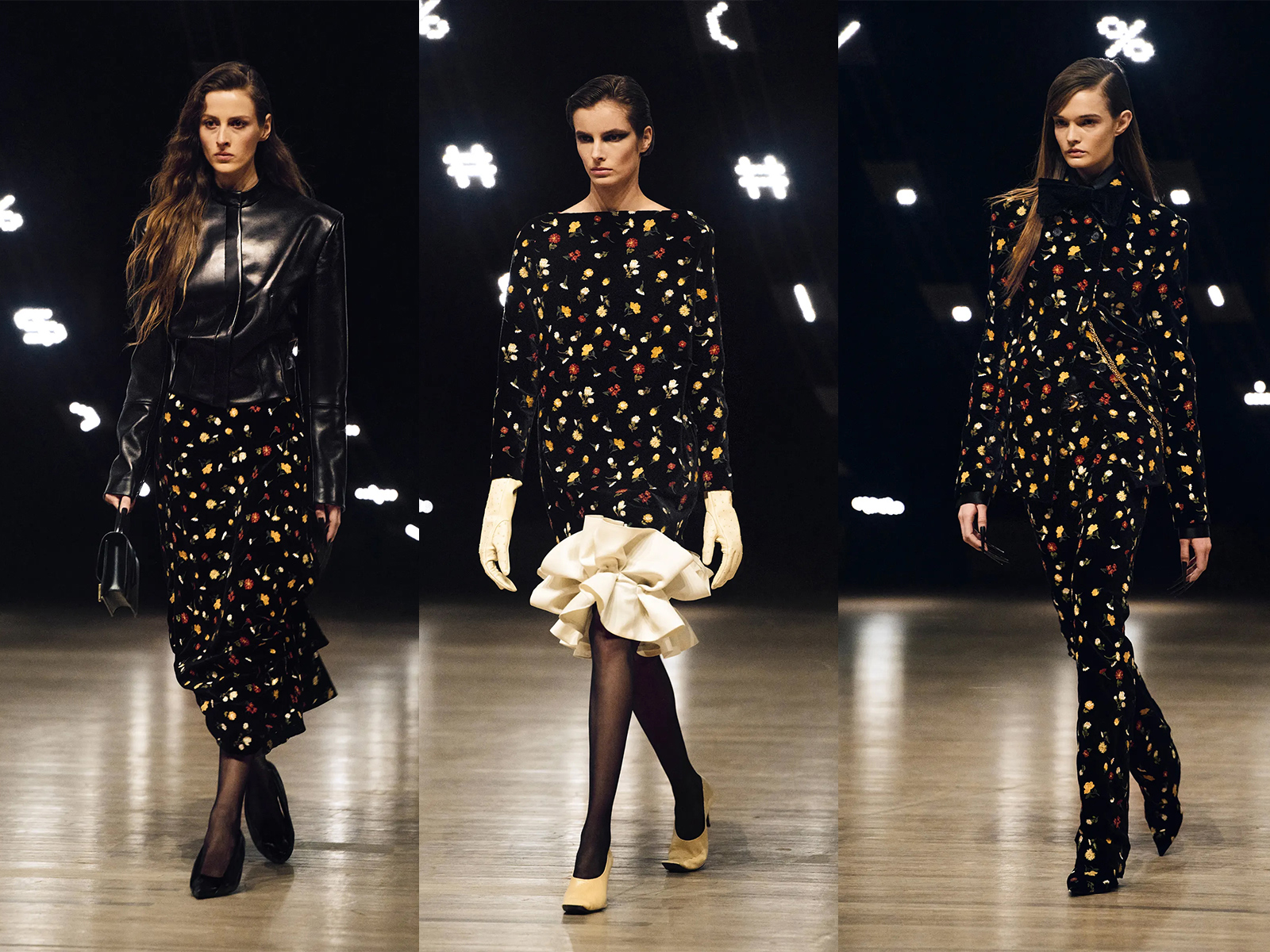
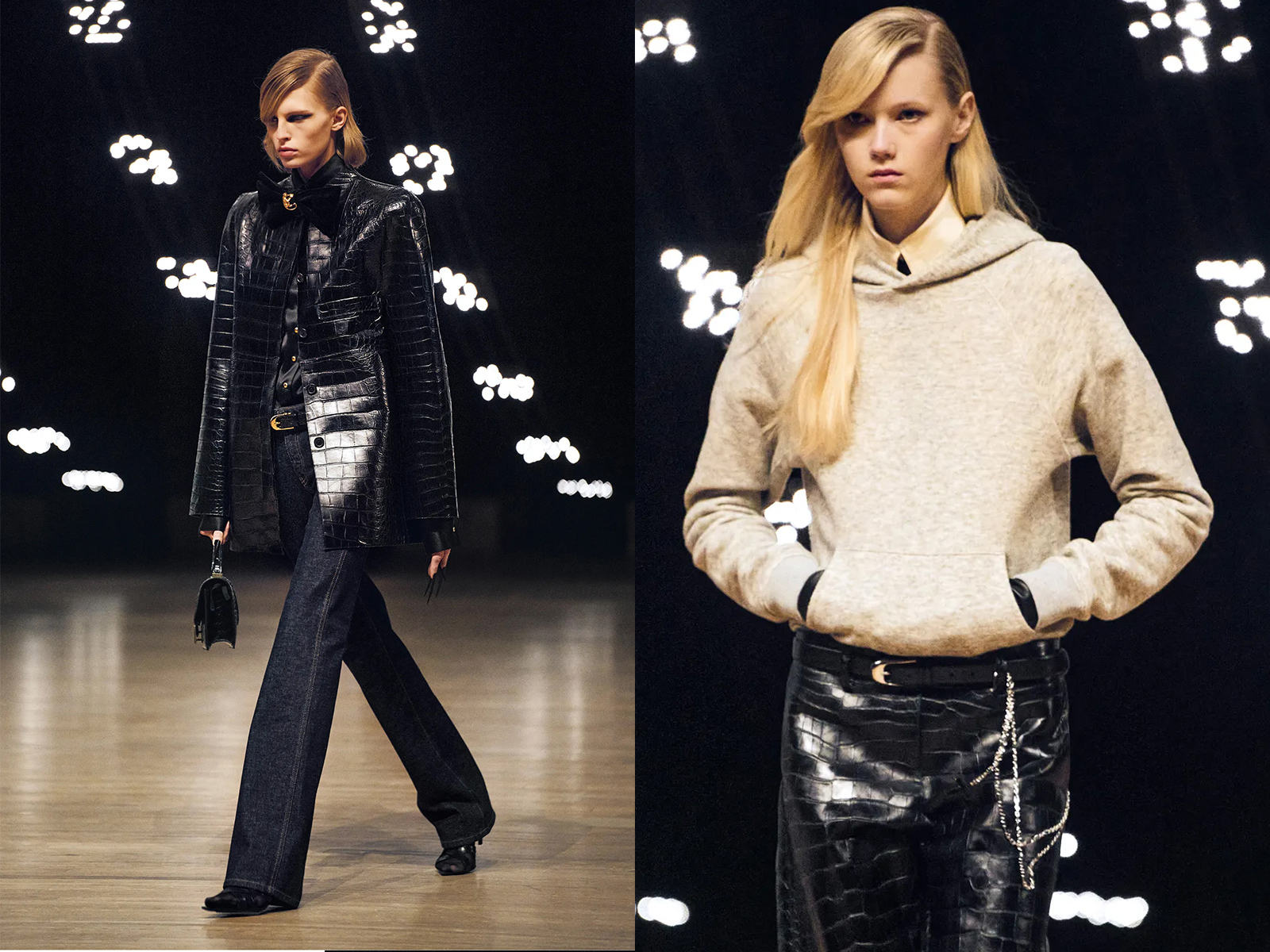
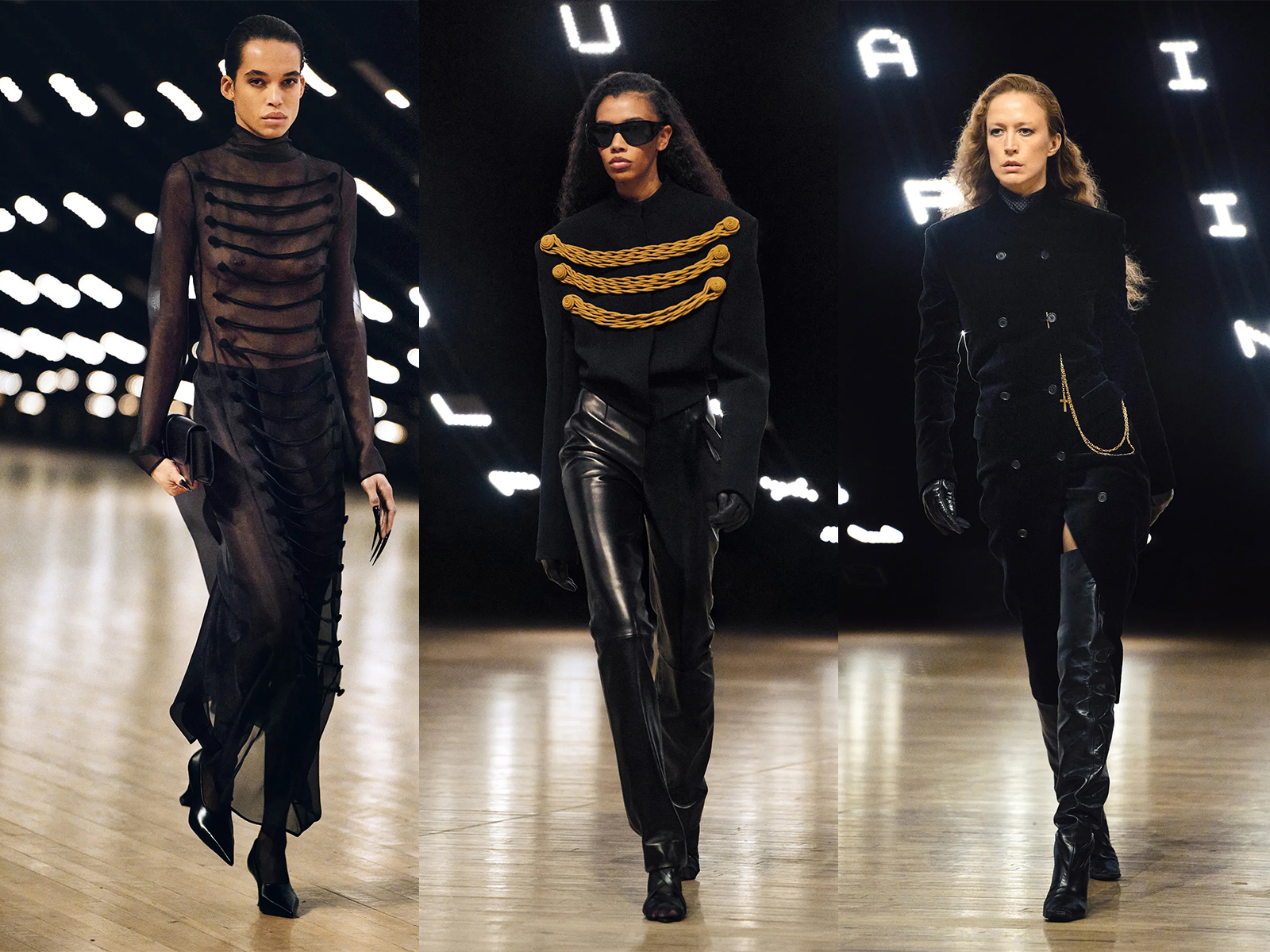
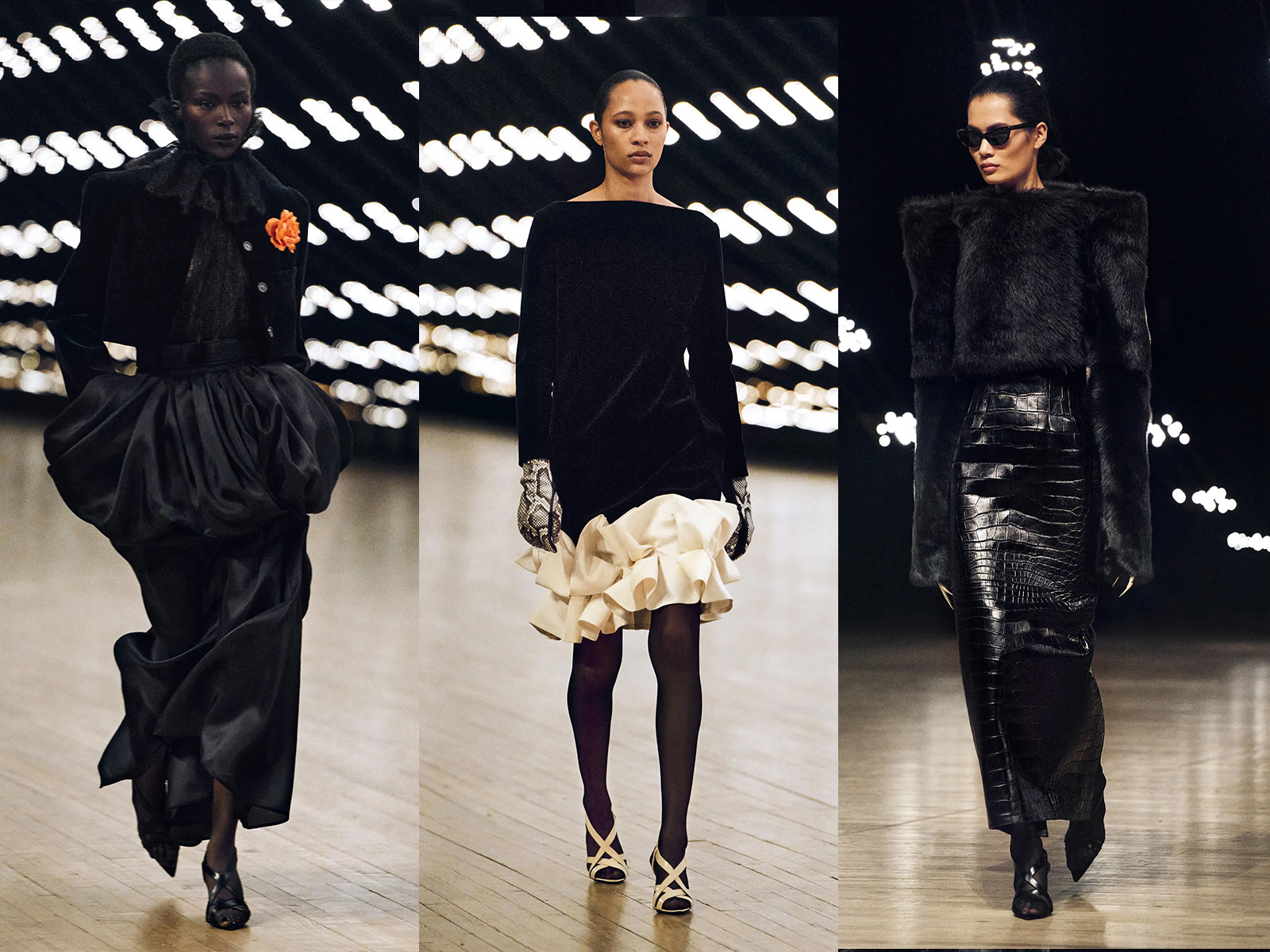
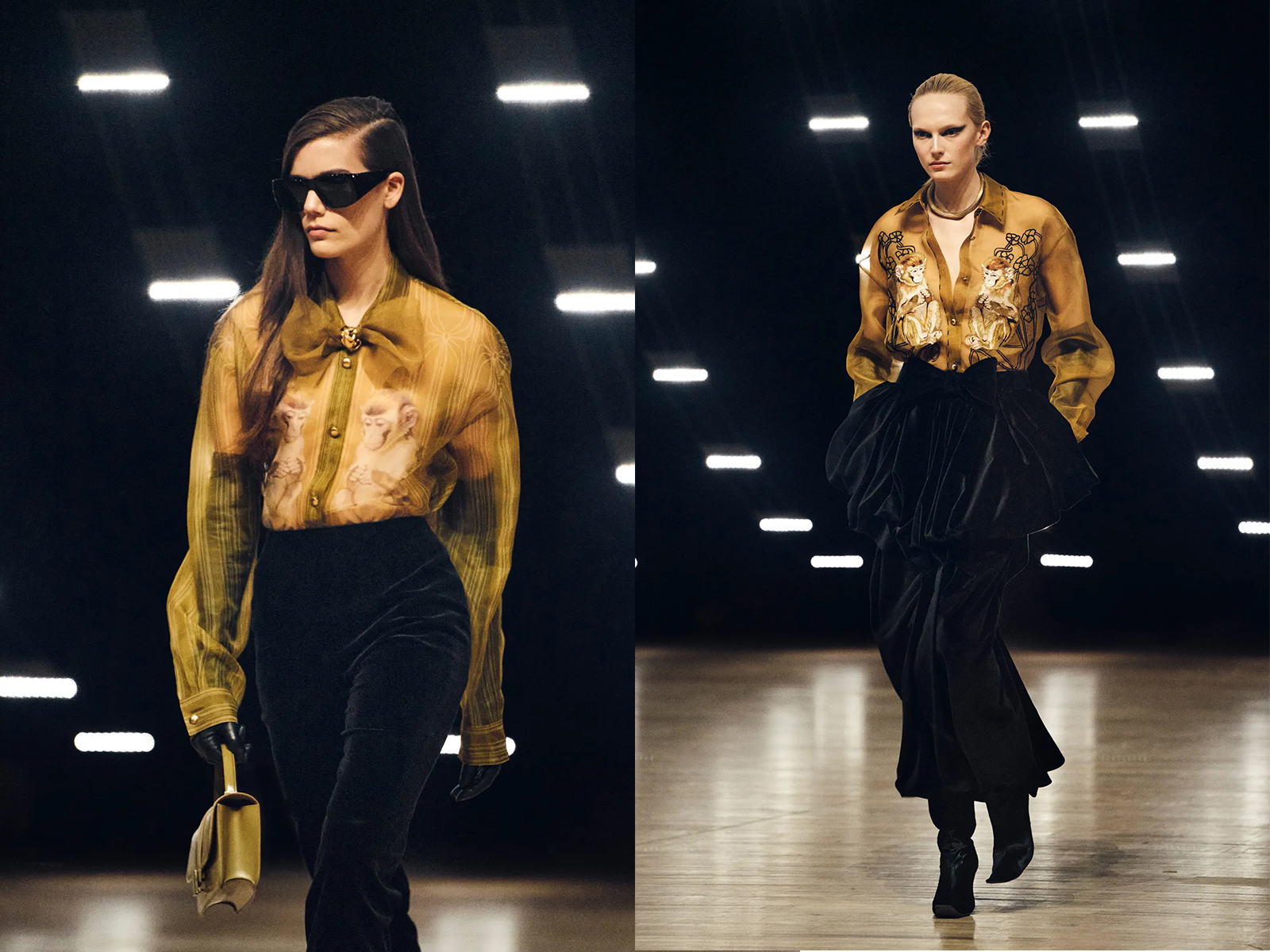
For Fall Winter 2026, that discipline turns almost ascetic. At first glance the collection reads as fluid, even generous, with skirts that swell, sleeves that breathe, and trousers that carry air inside them. Yet beneath that movement lies a deliberate severity. Black dominates—not decorative black, but declarative black. Leather appears polished and unyielding, framing the body like punctuation. Even the florals resist softness, printed onto black velvet grounds that absorb light rather than reflect it. The mood is not romantic; it is composed.
Gold interrupts this darkness with intention. These are not warm gilded tones meant to flatter; they are metallic, almost ceremonial, lending the garments a sculptural authority. When paired with sheer lace or asymmetric cuts, the effect is tension rather than contrast. Feminine elements are present, but they arrive sharpened, as though refined through editing rather than embellishment.
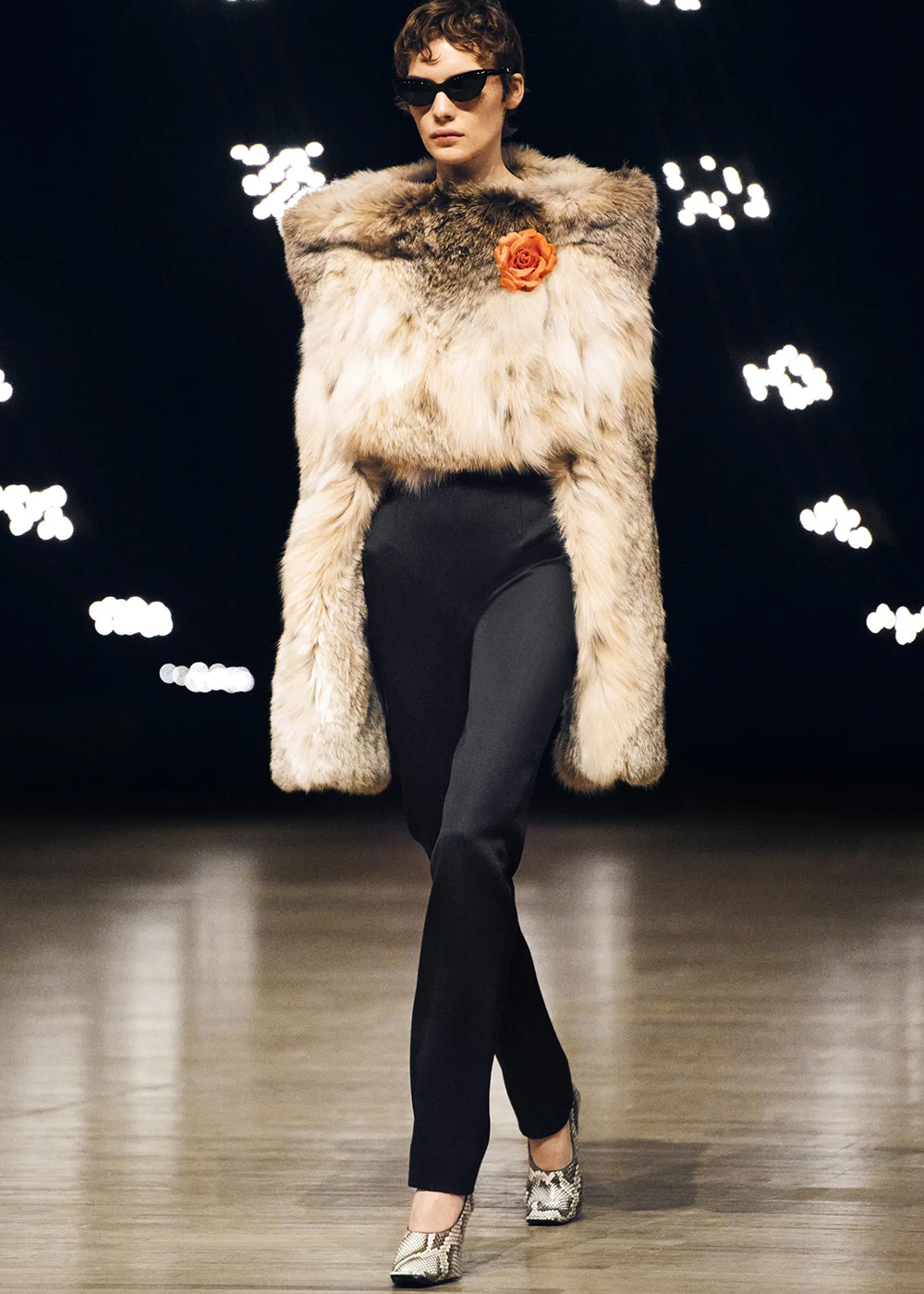
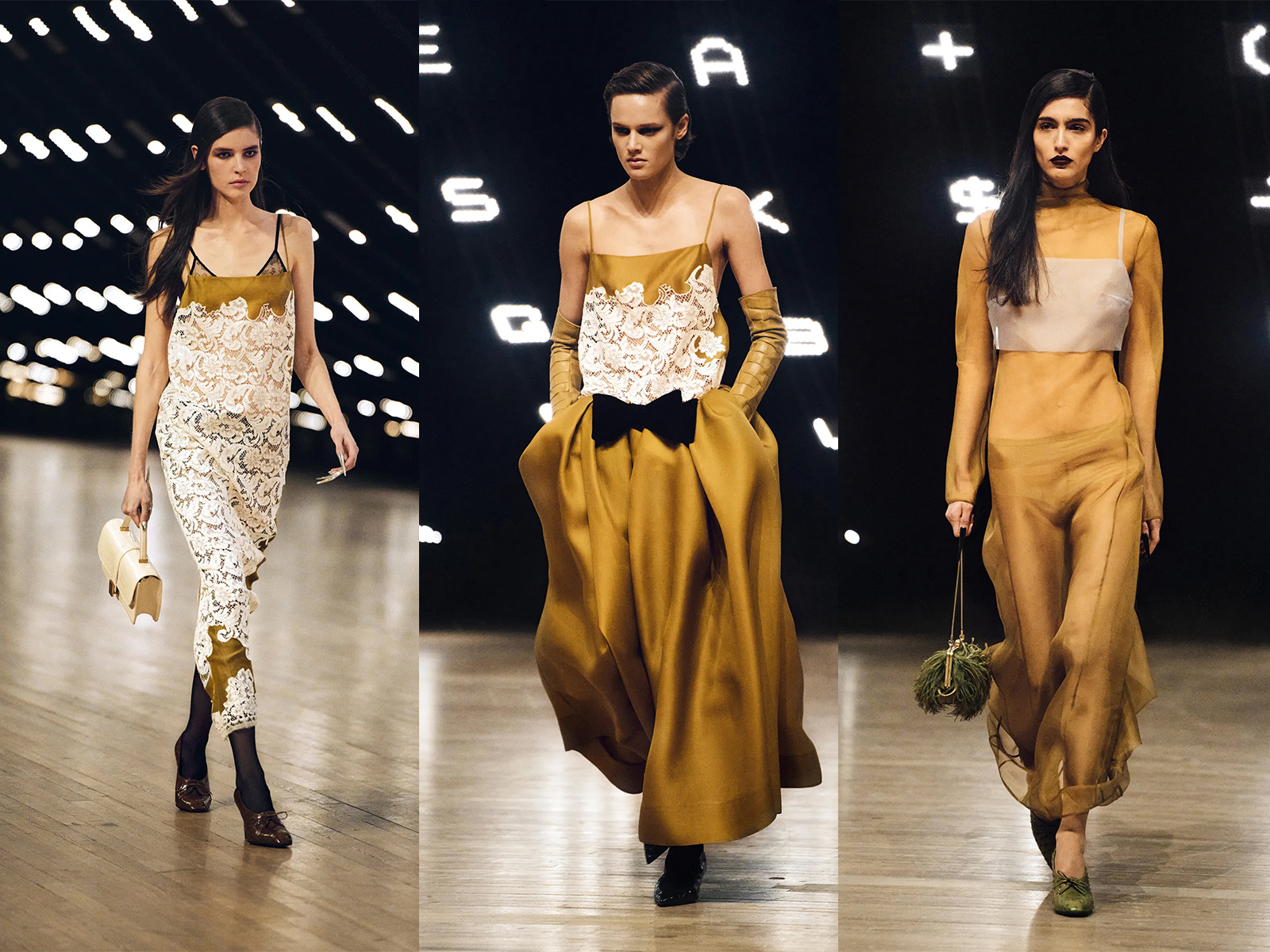
Holstein’s silhouettes this season move between column and swell. Some looks narrow the body into elongated lines, while others expand outward through controlled volume—puffed sleeves, gathered waists, skirts that hold shape like architecture. The play between containment and release gives the collection its pulse. Nothing slouches. Nothing drifts. Even the softest fabrics seem instructed.
Textiles carry much of the narrative weight. Dense velvets, structured leathers, and weighty silks create a tactile hierarchy, while select shirts feature prints derived from Milton Avery paintings, their painterly calm acting as a quiet counterpoint to the collection’s rigor. These moments of art reference do not soften the message; they deepen it, suggesting a wardrobe assembled with the discernment of a collector.
What emerges is a study in controlled drama. The clothes never shout, yet they command attention through posture alone. This is Park Avenue severity gently tuned toward edge—hardcore translated into polish. Khaite does not propose fantasy for Fall Winter 2026. It proposes presence. Khaite.